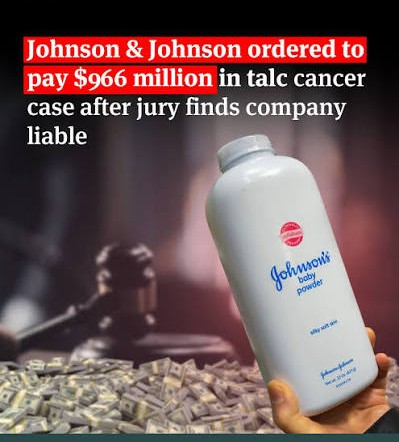
Kampala,Uganda – For decades, Johnson & Johnson’s iconic baby powder symbolized safety, trust, and childhood care across much of the world. Yet today, the multinational healthcare giant finds itself at the center of one of the most consequential product liability cases in modern corporate history.
The company has offered to pay up to US$5.5 billion to settle tens of thousands of lawsuits in the United States alleging that its talc-based products caused ovarian cancer after long-term use. While Johnson & Johnson continues to deny that its products are unsafe and maintains that decades of scientific testing support their safety, the litigation has become a defining example of how global corporations increasingly face scrutiny not only for the products they sell but also for how they communicate potential risks to consumers.
Beyond the courtroom, the case raises broader questions for regulators, policymakers, healthcare systems, and consumers worldwide including across Africa. The proposed settlement represents far more than a legal dispute between a multinational company and plaintiffs. It reflects a growing global expectation that corporations should exercise greater transparency regarding product safety, invest in continuous scientific evaluation, and respond promptly when public concerns emerge.
In recent years, multinational firms have found themselves operating in an environment where public trust is increasingly tied to accountability. Consumers now expect companies to demonstrate not only compliance with legal standards but also ethical stewardship throughout a product’s lifecycle. For governments, the Johnson & Johnson case underscores the importance of strong consumer protection institutions capable of independently assessing product safety rather than relying exclusively on manufacturer assurances. Although the lawsuits originate in the United States, their implications extend well beyond American courts.
Africa’s consumer market is expanding rapidly. Rising incomes, urbanization, and growing middle-class populations have increased demand for cosmetics, pharmaceuticals, and personal care products manufactured by multinational companies. At the same time, many African regulatory agencies continue strengthening their technical capacity to evaluate complex health products entering domestic markets.
The Johnson & Johnson litigation highlights the need for African countries to invest in:
- stronger post-market surveillance systems;
- laboratory capacity to independently assess imported products;
- improved consumer awareness campaigns;
- robust product recall mechanisms; and
- transparent reporting of potential health risks.
Rather than reacting to international controversies after they emerge, African regulators have an opportunity to build preventive systems that identify concerns early. For Uganda, the case offers lessons that extend beyond one company or one product. Uganda has made notable progress in strengthening pharmaceutical regulation and consumer protection through institutions responsible for medicines, standards, and public health oversight. However, the increasing diversity of imported consumer goods means regulatory systems must continuously evolve.
Personal care products, cosmetics, and healthcare items available in Ugandan retail outlets increasingly originate from global supply chains. Ensuring that these products meet internationally recognized safety standards requires sustained investment in laboratory testing, market surveillance, and cross-border regulatory cooperation.
The case also reinforces the importance of public education, Consumers should understand how to verify product authenticity, follow manufacturer instructions, report suspected adverse effects, and seek medical advice when concerns arise. Importantly, the ongoing litigation does not establish that every talc-containing product causes cancer, nor does it suggest that consumers should immediately abandon products without guidance from health authorities. Scientific evidence surrounding talc and cancer has been debated for years, with different regulatory bodies reaching different conclusions based on available evidence.
The central lesson is therefore not panic but preparedness. Across the global economy, environmental, social, and governance (ESG) expectations are reshaping how companies manage risk. Investors increasingly evaluate litigation exposure alongside financial performance. Consumers reward brands perceived as transparent and responsive. Governments are strengthening legal frameworks that hold manufacturers accountable for product safety.
The Johnson & Johnson case illustrates how corporate reputation can be influenced not only by scientific evidence but also by public confidence, regulatory engagement, and institutional transparency. For Africa, this evolution presents an opportunity rather than merely a challenge. As the continent deepens integration through the African Continental Free Trade Area (AfCFTA), harmonized consumer protection standards and stronger regulatory cooperation could enhance confidence in African markets while safeguarding public health.
Whether the proposed settlement ultimately resolves the litigation or not, its significance extends far beyond the courtroom. It serves as a reminder that globalization has interconnected markets, legal systems, and public health in unprecedented ways. A product manufactured in one jurisdiction can influence legal precedents, regulatory reforms, and consumer behavior across continents.
For Uganda and Africa more broadly, the enduring lesson is clear: effective consumer protection depends not only on responding to crises but on building resilient institutions capable of anticipating them. In an increasingly interconnected world, public trust is becoming one of the most valuable assets any company or regulator can possess.