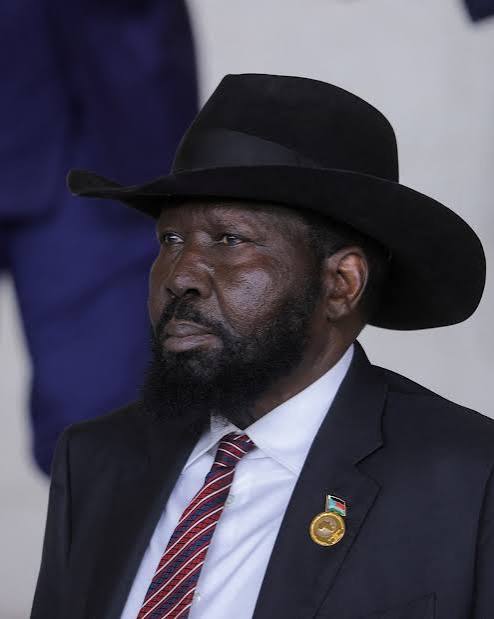
JUBA, South Sudan — South Sudan’s President H.E Salva Kiir Mayardit has dismissed Central Bank Governor Johnny Ohisa, replacing him with former governor Addis Ababa Othow, in the latest high-profile reshuffle within the country’s senior leadership. The announcement, delivered through a presidential decree broadcast on state television, did not provide reasons for the change. The appointment marks another chapter in a series of leadership adjustments undertaken by President Kiir over recent months, a pattern that political observers increasingly associate with broader efforts to reorganize the state apparatus amid growing political and economic uncertainty.
The leadership transition comes as South Sudan confronts one of its most difficult economic periods since independence in 2011. The world’s youngest nation remains heavily dependent on oil exports, which account for the overwhelming majority of government revenue and foreign exchange earnings. Disruptions in oil production, fluctuating global energy prices, and infrastructure constraints have significantly reduced public revenues.
These pressures have translated into persistent foreign currency shortages, elevated inflation, depreciation of the South Sudanese pound, and recurring liquidity challenges within the banking sector. Businesses and households continue to grapple with rising living costs, while the government faces increasing fiscal constraints in financing public services and development priorities. Against this backdrop, the Central Bank plays a critical role in maintaining monetary stability, managing inflation expectations, supporting the exchange rate, and safeguarding confidence in the country’s financial system.
President Kiir appointed Addis Ababa Othow, who previously served as Governor of the Bank of South Sudan between June and November 2025. His return suggests the presidency is seeking experienced leadership familiar with the country’s complex monetary environment. Outgoing Governor Johnny Ohisa, an economist with extensive experience in South Sudan’s financial sector, had himself returned to the position earlier this year after previously serving multiple terms. His removal underscores the fluid nature of appointments within South Sudan’s senior economic institutions.
Whether the leadership change translates into substantive policy adjustments remains uncertain, particularly given that many of the country’s economic difficulties stem from structural factors extending beyond monetary policy alone. The reshuffle also unfolds against a politically significant backdrop. Since the signing of the Revitalized Peace Agreement, South Sudan has continued navigating a delicate transition aimed at implementing institutional reforms and preparing for democratic elections. However, repeated delays in implementing key provisions of the peace process have heightened political uncertainty.
Analysts have interpreted recent cabinet reshuffles and changes within strategic institutions as part of President Kiir’s broader effort to strengthen administrative cohesion while managing evolving political dynamics within the governing establishment. Leadership changes in institutions responsible for finance and economic management often carry significance beyond technical governance, reflecting broader calculations regarding state stability and public confidence.
South Sudan’s economic trajectory carries implications beyond its borders. As a member of the East African Community (EAC) and the Intergovernmental Authority on Development (IGAD), economic stability in South Sudan remains important for regional trade, cross-border investment, infrastructure connectivity, and security cooperation. Regional partners have consistently emphasized that sustainable economic recovery will depend not only on prudent macroeconomic management but also on continued implementation of governance reforms, diversification beyond oil, and improvements in the investment climate.
The appointment of a new central bank governor alone is unlikely to resolve South Sudan’s underlying economic challenges. Restoring macroeconomic stability will require coordinated fiscal discipline, stronger public financial management, enhanced investor confidence, and progress toward broader structural reforms. As the country continues balancing political transition with economic recovery, the effectiveness of its financial institutions will remain central to maintaining public confidence and supporting long-term development. For South Sudan, the latest leadership change represents not merely an administrative adjustment but another indicator of a nation seeking stability while confronting complex economic and political realities.