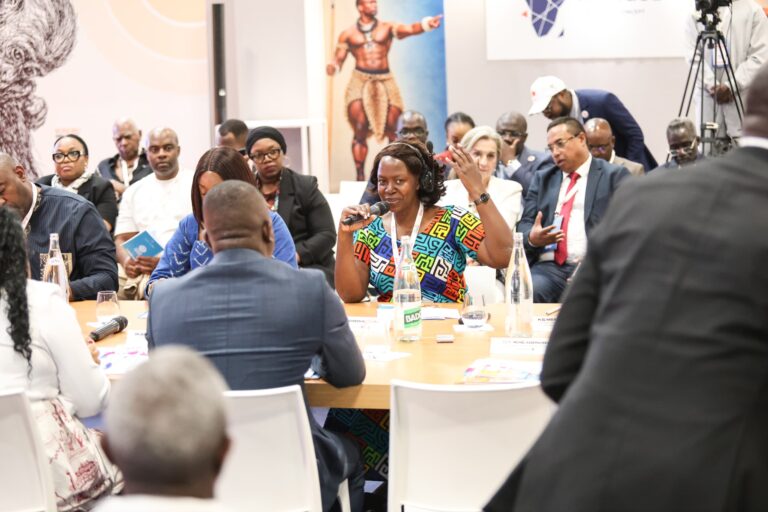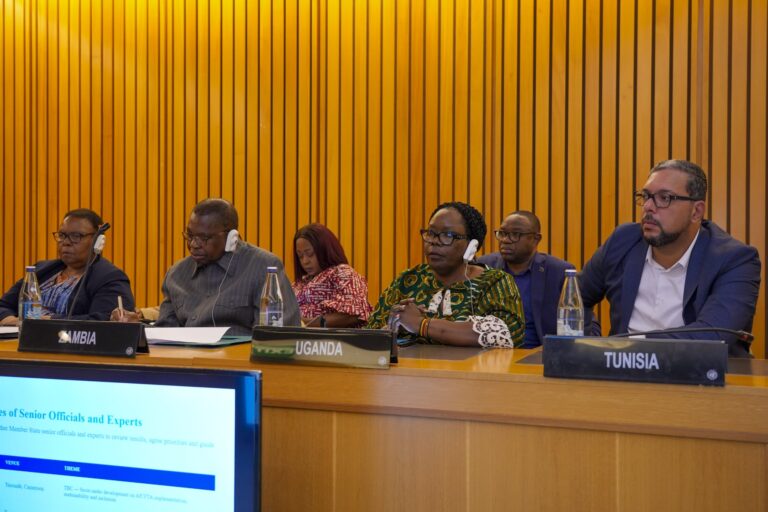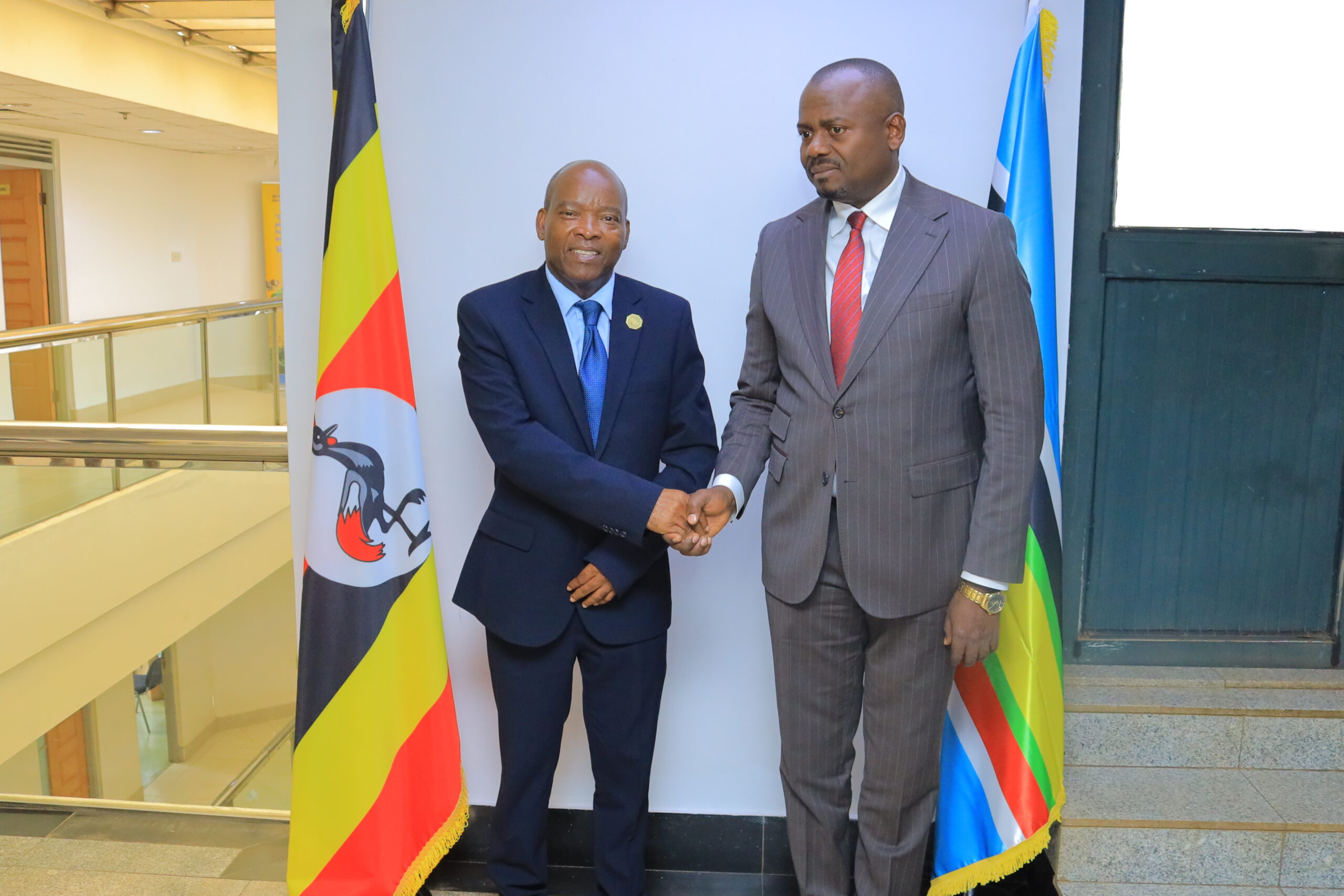
KAMPALA, UGANDA | Uganda is hosting a three-day High-Level Policy Dialogue on the domestication and implementation of the Comprehensive Africa Agriculture Development Programme (CAADP) Kampala Declaration and the CAADP Strategy and Action Plan 2026–2035, bringing together senior government officials, the African Union Commission and representatives of Ministries, Departments and Agencies to address one of the continent’s most consequential development questions: how to turn agricultural commitments into investment, productive value chains and measurable improvements in livelihoods.
The dialogue, taking place from 9–11 September 2026, comes at a time when food security, climate resilience, agricultural productivity and access to markets have become increasingly central to Africa’s economic and strategic priorities.
Rather than treating agriculture solely as a domestic production issue, the Kampala discussions have placed it within a wider framework encompassing industrialisation, trade, investment, science and technology, employment, regional integration and international economic engagement.
The meeting builds on Uganda’s hosting of the Extraordinary African Union Summit in January 2025, which adopted the Kampala CAADP Declaration on Building Resilient and Sustainable Agri-Food Systems in Africa, together with the continental Strategy and Action Plan for 2026–2035.
The framework places emphasis on sustainable food production and agro-industrialisation, investment and financing, food and nutrition security, inclusive livelihoods, resilience and stronger agricultural governance. For Uganda, the immediate challenge is not the creation of another policy framework, but ensuring that continental commitments are integrated into existing national development priorities and translated into implementation.
Speaking at the dialogue, Hon. Lt. Col. (Rtd) Bright Rwamirama, State Minister for Animal Industry, said Uganda’s task was to convert its agricultural potential into higher household incomes, employment, food and nutrition security, competitive agro-industries, increased exports and resilient livelihoods.
He explained that implementation would be anchored in Uganda Vision 2040, NDP IV, the NRM Manifesto 2026–2031 and the Agro-Industrialisation Programme Implementation Action Plan (NASIP) rather than establishing a parallel policy architecture.
Among the priorities highlighted were quality seed and planting materials, mechanisation, irrigation, sustainable land management, post-harvest handling and value addition, quality assurance, market access, disease control, fisheries, commercial farming partnerships and stronger agricultural extension and farmer education.
The approach reflects a broader shift in African agricultural policy: moving beyond the question of how much food is produced towards how agricultural production can generate income, employment, industrial capacity and internationally competitive enterprises. That transition is particularly important for economies where millions of livelihoods remain connected to agriculture, while farmers and agribusinesses continue to face constraints related to finance, technology, infrastructure, market access and post-harvest losses.
The connection between agriculture and industrialisation was reinforced by Hon. Sanjay Tanna, Minister of Trade, Industry and Cooperatives, who emphasised that sustaining agricultural growth would require Uganda to move further from production towards processing, value addition, branding, market positioning and export development. He pointed to opportunities across value chains including milk, coffee, tea, honey, shea butter and fruits, stressing the importance of connecting production to international markets.
Africa has considerable agricultural potential, but the economic benefits of agricultural production depend increasingly on what happens after the farm gate. Processing, packaging, standards, logistics, branding, financing and market access determine whether agricultural commodities remain low-value exports or become competitive products capable of supporting industrial development. The Kampala dialogue therefore placed agro-industrialisation alongside food security as a strategic development objective. For Uganda, this also presents an opportunity to deepen the relationship between agricultural transformation and Economic and Commercial Diplomacy.
Agriculture may begin at the farm, but its economic journey increasingly crosses borders. Ugandan diplomatic missions abroad can play a greater role in generating market intelligence, identifying potential buyers, facilitating business-to-business relationships, promoting investment opportunities and supporting Ugandan companies seeking entry into regional and international value chains.
This gives foreign policy a practical economic function: helping connect domestic productive capacity with external markets, capital, technology and expertise. The same logic extends to continental integration. Agricultural transformation requires more than producing competitive goods. Farmers and businesses also need predictable markets, efficient transport systems, appropriate standards and the ability to move products across borders.
The Kampala dialogue therefore linked agricultural policy with regional trade and Africa’s broader economic integration agenda. It also reinforces Uganda’s 4ATMS framework Agriculture, Tourism, Minerals and Science, Technology and Innovation as complementary pillars of international economic engagement.
H.E. Moses Vilakati, AU Commissioner for Agriculture, Rural Development, Blue Economy and Sustainable Environment, called for collective action to move the Kampala Declaration from commitments towards implementation and measurable results. His presentation highlighted both opportunities and challenges surrounding agricultural productivity, food security, investment, irrigation, processing, markets, intra-African trade and youth employment.
A central requirement identified was the development of bankable projects capable of attracting investment at scale. That emphasis is significant because Africa’s agricultural transformation challenge is not simply one of policy formulation. It is also a financing and implementation challenge.
Declarations establish political direction. Strategies establish priorities. But transformation ultimately depends on projects, institutions, financing, technology, skills, infrastructure and accountable implementation. The test for the CAADP Strategy and Action Plan 2026–2035 will therefore be whether continental commitments can increasingly be translated into programmes and investments that farmers, businesses and communities can experience in practical terms.
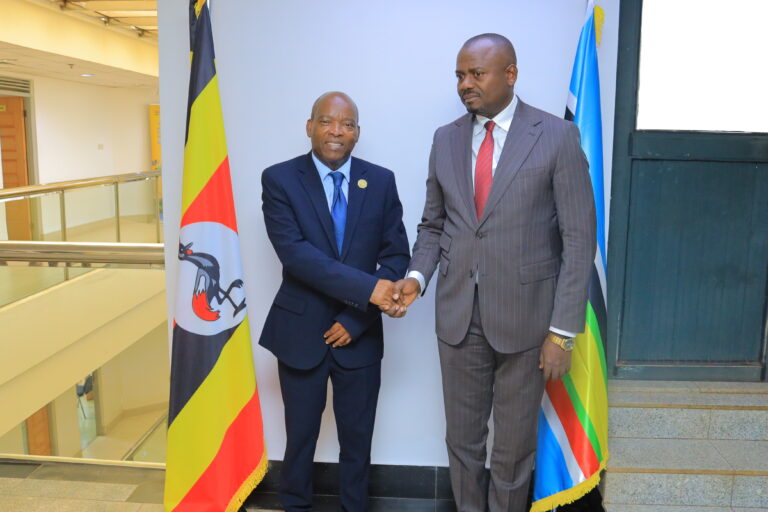
The agricultural discussions were complemented by a courtesy call by Commissioner Vilakati on Hon. Kyeyune Haruna Kasolo, Minister of State for Foreign Affairs in charge of Regional Cooperation. During the engagement, Commissioner Vilakati commended Uganda for hosting the high-level dialogue and emphasised the importance of stronger continental cooperation in supporting farmers through improved access to fertiliser, extension services, climate-smart agriculture, technology and markets.
Hon. Kasolo congratulated Commissioner Vilakati on his appointment and reaffirmed Uganda’s commitment to supporting farmers across the value chain from grassroots production to export markets. The Minister also underscored the importance of facilitating the movement of agricultural products, expanding market access and strengthening regional trade. He further reaffirmed the Ministry of Foreign Affairs’ role in coordinating and nurturing the relationship between the Government of Uganda and the African Union in implementing the CAADP Kampala Declaration.
The engagement illustrated an increasingly important reality in contemporary development diplomacy: foreign policy and domestic economic transformation can no longer operate as separate policy conversations.
The first day of the dialogue concluded with a field visit to the National Agricultural Research Organisation (NARO), including the National Crop Resources Research Institute at Namulonge and the National Livestock Resources Research Institute at Nakyesasa. The visit provided an opportunity to showcase Uganda’s agricultural research, innovation and technology capabilities. It also highlighted the potential for stronger partnerships in research, technology transfer, skills development and commercialisation.
For Africa, this dimension may prove increasingly important, the future of agriculture will be shaped not only by land and labour, but also by science, biotechnology, digital technologies, climate-smart production, improved genetics, irrigation, data, mechanisation and knowledge transfer. Research institutions therefore have a role extending beyond laboratories. Their discoveries must increasingly find pathways into farms, enterprises and markets. This is where the relationship between science, investment, agriculture and diplomacy becomes particularly relevant.
Representing Uganda’s Embassy in Addis Ababa, Minister Counsellor Margreet Kafeero, on behalf of H.E. Ambassador Rebecca Amuge Otengo, highlighted the relevance of the Commissioner’s interventions to Uganda’s 4ATMS and Economic and Commercial Diplomacy priorities. The observation points to a potentially broader role for diplomatic missions: becoming more active connectors between Uganda’s productive sectors and continental and international economic opportunities.
Such diplomacy can involve market intelligence, investment promotion, technology partnerships, commercial networking, export promotion and facilitating relationships between Ugandan enterprises and foreign investors or buyers. In this model, diplomacy does not replace domestic production or private enterprise. Rather, it helps create the external relationships through which domestic capabilities can access wider opportunities.
The significance of the Kampala dialogue extends beyond Uganda, Africa’s agricultural future has implications for global food markets, trade, employment, climate resilience, investment and development.
With a rapidly growing population and increasing urbanisation, the continent faces the simultaneous challenge of producing more food, creating jobs for young people, protecting natural resources and building competitive industries.
That requires a shift from viewing agriculture principally as a subsistence sector towards understanding it as part of a wider economic system connecting farmers, researchers, financiers, manufacturers, traders, logistics providers, consumers and governments.
The CAADP framework provides a continental platform for pursuing that transition.
But the effectiveness of the framework will ultimately depend on implementation at national and regional levels.
The message emerging from Uganda’s three-day dialogue is therefore straightforward but consequential. The Kampala Declaration cannot remain only a continental commitment, It must move from commitment to implementation; from implementation to measurable results; and from measurable results to improved livelihoods.
For Uganda, that means bringing agriculture, trade, investment, science and technology, regional cooperation and diplomacy into a more coherent economic transformation agenda.
It means producing more competitively, processing more domestically, connecting farmers to markets, attracting investment, strengthening research and innovation, improving regional trade and using diplomatic networks to open doors for Ugandan enterprises.
For Africa more broadly, the challenge is similar, the continent possesses land, labour, markets, entrepreneurial energy and considerable agricultural potential. The strategic question is whether these assets can be connected through investment, technology, infrastructure, regional markets and effective institutions to generate higher-value economic activity.
The Kampala dialogue has provided another opportunity to define that ambition.
The harder task and the one that will determine the legacy of the CAADP Strategy and Action Plan 2026–2035 will be turning the ambition into results that can be measured not only in policy documents, but in farm incomes, jobs, food security, exports, enterprises and more resilient African communities.