The global minerals economy is entering a new phase in which access to resources is no longer the only strategic advantage; control of processing and refining capacity is increasingly determining who captures the greatest economic value. UN Trade and Development estimates that global trade in critical minerals reached approximately US$2.5 trillion in 2023, with Asia accounting for more than half of global imports. In 2024, global critical-mineral exports were still about US$2.25 trillion, while Africa exported approximately US$176 billion worth of critical minerals. Yet the most important statistic may be the value Africa does not capture.
UNCTAD estimates that Africa supplies about 12% of global mineral exports but captures only around 4% of the value in green supply chains. That gap explains why the global competition around minerals is increasingly moving beyond mining. Africa possesses approximately 48.1% of the world’s cobalt, 47.7% of manganese, 21.6% of natural graphite, 5.9% of copper, 5.6% of nickel and 1% of lithium, according to UNCTAD analysis.
But ownership of deposits does not automatically translate into industrial power. In 2025, the Democratic Republic of Congo accounted for 74% of global cobalt mine production, while China dominated several critical-mineral refining chains and Indonesia accounted for 43% of global nickel refining capacity. The lesson for Africa is increasingly clear: the strategic value of a mineral is not created at the mine alone. It increases through processing, refining, manufacturing, technology, logistics and the industries built around it.
This is why the debate over mineral wealth is becoming a debate about industrial sovereignty. Africa can remain primarily a supplier of ores and concentrates to factories elsewhere, or use its resource endowment to build domestic and regional value chains.
The economic difference can be substantial. UNCTAD cites the Democratic Republic of Congo’s cobalt experience: local processing increased the mineral’s unit price from approximately US$5.8 per kilogram at extraction to US$16.2 per kilogram after processing. The country’s processed cobalt exports reached about US$6 billion in 2022, compared with approximately US$167 million from raw cobalt ores. That is the broader significance of Uganda’s mineral-development agenda. Mining creates extraction. Refining creates another layer of value. Manufacturing creates another. And industrial ecosystems create jobs, skills, technology and businesses around the entire chain.
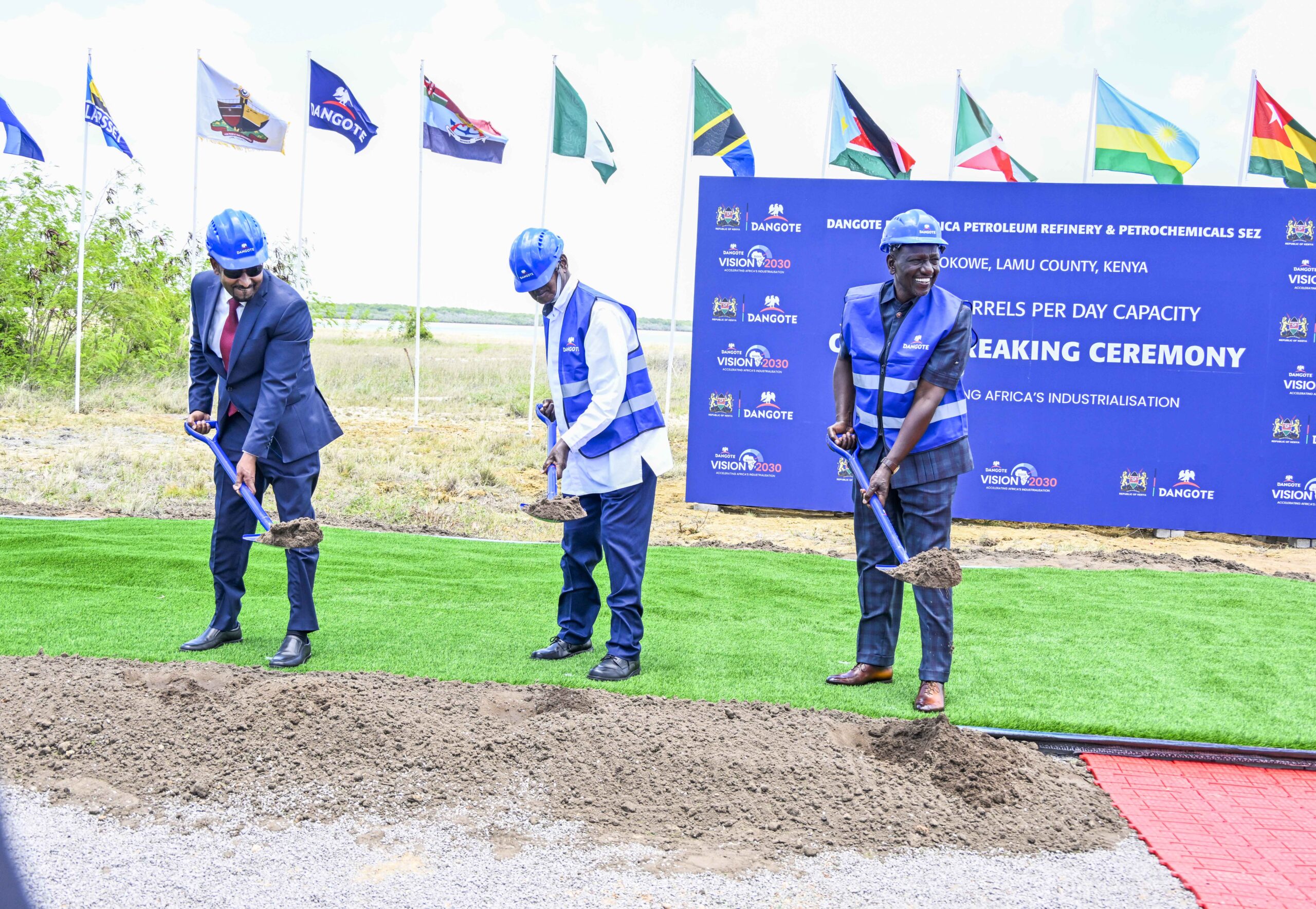
The same principle extends beyond minerals to petroleum, President Yoweri Kaguta Museveni has reiterated Uganda’s commitment to establishing a domestic refinery, describing it as part of a wider strategy to process Uganda’s crude for domestic consumption and supply markets in the interior of Africa. He has also argued that several East African refineries can operate alongside one another if countries coordinate markets, infrastructure and economic interests. This places Uganda’s refinery within a much larger regional industrial equation.
The planned regional refinery network including Uganda’s refinery alongside proposed or developing facilities in Kenya and Tanzania could create opportunities extending beyond petroleum products into petrochemicals, fertiliser, logistics, engineering, storage, manufacturing and specialised services. The Lamu proposal cited in the source material, for example, is designed around a 700,000-barrel-per-day processing capacity and an estimated US$16 billion investment, with intended markets including Uganda, Tanzania, Ethiopia, South Sudan and the DRC.
For Uganda, therefore, the refinery should not be viewed only as a facility that converts crude oil into fuel. It can be understood as a potential industrial anchor—provided it is connected to local suppliers, technical skills, energy infrastructure, logistics, petrochemicals, manufacturing and regional markets. That is particularly important because the International Energy Agency notes that oil refining converts crude into fuels for road transport, shipping and aviation as well as inputs for chemicals and products such as plastics.
The global refining and minerals landscape is changing at the same time, the IEA projects global refined-products demand to peak at 86.3 million barrels per day in 2027, while about 4.2 million barrels per day of new refining capacity is expected to be added globally by 2030, partly offset by approximately 1.6 million barrels per day of closures. Meanwhile, UNCTAD reports that lithium demand alone could rise by 353% between 2024 and 2040, while graphite demand could increase by more than 130%.
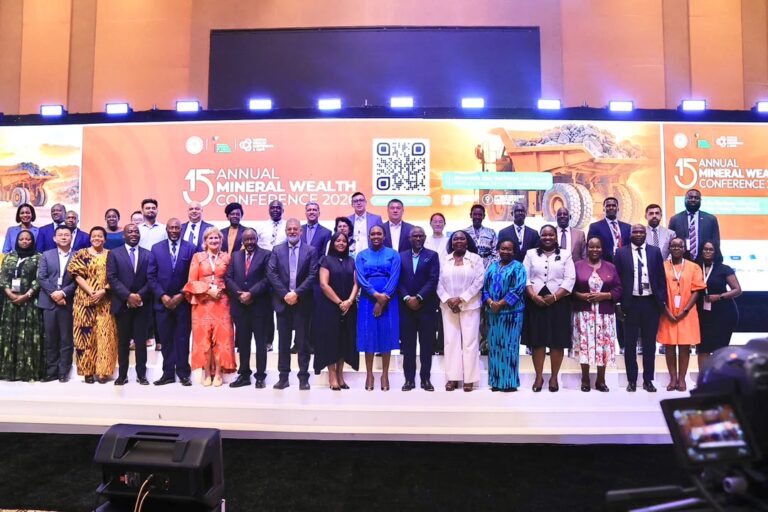
For Africa, these figures point to a strategic window but not an automatic dividend. The opportunity is to move from “Africa has the resources” to “Africa processes, refines and manufactures from its resources.” For Uganda, that means linking the mining sector, oil refining, industrialisation, regional trade and economic diplomacy into one broader value-addition strategy. The message from the Mineral Wealth Conference 2026 therefore extends well beyond the mining sector:
Africa’s next resource advantage may not be what it extracts, but what it learns to process, refine and manufacture and for Uganda, the question is increasingly not simply how much mineral and petroleum wealth the country possesses, but how much of the resulting value, technology, investment and employment can be retained within Uganda and connected to the wider East African market.