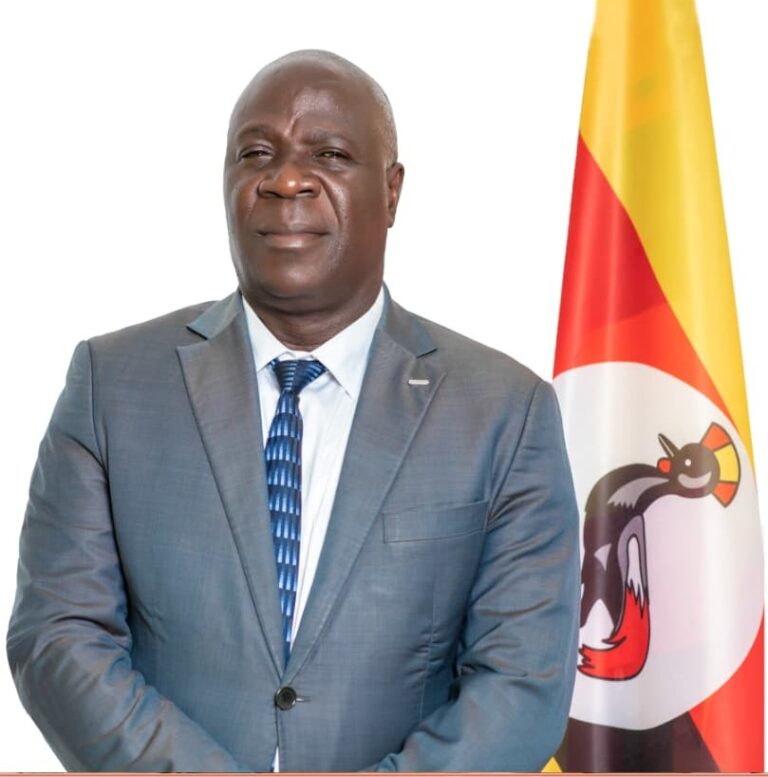
Mombasa — The arrest and subsequent remand of Uganda’s Consul General in Mombasa, Ambassador Herbert Kiguli, over allegations of causing financial loss to Government has brought renewed attention to the institutional responsibilities and strategic economic role of Uganda’s Consulate General in Mombasa.
The Inspectorate of Government (IG) alleges that Ambassador Kiguli, was responsible for a financial loss of UGX 494,097,270 and abuse of office arising from transactions undertaken in 2020, when he was serving as Commissioner for Human Resource Management at the Ministry of Agriculture, Animal Industry and Fisheries. He has denied the allegations, and the matter remains before the courts. The Anti-Corruption Court subsequently remanded him to Luzira Prison pending consideration of his bail application.
The case relates to alleged decisions made before his deployment to Mombasa in October 2024 and should therefore be distinguished from the current operations of the Consulate General. The Consulate is mandated to protect and promote Uganda’s strategic interests along Kenya’s Coast, including through regional integration, economic and commercial diplomacy, tourism promotion, trade, investment and consular services.
The significance of Uganda’s diplomatic presence in Mombasa extends well beyond traditional consular functions. The Consulate has jurisdiction over six Kenyan coastal counties Mombasa, Kwale, Kilifi, Taita Taveta, Lamu and Tana River placing it at an important intersection of trade, logistics, tourism, investment and regional connectivity.
Most strategically, the Port of Mombasa remains a critical gateway for Uganda’s international trade, with the Consulate reporting that more than 60 percent of transit cargo passing through the port is destined for Uganda. This makes engagement with the Kenya Ports Authority, Kenya Revenue Authority, shipping lines and other logistics stakeholders an important component of Uganda’s economic diplomacy.
The Consulate’s mandate also includes identifying markets for Ugandan products on the Coast, facilitating investment opportunities and promoting technology transfer into Uganda’s economy. This represents a significant evolution in the role of diplomatic missions: from principally representing the state to actively connecting Uganda’s diplomatic presence with trade, investment, tourism, market access and private-sector opportunities.
Uganda’s Mombasa mission has increasingly used exhibitions, tourism partnerships and business engagements as instruments of economic diplomacy. At the 2025 Mombasa International Show, Uganda’s participation brought together value-added agricultural products, including coffee, tea, pineapples, passion fruits, avocados, ginger, honey and spices. The Ugandan stand attracted more than 1,000 visitors, while follow-up engagements were initiated with the Kenya National Chamber of Commerce and Industry, Mombasa Chapter, and private-sector actors interested in distributing Ugandan products.
Tourism has similarly become an important pillar of the mission’s commercial diplomacy. The Consulate has worked with tourism stakeholders on both sides to develop complementary Uganda–Kenya Coast tourism products, combining Uganda’s wildlife and adventure attractions with Kenya’s coastal and marine tourism offering.
Against this wider economic diplomacy mandate, preparations are continuing for the 5th Uganda–Kenya Coast Tourism and Innovation Summit, scheduled for 26–27 October 2026 at Sarova Whitesands Beach Resort & Spa in Mombasa. The Summit is being convened around the theme: “Unlocking Tourism Opportunities: Resolving Policy Bottlenecks through Technology, Youth and Seamless Mobility across East Africa.”
Since its establishment in 2022, the initiative has developed into a platform for connecting Ugandan and Kenyan tourism stakeholders. Organisers report that the previous editions and associated familiarisation programmes have engaged more than 450 tourism stakeholders, including tour operators, travel agents, hoteliers and tourism institutions. The 2026 edition is expected to bring together approximately 150–200 participants from tourism, technology, government and investment sectors. The fifth edition is consequently designed to move beyond tourism promotion towards business matchmaking, investment linkages, technology partnerships, policy dialogue and practical regional cooperation.
The allegations against Ambassador Kiguli now fall within the judicial process, and the presumption of innocence remains applicable until a competent court determines otherwise. At the institutional level, however, the case also highlights the importance of maintaining strong systems of financial accountability, public-resource management and institutional oversight across Uganda’s foreign missions.
This is particularly important as Uganda increasingly positions its diplomatic missions as platforms for economic and commercial diplomacy. The effectiveness of such missions is ultimately measured not only by diplomatic representation, but also by their ability to facilitate market access, investment, tourism, trade, regional connectivity and tangible economic opportunities for Ugandans.
For Mombasa, that responsibility carries particular strategic weight. With Uganda deeply connected to the port and the wider Kenya Coast through trade, tourism and regional mobility, the Consulate remains an important component of Uganda’s economic engagement within the East African region. The current judicial proceedings will determine the individual allegations against Ambassador Kiguli. Meanwhile, the broader institutional mandate remains clear: to safeguard Uganda’s interests, strengthen commercial partnerships and translate diplomatic presence into measurable economic opportunity.