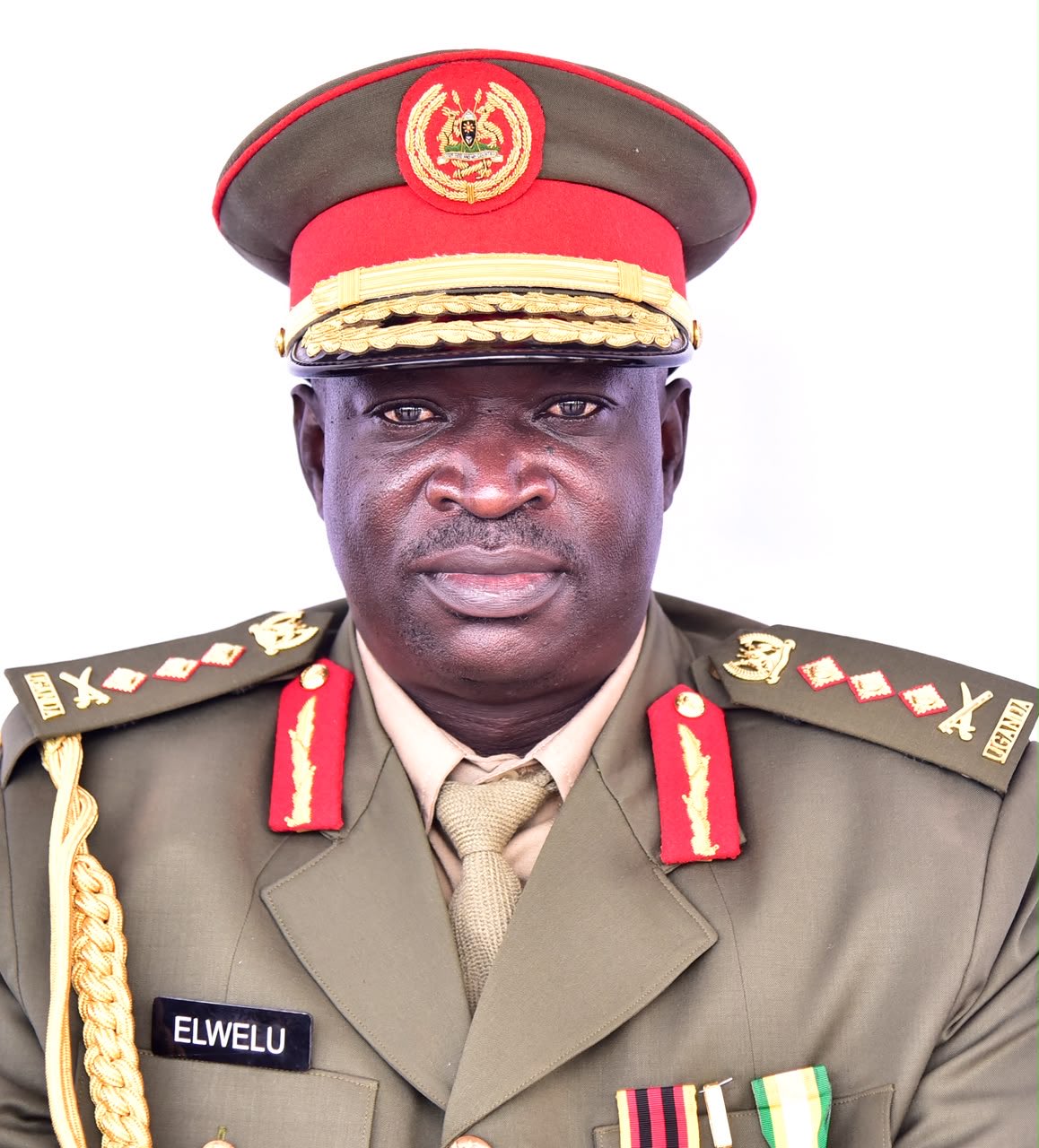
SOROTI, UGANDA | Uganda’s security agencies have arrested retired Lieutenant General Peter Elwelu in Soroti City following an operation linked to allegations of subversive activities and plans to destabilise the Teso sub-region, the Uganda People’s Defence Forces (UPDF) has confirmed.

The arrest was announced on Monday evening by Colonel Chris Magezi, Acting Director of Defence Public Information at the Ministry of Defence and Veteran Affairs. According to the military spokesperson, Elwelu had been sought by security agencies over alleged involvement in activities considered a threat to stability in eastern Uganda.
Col. Magezi further stated that security forces had recently recovered 15 firearms, military uniforms and two pickup trucks reportedly linked to the retired officer. He added that Elwelu would be charged and prosecuted in accordance with the law.
The announcement marks a significant development in a security operation that has attracted national attention, particularly because of Elwelu’s previous position within Uganda’s military leadership. He served as Deputy Chief of Defence Forces from June 2021 to March 2024 and previously commanded the UPDF Land Forces, placing him among the country’s most senior military officers.
His arrest follows several days of heightened public attention surrounding his whereabouts and security operations in parts of Teso. On 27 October, Chief of Defence Forces General Muhoozi Kainerugaba announced that more than 20 former soldiers associated with Elwelu had been arrested. Subsequent reports also indicated that security agencies were pursuing investigations into alleged weapons stockpiles and possible mobilisation activities. These claims remain matters for formal investigation and judicial determination.
The developments carry particular significance for Teso, a region whose experience of insecurity has been shaped by decades of armed conflict, displacement and community efforts to restore stability. The Arrow Boys, a local self-defence formation established in 2003 in response to threats from the Lord’s Resistance Army, are part of that history. Their emergence illustrates the lasting social and security consequences of prolonged insurgency in eastern Uganda.
For communities that have experienced conflict, renewed security concerns can affect more than the immediate law-enforcement environment. Public confidence, livelihoods, movement, investment and access to essential services depend on predictable security and the assurance that disputes are addressed through established institutions. It is therefore important that security operations remain professional, proportionate and attentive to civilian welfare.
Elwelu is also a figure associated with one of Uganda’s most consequential military operations in recent history. In November 2016, he commanded the UPDF Second Division during the raid on the Rwenzururu Kingdom palace in Kasese. The operation resulted in more than 100 deaths, according to contemporaneous reporting, and generated substantial national and international scrutiny over the conduct of security forces and the protection of civilians. The episode remains an important reference point in discussions about accountability, civilian protection and the exercise of state security authority.
The latest arrest should, however, be assessed on the evidence relating to the present allegations rather than treated as proof of guilt. Uganda’s constitutional and judicial framework provides for the presumption of innocence and the right to a fair hearing. The authorities will therefore be expected to establish the allegations through lawful procedures, clarify the charges and ensure that any evidence recovered is handled in accordance with the applicable law.
For the government, the immediate priority is to protect public safety, prevent any threat to constitutional order and reassure residents that security institutions remain accountable. For the people of Teso, the priority is equally clear: stability must be preserved without allowing fear, speculation or disruption to undermine everyday life.
As investigations proceed, timely and credible communication from the relevant authorities will be essential. The public deserves verified information about the circumstances of the arrest, the status of the investigations and the legal process to follow. Ultimately, the significance of this development will be measured not simply by the arrest of a former senior military officer, but by the ability of institutions to uphold the rule of law, safeguard communities and demonstrate that accountability applies consistently, irrespective of an individual’s former position or influence.