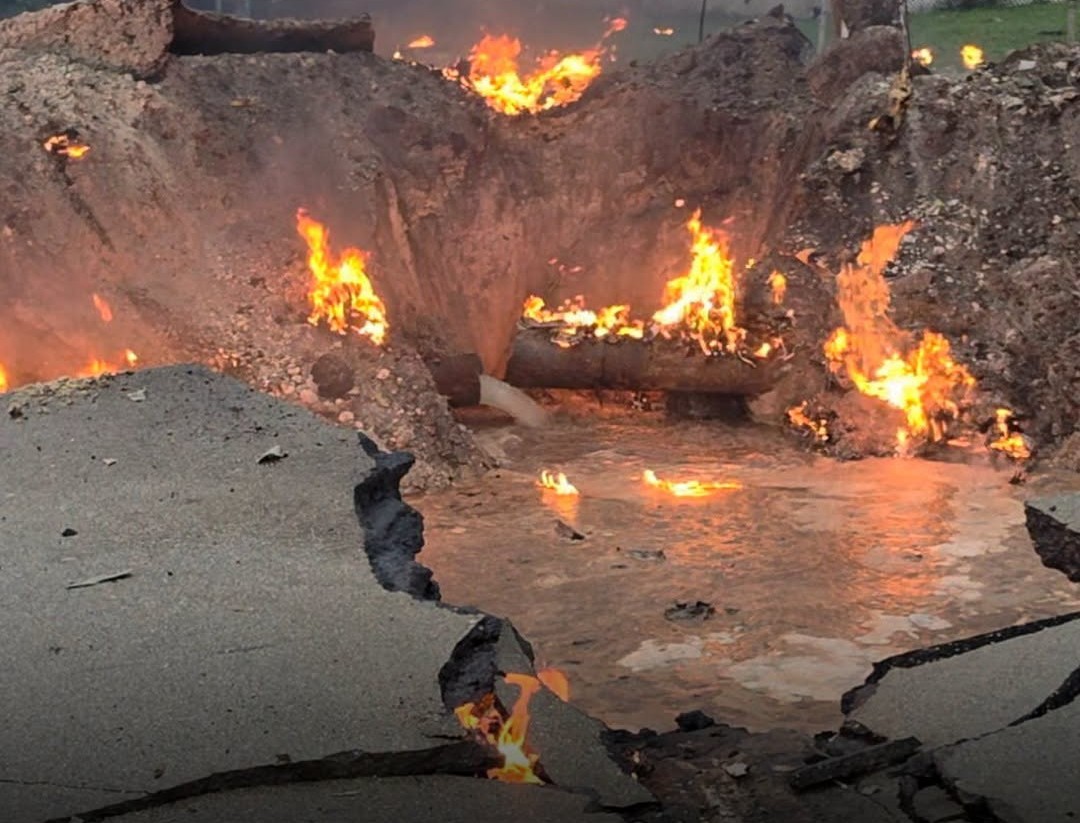
A business jet crashed into a residential neighbourhood in Palm Beach County, Florida, on Sunday, 1 November 2026, killing all nine people aboard and triggering an emergency response that forced hundreds of residents to evacuate their homes.

The aircraft, identified as a Learjet 60, crashed in the Greenacres area near Cresthaven at approximately 12:50 p.m. local time. It had departed Austin-Bergstrom International Airport in Texas and was travelling to North Eleuthera Airport in the Bahamas when disaster struck.
US Transportation Secretary Sean Duffy confirmed the deaths, describing the incident as a horrific tragedy and expressing condolences to the victims’ families. The aircraft reportedly descended at approximately 350 feet per second, equivalent to about 21,000 feet per minute. This extraordinary rate of descent illustrates the severity of the emergency experienced during the flight’s final moments.
Information from air traffic control recordings and flight-tracking data indicates that the aircraft was cruising at approximately 35,000 feet when the crew reported moderate turbulence and ice accumulation. The pilots reportedly requested permission to climb to 37,000 feet. However, shortly afterwards, the aircraft entered a rapid descent and the crew declared an emergency.
In communications with air traffic controllers, the pilots reported an overspeed condition and a rapidly accelerating descent. One of the final transmissions included the words: “We’re going to crash into the ground.” The aircraft subsequently struck the ground and exploded into a fireball, leaving a large crater near a roadway and residential properties.
The National Transportation Safety Board (NTSB) is leading the investigation, with support from the Federal Aviation Administration. Weather conditions, particularly icing and turbulence, are among the factors investigators are examining. However, authorities have cautioned against drawing conclusions before the investigation is complete.
A significant development emerged when investigators recovered parts of the aircraft’s left elevator, a component of the tail assembly responsible for controlling the aircraft’s pitch. The pieces were reportedly discovered between approximately 1.3 and 3.8 miles from the crash site. Investigators say it remains unclear whether the component’s separation contributed to the loss of control or occurred because of the extreme forces experienced during the aircraft’s descent.
Although the crash occurred close to homes and a busy roadway, initial reports indicated that there were no immediate fatalities on the ground. Subsequent reporting identified one person who sustained a leg injury while in a vehicle close to the impact site.
Authorities evacuated approximately 600 residents from a nearby mobile-home community as emergency responders secured the area and investigators began collecting aircraft debris. The investigation is also examining the aircraft’s flight data, available recordings, maintenance history and physical evidence from the wreckage.
The tragedy raises important questions about how aircraft respond to severe icing, turbulence and sudden changes in flight conditions, particularly at high altitude.The Learjet 60’s rapid descent and the discovery of separated aircraft components make the investigation particularly significant for understanding the sequence of events that preceded the crash.
For now, the cause remains undetermined. The NTSB’s findings will be essential in establishing whether weather, mechanical failure, structural damage, operational decisions or a combination of factors contributed to the disaster. The loss of nine lives is a sobering reminder of the importance of aviation safety, rigorous aircraft maintenance, effective emergency procedures and transparent accident investigations.