July 18, 2026

Amiri Wabusimba

Amiri Wabusimba is a communication specialist, diplomatic Scholar, Public Health Advocator, Journalist, political analyst and Human Right activist.

In today’s labour market, the promise that education and effort lead to opportunity is quietly eroding. Across sectors, a growing number of job applicants are encountering recruitment processes that appear increasingly detached from the realities of work itself. At the centre of this concern is the widespread use of aptitude testing an instrument originally intended to strengthen fairness, but which, in practice, is now raising credible questions about transparency, relevance, and accountability.


In countries with youthful populations such as Uganda, where thousands of graduates enter the job market each year, recruitment is not merely an administrative exercise; it is a defining pathway for national productivity and social stability. Yet many applicants report a pattern that is difficult to ignore. Job openings attract hundreds, sometimes thousands, of candidates. These candidates are then subjected to aptitude tests that bear little or no relationship to the actual job requirements. From that pool, a remarkably small number often fewer than twenty progress, creating the perception that the process is less about identifying talent and more about filtering outcomes.


This concern is not abstract, it reflects the lived reality of a generation navigating a highly competitive job market, where the difference between employment and prolonged unemployment may depend not on competence, but on familiarity with obscure testing formats or access to informal networks. In such an environment, aptitude testing risks becoming less a measure of ability and more a mechanism that can be manipulated, whether intentionally or structurally, to produce predetermined results.


In countries like United Kingdom and Canada, testing is rarely used in isolation, Instead, it forms part of a broader, competency-based framework that includes job simulations, structured interviews, and transparent evaluation metrics. Candidates are assessed on what they will actually do in the role, not on abstract reasoning detached from practical application. Moreover, institutions often provide clear guidance on the nature of assessments, reducing uncertainty and strengthening trust in the process.


In contrast, where aptitude tests are poorly aligned with job functions or administered without transparency, they can undermine the very principle of meritocracy. When candidates begin to believe that outcomes are influenced by prior access to test content, informal connections, or internal preferences, confidence in institutions diminishes. This erosion of trust has wider implications. It discourages investment in education, weakens morale among young professionals, and fuels a narrative that systems are closed rather than competitive.


Policy frameworks already recognise the importance of fair recruitment. The International Labour Organization emphasises equal opportunity and non-discrimination as foundational principles in employment practices. Similarly, many public service guidelines across Africa call for merit-based recruitment grounded in transparency and accountability. The gap, therefore, is not necessarily in policy existence, but in policy enforcement and modernisation. Any assessment used in recruitment should be demonstrably linked to the competencies required for the job. This is not a theoretical standard; it is a measurable one. A communications officer should be evaluated on writing, analysis, and messaging. An engineer should be assessed through technical problem-solving relevant to engineering practice, where aptitude testing is retained, it should complement not replace role-specific evaluation.


Independent audits of recruitment processes particularly in large public institutions can provide assurance that standards are being upheld. Digital recruitment platforms, if properly designed, can reduce human discretion and create verifiable records of assessment outcomes. Countries such as Rwanda have begun integrating such systems to enhance credibility in public sector hiring, demonstrating that reform is both feasible and impactful. This is not a call to abandon aptitude testing, it is a call to restore its legitimacy. When properly designed and fairly administered, aptitude assessments can enhance recruitment. When misapplied, they risk excluding capable individuals and distorting labour market outcomes.


For policymakers, regulators, and institutional leaders, the urgency of this issue cannot be overstated. A recruitment system that fails to command public trust ultimately fails to serve its purpose. In a globalised world where talent mobility is increasing, countries that do not safeguard merit-based hiring risk losing their most capable minds to more transparent systems elsewhere. The conversation must therefore move from quiet frustration to deliberate action. Reforming recruitment practices is not only about fairness to applicants; it is about protecting the integrity of institutions and the future of national development. If aptitude tests are to remain part of modern recruitment, they must be reclaimed as instruments of merit not suspicion.

Kampala, Uganda — In the capital’s busiest arcades, shelves glow with promise creams and soaps marketed for radiance, renewal, and transformation. Yet behind this aesthetic appeal lies a quieter contradiction. Some of these products were formally prohibited in 2023 by the Uganda National Bureau of Standards after laboratory analyses linked them to hazardous substances such as Hydroquinone and Mercury. The science was clear, the policy decisive yet their continued presence in open markets raises a deeper governance question: what happens when enforcement becomes intermittent?


Uganda’s equatorial position intensifies the public health stakes. High ultraviolet exposure means melanin is not merely cosmetic it is protective. Substances that suppress melanin or compromise skin integrity heighten vulnerability to long-term health risks, including skin malignancies and organ toxicity. In this context, cosmetic regulation transcends consumer preference; it becomes a matter of preventive healthcare.


The government’s response has not been absent. Enforcement actions, including a major seizure in Kampala in late 2025, demonstrated institutional capability and resolve. But public policy is not ultimately judged by isolated crackdowns it is measured by consistency. A ban, however well-founded, loses credibility if its presence is not felt daily in the marketplace.


The journey of any imported cosmetic product is traceable: from border entry and customs clearance to taxation and retail distribution. Uganda has invested in digital governance systems intended to synchronize agencies and flag irregularities. In principle, a prohibited product should not pass through multiple checkpoints undetected. When it does, the issue is less about intent and more about coordination.


This moment presents not a failure, but an opportunity for institutional refinement. Regulatory ecosystems linking standards bodies, customs, health authorities, and local governments must operate as integrated networks rather than parallel silos. Digital alignment, where banned product codes trigger automatic alerts across agencies, could significantly strengthen enforcement. Routine joint inspections and predictable penalties would further shift incentives, making compliance the rational choice for traders. Beyond enforcement, the persistence of hazardous cosmetics reflects global dynamics. The skin-lightening industry is sustained by cross-border supply chains and deeply rooted social narratives. Uganda’s experience mirrors that of many emerging economies navigating the tension between open markets and consumer protection. Addressing it requires more than regulation it demands engagement.


Public awareness is central. Consumer choices are shaped not only by access but by perception. Educational campaigns that highlight health risks while promoting informed decision-making can gradually reshape demand. The Quality (Q) Mark remains a key symbol of compliance, but its authority depends on consistent verification. A certification must signal ongoing vigilance, not a one-time approval.


Uganda stands at a strategic inflection point. By strengthening inter-agency coordination, leveraging digital oversight, and investing in sustained public education, it can transform a regulatory challenge into a model of governance. The objective is not punitive enforcement, but credible protection. Because in public health, trust is cumulative. Each day of consistent enforcement reinforces it. Each visible gap erodes it. The law is already in place. What remains is its continuity.

Kampala, Uganda — The Embassy of Uganda in Cairo has received a high-level Egyptian delegation comprising leading figures from tourism, media, arts, and investment sectors for a 10-day familiarisation visit aimed at deepening bilateral cooperation and advancing Uganda’s Economic and Commercial Diplomacy (ECD) agenda.


The initiative, anchored in Uganda’s broader foreign policy priorities, seeks to expand trade, tourism, and investment linkages between Uganda and Egypt through structured people-to-people engagement. Upon arrival in Kampala, the delegation was officially welcomed and later hosted at a cultural gala dinner at Ndere Cultural Centre, where Uganda’s diverse heritage was showcased through traditional music, dance, and cuisine offering a symbolic introduction to the country’s cultural and tourism identity.


Speaking during the reception, Lt. Gen. Charles Angina, Uganda’s Chargé d’Affaires in Egypt, emphasized the strategic importance of cultural and professional exchanges in translating diplomatic relations into tangible economic outcomes. He noted that the visit directly supports Uganda’s ATMS development framework Agriculture, Tourism, Minerals, and Science & Technology identifying these sectors as key drivers of future growth.


He highlighted Uganda’s expanding opportunities in agro-industrialisation, value addition, tourism infrastructure, and mineral exploration, encouraging Egyptian investors and partners to explore long-term collaboration. Lt. Gen. Angina further underscored the complementary nature of Uganda and Egypt’s tourism offerings, suggesting the development of integrated travel circuits linking Egypt’s historical heritage with Uganda’s ecological and cultural landscapes.


H.E. Monzer Selim, the Egyptian Ambassador to Uganda, described the visit as a practical expression of public diplomacy, noting that cultural exchange remains a powerful tool in strengthening African cooperation. He encouraged the delegation to act as informal ambassadors of Uganda upon return, sharing insights with Egyptian audiences and promoting greater awareness of Uganda’s opportunities. He further highlighted the significance of South-South cooperation in reshaping development narratives across the continent.


Uganda Tourism Board Chief Executive Officer Juliana Kaggwa commended the coordinated efforts between both missions, noting that strategic partnerships of this nature are essential in positioning Uganda as a competitive global destination. She emphasized the potential for increased tourist flows from Egypt and the broader North African region.


Representing the delegation, acclaimed Egyptian actor and producer Mahmoud Hemida described Uganda as “culturally rich and visually compelling,” noting that the experience had challenged and expanded his perception of the country. Other delegates, including media professionals, tourism executives, and documentary filmmakers, expressed interest in strengthening professional and commercial linkages with Ugandan counterparts.

Over the course of the visit, the delegation will tour key tourism circuits, agricultural value chains, and investment zones across Uganda. The engagement is expected to enhance destination visibility, foster sector partnerships, and contribute to long-term market development.

The initiative reinforces Uganda’s continued commitment to leveraging cultural diplomacy, strategic partnerships, and private sector engagement as instruments for sustainable economic growth under its Economic and Commercial Diplomacy framework.

Brussels — As part of a broader effort to strengthen agricultural competitiveness and deepen trade linkages with Europe, a Ugandan delegation of farmers and private sector actors undertook a strategic visit to Rijk Zwaan in the Netherlands. The engagement, held on the second day of the Agri and Horticultural Trade Mission, underscores Uganda’s commitment to modernizing its agricultural systems through knowledge exchange and international partnerships.

Led by the Executive Director of the Private Sector Foundation Uganda, Stephen Asiimwe, alongside Ambassador Beatrice Pacunega, the delegation sought to explore innovations in seed technology, horticultural practices, and market-oriented production. The visit forms part of a wider diplomatic and economic agenda aimed at positioning Uganda as a reliable supplier of high-quality agricultural produce within global value chains.

Rijk Zwaan, a globally respected enterprise in vegetable breeding and seed development, has built its reputation on advancing resilient and high-yield crop varieties tailored to diverse climatic conditions. Its collaboration in Uganda, facilitated through Holland Greentech, has already contributed to improved access to quality seeds and technical expertise for local farmers over the past decade.

During the visit, the Ugandan delegation engaged with agronomists and technical experts to better understand emerging trends in sustainable agriculture, including climate-smart farming, precision irrigation, and post-harvest value addition. These discussions are particularly relevant for Uganda, where agriculture remains a cornerstone of the economy, employing a significant proportion of the population while facing challenges related to productivity, market access, and climate variability.

The mission reflects a growing recognition among policymakers and industry stakeholders that enhancing agricultural output must go hand in hand with improving quality standards and compliance with international markets. Europe, in particular, presents both an opportunity and a benchmark demanding consistency, traceability, and adherence to stringent phytosanitary requirements.

By fostering direct engagement with institutions such as Rijk Zwaan, Uganda is positioning its farmers to move beyond subsistence-oriented production toward commercially viable, export-driven agriculture. The emphasis on value addition ranging from improved packaging to processing signals an intention to capture greater economic returns across the supply chain.

As the trade mission progresses, its impact will ultimately be measured by how effectively these insights are translated into practice back home. If successfully implemented, the knowledge and partnerships cultivated through this visit could contribute meaningfully to Uganda’s agricultural transformation enhancing productivity, strengthening export capacity, and reinforcing the country’s integration into global food systems.

Kampala — Uganda’s Minister of State for International Affairs, Hon. Okello Oryem, held bilateral discussions with Chaloka Beyani, underscoring the country’s diplomatic posture on regional peace, security, and conflict prevention. The meeting, convened at the Ministry of Foreign Affairs, focused on strengthening frameworks for the peaceful settlement of disputes, with particular emphasis on preventing the escalation of conflicts that can culminate in mass atrocities, including genocide. Both sides highlighted the urgency of reinforcing early warning systems and sustaining political will to address emerging crises before they deteriorate.

Minister Oryem reiterated Uganda’s long-standing engagement in regional stabilization efforts, pointing to its involvement in peace processes and security interventions across the Horn of Africa and the Great Lakes region. He emphasized that Kampala remains committed to advancing practical, results-driven approaches to conflict prevention, even as it navigates what he described as “misleading narratives” that at times understate Uganda’s contributions to regional security. Uganda, he noted, continues to work through multilateral and regional platforms such as the United Nations, the African Union, the Intergovernmental Authority on Development, and the International Conference on the Great Lakes Region. These partnerships, alongside bilateral engagements, remain central to its foreign policy orientation on peacebuilding and conflict resolution.

Discussions also turned to the ongoing crisis in Sudan, where both parties acknowledged the complexity of the conflict and the need for coordinated diplomatic efforts. They stressed that sustainable peace will depend on inclusive dialogue among all stakeholders, backed by coherent regional and international support mechanisms. In addition, the meeting highlighted the importance of accountability in post-conflict settings. Strengthening judicial systems at both national and regional levels was identified as critical to addressing war crimes, deterring future violations, and ensuring justice for victims.

Mr. Beyani, appointed by António Guterres in August 2025, is currently undertaking a regional mission aimed at consulting key actors involved in peace processes. Based at the United Nations Headquarters in New York, his mandate focuses on advancing strategies to prevent genocide and related atrocities through early engagement and policy coordination. Following his engagements in Kampala, Mr. Beyani is expected to continue to Juba in the South Sudan, where he will meet senior government officials and other stakeholders as part of ongoing efforts to reinforce regional peace initiatives. The Kampala discussions reflect a broader alignment between national and international actors on the necessity of proactive diplomacy in addressing Africa’s evolving security challenges.

Chennai, India (April 13–17, 2026) — The India–Uganda Business Forum convened in Chennai this week, marking a significant step in advancing bilateral trade and investment cooperation between the two countries. Bringing together policymakers, diplomats, and private sector leaders, the forum underscored a shared commitment to translating long-standing diplomatic ties into tangible economic outcomes.


The Ugandan delegation was received by RV Chari, Chairman of the Confederation of Indian Industry (CII) Chennai Zone and Managing Director of GI Induction, alongside Vinod Saraogi Kumar, Uganda’s Honorary Consul in Chennai. In his remarks, Chari emphasized that India–Uganda relations are anchored in historical linkages, strong people-to-people connections, and shared democratic values. He noted that these foundations have, over time, evolved into structured economic cooperation supported by high-level engagements and institutional partnerships. India remains one of Uganda’s key economic partners, with growing trade volumes and a visible presence across sectors including pharmaceuticals, agriculture, manufacturing, ICT, education, and renewable energy. Chari highlighted the role of the CII in fostering Africa-focused engagement, particularly through the India Africa Conclave, which has become a major platform for business dialogue and cross-continental partnerships.


Addressing the forum, Kumar pointed to Uganda’s accelerating economic trajectory, positioning the country and the broader East African region as a frontier for investment. He cited macroeconomic stability, a conducive business environment, and Uganda’s resource endowment as central drivers of investor confidence. Emphasizing both agricultural potential and mineral wealth, he encouraged Indian businesses to explore opportunities supported by facilitative frameworks such as Uganda’s One-Stop Investment Centre. He also underscored Uganda’s strategic location, offering access to regional markets through established trade corridors across East Africa.


Uganda’s High Commissioner to India, Ambassador Prof. Joyce Kakuramatsi Kikafunda, framed the forum within the broader context of resilient bilateral relations. Reflecting on historical challenges, including the expulsion of Asians in 1972, she noted the subsequent restoration of trust under President Yoweri Museveni’s leadership, which has enabled the return and reintegration of a vibrant Indian diaspora now exceeding 40,000 people. Ambassador Kikafunda outlined Uganda’s investment priorities, highlighting sectors such as agro-industrialization, value addition, science and technology, and mineral development, including oil and gas. She revealed that Uganda is on track to commence oil production by July 2026, opening new avenues for downstream investment. While bilateral trade currently stands at approximately USD 1.4 billion largely in India’s favor she emphasized Uganda’s export potential of up to USD 900 million, much of which remains untapped.


Positioning Uganda as the “heart of Africa,” she called for strategic investments that leverage regional integration and support the country’s long-term development agenda under Vision 2040. The forum concluded with a renewed call for private sector collaboration to drive inclusive growth and rebalance trade, reinforcing the message that Uganda is firmly open for business.

Kampala, Uganda — Uganda’s positioning as an emerging global tourism destination received renewed endorsement this week, following an 11-day familiarization tour by Canadian tour operators, influencers, and travel professionals. The delegation, comprising travel journalists, investors, and media practitioners, concluded their nationwide expedition with a debrief at the Ministry of Foreign Affairs, where they shared reflections that consistently pointed to Uganda as a market-ready destination for the North American audience. The tour, coordinated by the Uganda High Commission in Ottawa, forms part of a broader strategy to deepen tourism diplomacy and expand Uganda’s footprint in Canada’s outbound travel market. Participants visited key destinations across the country, engaging with Uganda’s diverse ecosystems, wildlife reserves, and cultural heritage sites.


Addressing the delegation, Undersecretary Stephen Kyaterekera emphasized the Government’s sustained commitment to leveraging tourism as a pillar of economic transformation. He highlighted Uganda’s comparative advantages ranging from biodiversity to cultural richness while noting a steady increase in Canadian arrivals, from 7,542 in 2022 to 9,688 in 2024. The upward trend, he observed, reflects growing interest but also signals significant untapped potential.  Kyaterekera underscored the strategic value of experiential promotion, noting that while diplomatic missions play a role in marketing destinations, authentic narratives from international visitors carry greater influence in shaping perception. This aligns with evolving global tourism trends, where peer-driven storytelling and digital influence increasingly inform travel decisions.


Members of the delegation described Uganda as “unexpectedly diverse” and “deeply authentic,” citing national parks, cultural immersion experiences, and the hospitality of local communities as standout elements. Beyond leisure, they identified opportunities for investment in eco-tourism, hospitality infrastructure, and sustainable resource utilization areas seen as critical to scaling Uganda’s tourism sector. Supporting this outlook, Ambassador Allan Kajik, Chargé d’Affaires in Ottawa, pointed to ongoing infrastructure developments aimed at enhancing accessibility. These include new and upgraded air transport facilities designed to connect remote tourism circuits to international gateways. He also addressed prevailing misconceptions around safety, reaffirming Uganda’s stability as a destination open to visitors across all regions.


The engagement further highlighted the role of diaspora and media partnerships in strengthening bilateral ties. With an estimated 20,000 Ugandans residing in Canada, stakeholders view the diaspora as a strategic bridge for cultural exchange, investment, and destination marketing. As Uganda advances its economic and commercial diplomacy agenda, tourism remains central to its growth strategy. The visiting delegation’s commitment to promote Uganda across Canada and North Americawith ambitions to double arrivals to over 20,000 by 2028 signals growing confidence in the country’s global tourism proposition. In a competitive global travel landscape, Uganda’s appeal appears to rest not only in its natural assets, but in its ability to offer experiences that resonate beyond the itinerary an advantage increasingly shaping destination choices worldwide.


Kampala, Uganda — Uganda and Kenya have reiterated their enduring diplomatic and economic partnership following the presentation of copies of Letters of Credence by Kenya’s High Commissioner-designate, Ambassador Ababu Namwamba, to the Minister of State for Regional Cooperation, Hon. John Mulimba, at the Ministry of Foreign Affairs in Kampala. The ceremonial engagement, while procedural in nature, underscored the broader strategic importance both nations attach to their bilateral relations long regarded as a cornerstone of regional stability and integration within the East African Community (EAC).


Hon. Mulimba welcomed the envoy with a message of continuity and cooperation, congratulating Ambassador Namwamba on his appointment and reaffirming Uganda’s commitment to facilitating a productive diplomatic tenure. He highlighted the historical bonds between Uganda and Kenya, noting that the relationship is anchored in shared cultural heritage, economic interdependence, and aligned regional aspirations. “The ties between our two Republics are not only longstanding but forward-looking,” Mulimba noted, emphasizing the importance of sustained collaboration in advancing peace, economic growth, and regional integration.


In his remarks, Ambassador Namwamba conveyed appreciation for the warm reception accorded to him, signaling Kenya’s intent to deepen cooperation across key sectors. He identified peace and security collaboration, alongside trade and investment promotion, as central priorities of his mission in Uganda. The High Commissioner-designate further pointed to tourism development and joint infrastructure projects as critical enablers of economic transformation. Such initiatives, he observed, hold the potential to stimulate cross-border commerce, enhance value addition, and create employment opportunities for citizens in both countries.


The meeting also provided an opportunity for both sides to align on pressing regional priorities. Emphasis was placed on the need to accelerate East African integration through practical measures, including the reduction of non-tariff barriers that continue to constrain intra-regional trade. Both parties reaffirmed their commitment to strengthening people-to-people linkages, recognizing that social and cultural exchanges remain vital to sustaining diplomatic goodwill and economic cooperation. They also agreed on the importance of regular high-level consultations to ensure momentum in the implementation of agreed initiatives.


The presentation of credentials marks a key step in Ambassador Namwamba’s formal assumption of duties, setting the stage for renewed diplomatic engagement between Kampala and Nairobi at a time when regional collaboration is increasingly seen as essential to navigating global economic and security challenges. As Uganda and Kenya continue to position themselves as pivotal actors within the EAC framework, the tone set during this engagement reflects a shared determination to translate diplomatic goodwill into tangible outcomes for their respective populations.


Kampala, Uganda — At a time when global news cycles are accelerating and public discourse is increasingly shaped by brevity, Shanix Marketing and Media Agency has launched Daily Thinkers, a digital publication designed to recalibrate the balance between speed and substance in journalism. Branded under the tagline, “Thinking Beyond the Headlines,” the platform positions itself within a growing movement that prioritizes context, policy insight, and measured analysis particularly across Africa’s evolving media landscape. The launch signals more than the arrival of a new newsroom; it reflects a broader editorial intervention into how stories about Africa are framed, interpreted, and consumed. As debates around misinformation, narrative ownership, and media credibility intensify globally, Daily Thinkers enters the space with a clear proposition: journalism must not only report events, but also illuminate their meaning.


Speaking at the unveiling, Founding Editor and Publisher Amiri Wabusimba emphasized the need for a deliberate shift in editorial culture. He observed that while access to information has expanded significantly, the capacity to interpret that information responsibly has not kept pace. In his remarks, he framed the platform as a response to what he described as a widening “context gap” in contemporary reporting. “Information today travels with unprecedented speed,” he noted. “But without context, it risks losing its value. Our responsibility is to ensure that readers are not only informed, but equipped to understand the forces shaping their societies.”


This philosophy is embedded in the platform’s editorial architecture. Daily Thinkers brings together contributors from journalism, academia, diplomacy, and policy practice, creating a multidisciplinary approach to storytelling. Coverage spans global affairs, governance, economics, real estate, culture, and sports areas increasingly interconnected in shaping both national trajectories and international engagement. Within the African context, the platform’s emergence aligns with a discernible shift in audience expectations. Policymakers, business leaders, and a rising cohort of young professionals are demonstrating greater appetite for in-depth reporting that goes beyond headline summaries. By situating African developments within global frameworks, Daily Thinkers seeks to contribute to a more balanced narrative one that reflects both the continent’s complexities and its strategic relevance.


Editorially, the platform affirms adherence to established journalistic standards, including independence, fairness, and accountability. At the same time, it adopts a tone that is deliberately constructive and diplomatic, aiming to foster dialogue rather than polarization. This approach reflects an understanding that media, particularly in emerging economies, plays a critical role not only in informing the public but in shaping policy conversations and investment climates. Beyond its publishing mandate, Daily Thinkers outlines ambitions to function as a convening space bridging perspectives across sectors and geographies. Plans to collaborate with institutions, researchers, and practitioners point to a model that extends beyond traditional newsroom boundaries, reflecting a hybrid between journalism and policy analysis.


For Shanix Marketing and Media Agency, the initiative represents a strategic investment in thought leadership at a moment when trust has become one of the most contested currencies in media. It also underscores confidence in African-led platforms to define narratives with both nuance and authority, rather than relying solely on external interpretations. The launch raises important questions about the sustainability of depth-driven journalism in an attention economy often dominated by immediacy. Yet it also highlights an emerging opportunity: that audiences, when offered credible and insightful content, are willing to engage beyond the surface. As Amiri concluded, the platform’s mission is anchored in a simple but increasingly relevant premise: “In a world where information is abundant, understanding becomes the true measure of value.” With this foundation, Daily Thinkers enters the digital media ecosystem not as a competitor in speed, but as a contributor to clarity an approach that may well define the next phase of journalism in Africa and beyond.


At the gracious invitation of his Turkish counterpart, H.E Hakan Fidan, the Honorable Minister of Foreign Affairs of the Republic of Uganda, Hon. Odongo Jeje Abubaker, has embarked on an official visit to Antalya, Türkiye, to participate in the 5th edition of the Antalya Diplomacy Forum (ADF2026), due to take place on 17 – 19 April 2026 at the NEST Congress and Exhibition Centre. The theme of ADF2026 is “Mapping Tomorrow, Managing Uncertainties.”


During the 5th edition of the ADF2026, Hon. Odongo will deliver a keynote address as a distinguished panelist on the topic,Investing in Africa’s Future: Strategy, Scale and Competitiveness”, which resonates deeply with Uganda’s vision for investment in critical sectors to accelerate socioeconomic transformation.


On the sidelines of ADF2026, Hon. Odongo will also hold high-level bilateral engagements with Turkish Foreign Minister, Hakan Fidan, and other esteemed foreign ministers. The Minister will seek to fortify Uganda’s diplomatic footprint and explore avenues for mutually beneficial cooperation with Turkiye and other participating countries. He is accompanied by Uganda’s Ambassador to Türkiye, Nusura Tiperu, and other senior officials from the Ministry of Foreign Affairs.


The ADF2026 provides a pivotal platform for international stakeholders to convene, deliberate, and chart a course for a more resilient and harmonious global order. Uganda’s participation underscores its unwavering dedication to global diplomacy and collaborative problem-solving

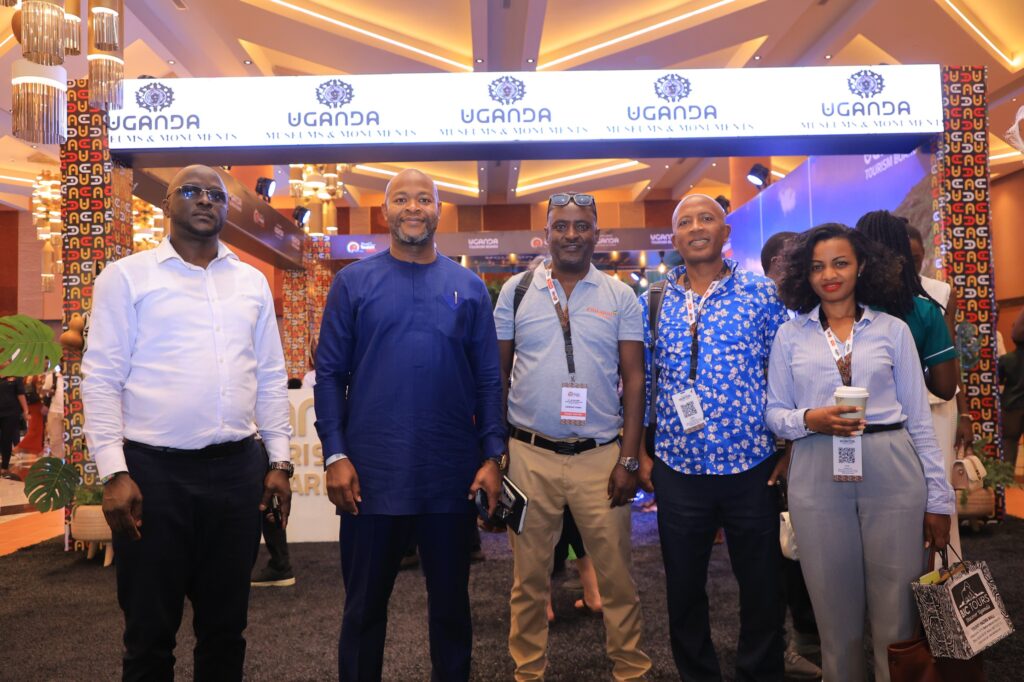
Uganda was honoured to participate in the Turkmen Travel and Tourism Expo 2026—an important platform for strengthening cultural diplomacy and advancing global tourism partnerships.

Amb. Matata extended his sincere appreciation to the Rector for the warm hospitality and to the Government of Turkmenistan for the gracious invitation. Uganda is proud to be part of this meaningful engagement.

Uganda and Turkmenistan have enjoyed cordial relations since 1999, built on mutual respect and sustained through cooperation in multilateral platforms, including the United Nations. There is strong potential to further deepen these ties through enhanced people-to-people connections and cultural exchange.

Uganda proudly showcases a rich cultural heritage, with over 56 tribes, vibrant traditions, and historic kingdoms. From the UNESCO-listed Kasubi Tombs to the captivating performances at the Ndere Cultural Centre, cultural tourism continues to serve as a powerful bridge for connection and shared prosperity.

We are also honoured to have received an Award of Participation at the Expo, received by Mr. Sseremba, Under Secretary, Ministry of Tourism.

As we look ahead, we remain committed to strengthening collaboration in tourism, culture, and diplomacy—building lasting partnerships that contribute to peace, cooperation, and sustainable development.

#Uganda #Turkmenistan #Tourism #CulturalDiplomacy #TravelExpo2026 #GlobalPartnerships

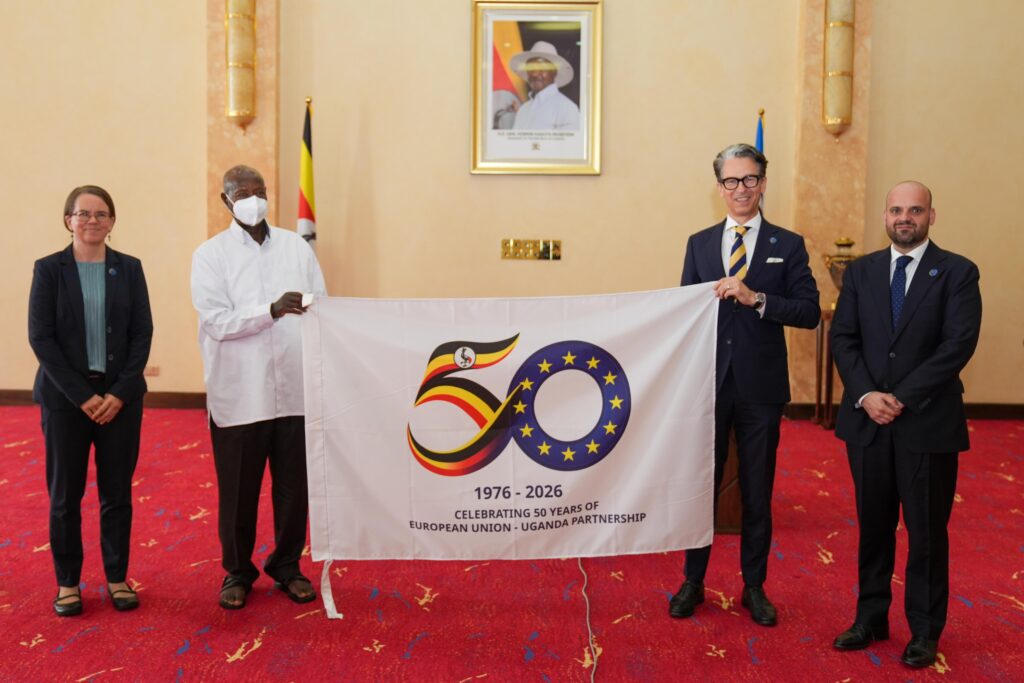
A high-level public diplomacy engagement hosted at Cavendish University Uganda brought into focus five decades of cooperation between European Union and the Republic of Uganda, offering a reflective and forward-looking dialogue anchored in youth engagement, multilateralism, and sustainable development. Convened under the theme “EU Foreign Policy Goals, Ambitions, Achievements and Prospects: Reflections on 50 Years of EU–Uganda Partnership,” the forum underscored the enduring relevance of public diplomacy in shaping informed and inclusive international relations.

Delivering the keynote address on behalf of the Permanent Secretary, Brian Mwesigwa, Minister Counselor at the Ministry of Foreign Affairs, traced the origins of the partnership to the establishment of the EU Delegation in Kampala in 1976. He observed that over five decades, the relationship has remained firmly grounded in dialogue, mutual trust, and a shared commitment to a rules-based international order. The European Union’s contribution exceeding €5 billion in development cooperation, complemented by significant private investment has supported Uganda’s socio-economic transformation, particularly in infrastructure, social services, and post-conflict recovery.

As Uganda’s development trajectory evolves, so too has the character of the partnership. Emphasis has progressively shifted toward sustainable growth, private sector development, and job creation, with particular attention to the country’s youthful demographic. With one of the youngest populations globally, Uganda’s “youth dividend” was highlighted as both a strategic opportunity and a policy imperative. Investments in digital infrastructure, innovation ecosystems, and micro, small and medium-sized enterprises are enabling greater participation of young people and women in the economy, fostering resilience and inclusion. The European Union’s continued support in humanitarian response was equally acknowledged, particularly in light of Uganda’s progressive refugee policy, which has positioned the country among the largest refugee-hosting nations in Africa. EU assistance has strengthened both emergency response mechanisms and long-term resilience among host communities, reinforcing shared principles of solidarity and responsibility.

In his remarks, Jan Sadek offered a candid reflection on the evolving practice of diplomacy in a digital era. He emphasized that modern diplomacy increasingly extends beyond formal channels into public engagement, where transparency, accessibility, and dialogue with citizens especially young people are indispensable. Through digital platforms and open forums, diplomacy is becoming more participatory, complementing traditional statecraft with real-time interaction and public accountability. Ambassador Sadek further reflected on the European Union’s own historical evolution as a peace project rooted in cooperation, integration, and shared governance. While acknowledging contemporary global complexities, he reaffirmed the EU’s commitment to multilateralism and enduring partnerships with regions such as Africa.

The engagement at Cavendish University Uganda thus served not only as a commemoration of past achievements but also as a strategic platform for cultivating the next generation of global actors. As EU–Uganda relations advance, their continued vitality will depend on adaptive diplomacy, inclusive growth, and the active participation of informed and engaged citizens.