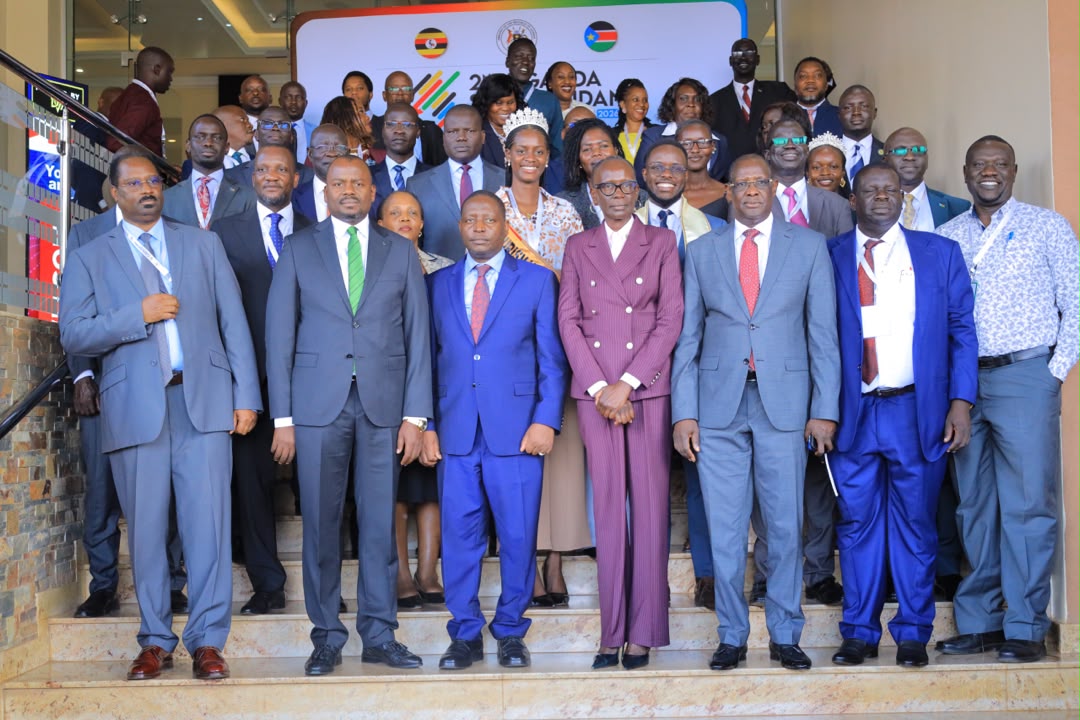
Kampala | Uganda and South Sudan have reaffirmed their commitment to strengthening bilateral trade, expanding investment and resolving cross-border business challenges following the conclusion of the Second Uganda–South Sudan Business Forum and Exhibition 2026. The forum culminated in the signing of a Memorandum of Understanding (MoU) on Trade, providing a framework for regular consultations, information-sharing, trade promotion and investment facilitation.
The renewed commitment comes against the backdrop of significant commercial ties between the neighbouring countries. According to South Sudan’s National Bureau of Statistics, recorded trade between South Sudan and Uganda totalled approximately US$313.49 million in 2024, making Uganda one of South Sudan’s major trading partners. The figures comprised US$298.45 million in South Sudanese imports from Uganda and US$15.03 million in exports to Uganda, highlighting the substantial role of Ugandan goods in the South Sudanese market and the opportunity to diversify trade in both directions.
Hon. Haruna Kyeyune Kasolo, Minister of State for Foreign Affairs in charge of Regional Cooperation, officially closed the forum, emphasising that sustained dialogue and effective institutional cooperation are essential to addressing concerns raised by business communities. He called for the implementation of regional integration commitments under the East African Community (EAC) and the Common Market for Eastern and Southern Africa (COMESA), noting that regional frameworks must translate into practical benefits for traders and investors. Hon. Kasolo reaffirmed the Ministry of Foreign Affairs’ commitment to working with relevant ministries, institutions and diplomatic missions to ensure that the forum’s recommendations lead to tangible economic outcomes.
South Sudan’s National Minister of Trade and Industry, Hon. Dr. Labanya Margaret Mathya Ugila, described trade as a driver of economic development through the exchange of goods, services, knowledge and expertise. She recognised Uganda as a longstanding partner whose friendship and hospitality have supported the people of South Sudan since before independence. Dr. Ugila also stressed the importance of cooperation in product quality assurance, certification and standards, alongside policies that facilitate the movement of goods and services. She underscored the private sector’s role in creating jobs, strengthening regional trade corridors and supporting economic growth.
On Uganda’s side, Hon. David Bahati, Minister of State for Trade, Industry and Cooperatives in charge of Industry, highlighted industrialisation, reliable energy supply and value addition as important foundations for regional economic transformation. He pointed to opportunities for Uganda to expand iron ore processing and steel manufacturing, while encouraging South Sudan to strengthen its energy capacity and explore cross-border energy cooperation.
The signed trade MoU is expected to support regular consultations, information-sharing, trade promotion and investment facilitation, including collaboration in agriculture and industrial development. Its effectiveness will depend on implementation, coordination between public institutions and the removal of practical barriers that increase the cost and complexity of doing business across borders.
Mr. Vincent Bagiire Waiswa, Permanent Secretary of Uganda’s Ministry of Foreign Affairs, commended the countries’ longstanding relationship, and rooted in geographical proximity, historical ties, people-to-people connections and complementary economic interests. He expressed confidence that the forum would produce practical recommendations to improve the business environment and unlock opportunities for the private sector.
With recorded bilateral trade already exceeding US$300 million in 2024, the next priority is to deepen the relationship through more balanced trade, stronger quality standards, efficient border procedures, value addition and increased private-sector investment. For Uganda and South Sudan, converting political goodwill into predictable rules and reliable trade corridors will be essential to creating jobs, expanding markets and advancing regional integration.