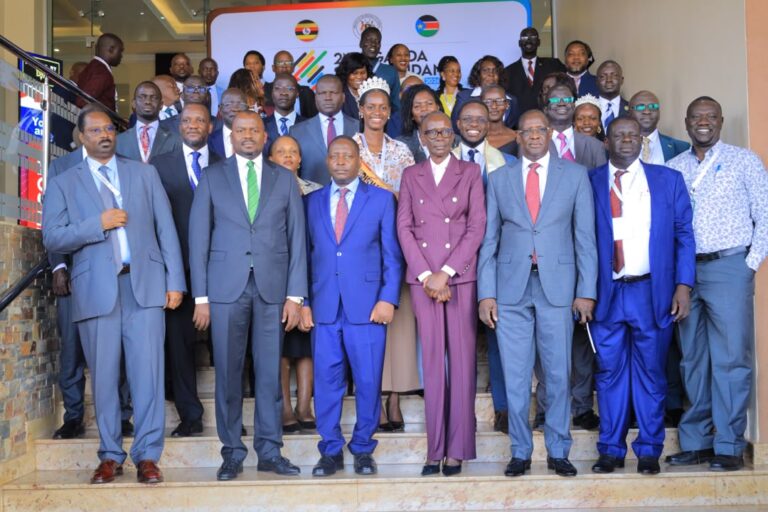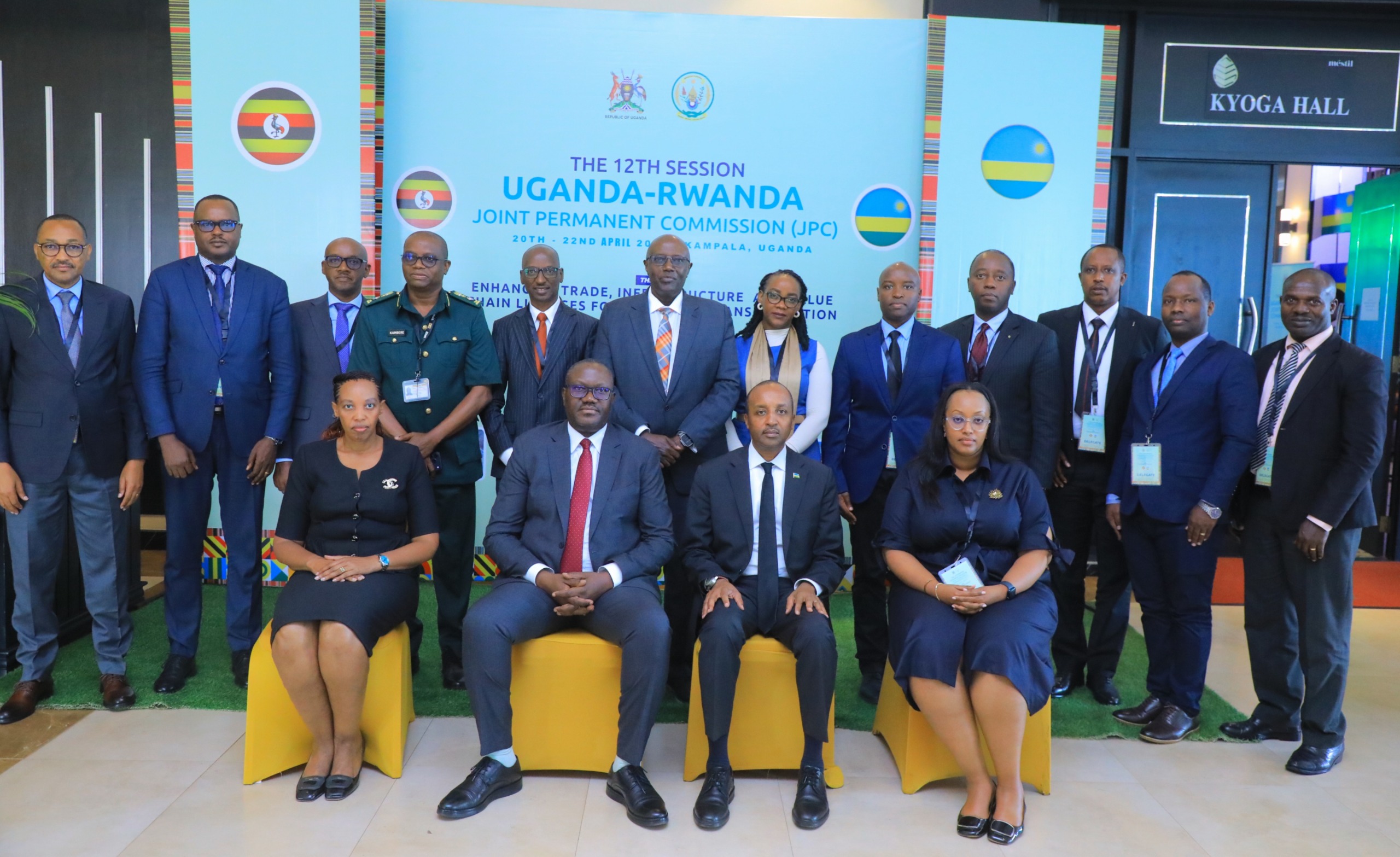
Kampala, Uganda — Uganda and Rwanda have reaffirmed their commitment to strengthening bilateral cooperation following the successful convening of the 12th Session of the Joint Permanent Commission (JPC), held in Kampala. The meeting, which brought together senior government officials and policymakers from both countries, signals a renewed diplomatic momentum aimed at advancing regional integration, economic cooperation, and long-term stability in the Great Lakes region.
The session, hosted at Mestil Hotel in Kampala, was co-chaired by Uganda’s Minister of State for Foreign Affairs (Regional Affairs), Hon. John Mulimba, and Rwanda’s Minister of State for Foreign Affairs, Hon. Dr. Usta Kaitesi. It followed the 11th JPC session held in Kigali in March 2023 and served as a platform to review progress, address emerging challenges, and set new priorities for collaboration.
At the heart of the discussions was a shared recognition of the steady progress made in implementing previous agreements. Both delegations expressed satisfaction with advancements in key sectors, including defence and security, immigration, infrastructure, information and communication technologies, as well as trade and customs. These areas, officials noted, are central to facilitating cross-border movement, enhancing economic exchange, and building mutual trust between the two nations.
The Ministers emphasized that sustained coordination remains critical to maintaining this positive trajectory. They called on technical teams and senior officials to strengthen institutional linkages and work collaboratively to resolve practical bottlenecks affecting trade flows and the movement of people. Such coordination, they noted, is essential not only for bilateral relations but also for broader regional stability within the East African Community framework.
A notable outcome of the session was the expansion of cooperation into additional strategic sectors. Both countries agreed to deepen partnerships in investment promotion and facilitation, tourism development particularly within the Meetings, Incentives, Conferences, and Exhibitions (MICE) segment as well as conservation and sustainable tourism. These areas reflect a forward-looking agenda that aligns economic growth with environmental stewardship and global tourism trends.
In a demonstration of this strengthened partnership, Uganda and Rwanda signed four Memoranda of Understanding (MoUs) covering health, education, agriculture, and local government. These agreements are expected to reinforce institutional collaboration and provide structured pathways for implementing joint initiatives that directly impact citizens’ livelihoods.
The reaffirmation of cooperation in agriculture and local governance is particularly significant, given the role these sectors play in rural development and service delivery. Similarly, collaboration in health and education underscores a shared commitment to human capital development an area increasingly viewed as foundational to sustainable economic progress.
Both sides reiterated their commitment to ensuring that agreed initiatives are implemented effectively and within agreed timelines. The emphasis on tangible outcomes reflects a shift toward results-driven diplomacy, where bilateral engagements are measured not only by agreements signed but by their real-world impact on communities and economies.
Importantly, the session also highlighted the role of high-level political leadership in guiding bilateral relations. The continued engagement between Uganda and Rwanda under the leadership of their respective Heads of State has provided a stable framework within which technical and diplomatic efforts can thrive. Looking ahead, the two countries agreed that the 13th Session of the Joint Permanent Commission will be hosted by Rwanda, with dates to be determined through diplomatic channels. This continuity underscores a shared commitment to institutional dialogue as a mechanism for managing relations and advancing mutual interests.
In a region where cross-border cooperation is increasingly linked to economic resilience and security, the outcomes of the 12th JPC reflect a pragmatic and constructive approach to diplomacy. By prioritizing coordination, expanding areas of partnership, and focusing on implementation, Uganda and Rwanda are positioning their bilateral relationship as a cornerstone of regional integration. As both countries move to operationalize these commitments, the emphasis will now shift from policy alignment to delivery ensuring that diplomatic progress translates into measurable benefits for citizens on both sides of the border.