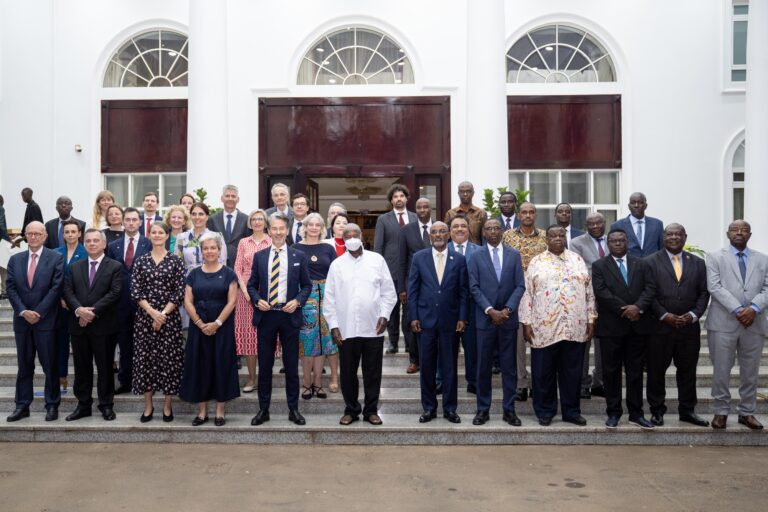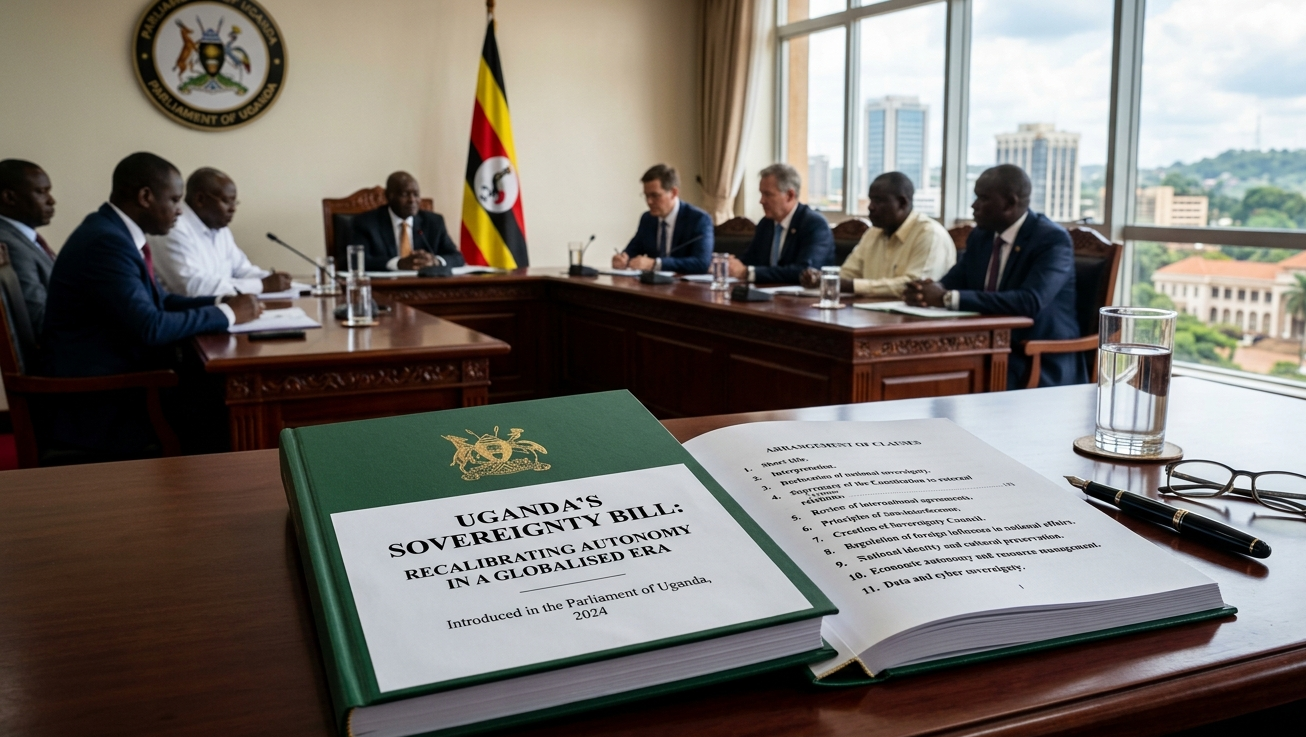
Kampala, Uganda — Uganda’s proposed Sovereignty Bill has ignited a measured but consequential debate across legal, Religious, diplomatic, and economic circles. Framed as an effort to reinforce national autonomy and insulate domestic decision-making from external influence, the bill arrives at a moment when many countries particularly in the Global South are reassessing how to balance sovereignty with the realities of an interconnected world. At its core, the proposed legislation seeks to affirm the primacy of Uganda’s constitutional and legal systems over external directives that may be perceived to conflict with national interests. While details continue to evolve, the bill is widely understood to address concerns around international legal obligations, external funding conditionality’s, and the growing influence of global governance frameworks on domestic policy.
For proponents, the argument is grounded in principle. Sovereignty, they contend, is not merely symbolic; it is a functional necessity for self-determined development. In this view, Uganda like many developing economies must retain policy space to pursue its priorities without undue external pressure. The bill is therefore positioned as a corrective measure, reinforcing the country’s agency in shaping its legal and economic trajectory. This perspective resonates within a broader continental discourse. Across Africa, debates around sovereignty have intensified in recent years, often intersecting with questions of development financing, trade agreements, and regulatory standards. Institutions such as the African Union have consistently emphasized the importance of “African solutions to African problems,” a principle that underscores the desire for locally grounded policy frameworks.
Yet the Sovereignty Bill also raises complex questions particularly regarding Uganda’s engagement with international partners. In an era where economic growth is closely tied to global integration, the recalibration of sovereignty must be managed with precision. Uganda’s trade relationships, development partnerships, and multilateral commitments are embedded within systems governed by institutions such as the World Trade Organization and financial frameworks linked to organizations like the International Monetary Fund. Any legislative shift that appears to redefine these relationships will inevitably attract scrutiny. From a local perspective, the implications of the bill are likely to be both practical and perceptual. On one hand, a stronger assertion of sovereignty could enhance public confidence in national institutions, reinforcing the idea that policy decisions are made with domestic priorities at the forefront. This may resonate particularly in sectors where citizens perceive external influence as misaligned with local realities.
On the other hand, there are legitimate concerns about how the bill will affect governance standards, regulatory predictability, and investor confidence. Businesses both domestic and foreign tend to operate best in environments where legal frameworks are stable and internationally coherent. If the bill is interpreted as creating divergence from established norms, it could introduce uncertainty, particularly in sectors reliant on cross-border investment and partnerships. The diplomatic dimension is equally significant. Uganda has historically maintained a pragmatic foreign policy, balancing regional leadership with constructive engagement on the global stage. The Sovereignty Bill, depending on its final form and implementation, may require careful diplomatic communication to ensure that it is understood not as a retreat from cooperation, but as a recalibration of engagement.
Comparative experiences offer useful context, Countries like India and Brazil have, at different points, asserted stronger national control over policy domains while remaining active participants in global systems. Their experiences suggest that sovereignty and integration are not mutually exclusive but achieving balance requires clarity, consistency, and sustained dialogue with partners. For Uganda, the path forward may lie in defining sovereignty not as isolation, but as strategic autonomy. This would involve maintaining international commitments where they align with national interests, while ensuring that domestic institutions retain the authority to adapt policies to local conditions. Such an approach would position the country as both self-determined and globally engaged.
Public discourse will play a critical role in shaping this trajectory, as the bill moves through legislative and consultative processes, there is a clear need for inclusive dialogue bringing together policymakers, legal experts, civil society, and the private sector. Transparency in both intent and implementation will be essential in building trust and mitigating misinterpretation. Ultimately, the Sovereignty Bill represents more than a legal instrument; it is a reflection of Uganda’s evolving identity within the international system. It raises fundamental questions about how nations navigate power, partnership, and policy in a complex global environment.
For citizens, its impact will be measured in tangible outcomes: the strength of institutions, the stability of the economy, and the extent to which governance reflects public interest. For the international community, it will serve as an indicator of how Uganda seeks to position itself assertive in its autonomy, yet engaged in collective progress. As the conversation unfolds, one principle remains clear: sovereignty, in the modern era, is most effective when it is both confident and constructive anchored in national priorities while open to the opportunities of global cooperation.