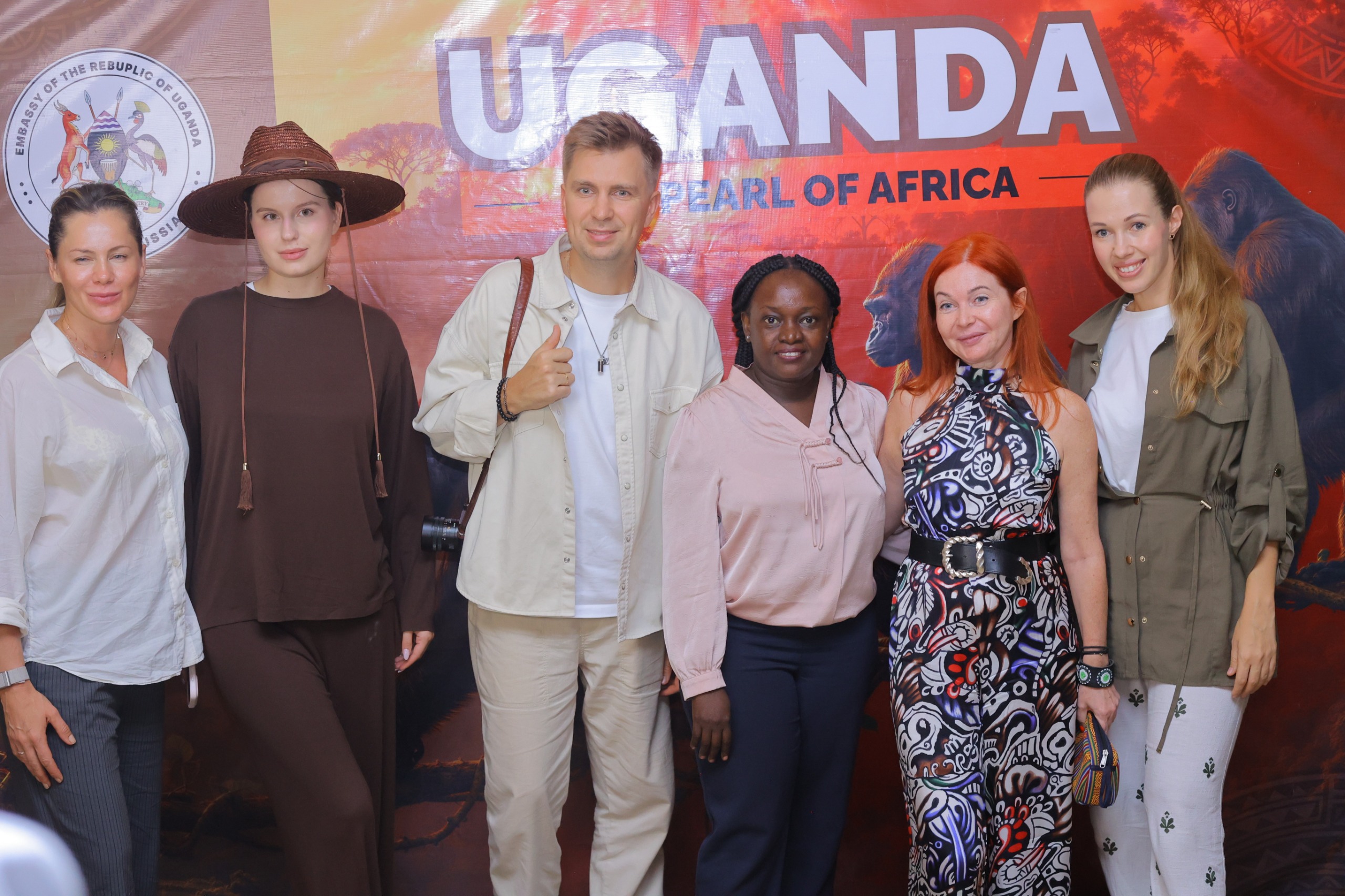
MOSCOW, Russia — Diplomacy in the twenty-first century is increasingly extending beyond formal negotiations and state visits. Across the world, governments are embracing culture, cuisine, tourism, and creative industries as instruments of foreign policy, recognizing that lasting partnerships are often built through shared experiences as much as through official agreements.
This evolving approach was on display in Moscow as the Embassy of the Republic of Uganda, in partnership with the Ministry of Foreign Affairs of Uganda and Forking Around Kampala, hosted the Uganda–Russia Experience an exclusive cultural and culinary showcase that highlighted Uganda’s heritage while reinforcing the steadily expanding relationship between Uganda and the Russian Federation. The event reflected Uganda’s broader diplomatic strategy of integrating public diplomacy with economic objectives, demonstrating how cultural engagement can support trade, tourism, investment promotion, and people-to-people cooperation.
Delivering remarks on behalf of Uganda’s Ambassador to the Russian Federation, H.E. Moses Kizige, the First Secretary at the Embassy of Uganda in Moscow, Ms. Georgina Nakawombe, described the Uganda–Russia Experience as a continuation of the deepening partnership between the two countries, built upon decades of mutual respect, longstanding friendship, and expanding collaboration across political, economic, educational, cultural, and people-to-people exchanges. She noted that the dinner represented the next phase of a strategic engagement initiated through the successful familiarisation (FAM) visit organised in November 2025, during which leading Russian luxury tour operators were introduced to Uganda’s tourism offerings.
According to Ms. Nakawombe, the current initiative enables key tourism stakeholders to experience Uganda beyond promotional materials by immersing them in the country’s cuisine, hospitality, traditions, and cultural identity while simultaneously creating opportunities to strengthen commercial partnerships.
The Uganda–Russia Experience reflects a growing international recognition that cultural diplomacy has become an essential component of modern foreign policy. Rather than serving solely as a platform for cultural exchange, such initiatives increasingly function as catalysts for economic cooperation, investment promotion, destination marketing, and business networking.
Ms. Nakawombe observed that cultural and culinary diplomacy complement traditional diplomatic engagement by strengthening mutual understanding and fostering relationships that create long-term opportunities across tourism, trade, education, investment, and cultural industries.
This approach aligns with Uganda’s evolving Public Diplomacy agenda, where diplomatic missions are increasingly expected to generate measurable economic outcomes alongside political engagement.
By showcasing Ugandan cuisine, hospitality, agricultural products, music, and tourism experiences, the Embassy demonstrated how soft power can translate into tangible commercial opportunities.
Advancing Uganda’s Economic and Commercial Diplomacy
The event also illustrates the practical implementation of Uganda’s Economic and Commercial Diplomacy (ECD) Strategy, which positions diplomatic missions as active facilitators of national development.
Under this framework, embassies are tasked with promoting exports, attracting quality foreign investment, expanding tourism markets, facilitating market access for Ugandan products and services, and connecting domestic businesses with international commercial opportunities. The Uganda–Russia Experience therefore represented more than a cultural celebration; it served as a strategic platform linking government institutions with private sector actors to stimulate economic partnerships that benefit both countries.
Such engagements reflect a broader transformation in African diplomacy, where foreign missions increasingly serve as economic gateways rather than purely political institutions. Supporting Uganda’s Tenfold Growth Strategy Ms. Nakawombe further emphasized that the initiative contributes directly to the Government of Uganda’s Tenfold Growth Strategy, which seeks to accelerate structural economic transformation through industrialisation, export promotion, tourism development, value addition, and private sector growth.
By promoting Uganda’s premium agricultural products, culinary heritage, tourism destinations, and investment opportunities, the Embassy is positioning the country as an attractive destination for both visitors and investors. The approach also creates commercial opportunities for Ugandan tourism enterprises, creative industries, hospitality businesses, and exporters seeking access to emerging international markets. Increasingly, Uganda’s diplomatic engagements are bringing together government agencies, businesses, cultural practitioners, and development partners to pursue inclusive economic growth through international cooperation.
One of the most practical outcomes of the Uganda–Russia Experience will be the familiarisation tour scheduled immediately after the event. A delegation of Russian luxury tour operators will travel across Uganda’s premier tourism destinations, including Murchison Falls National Park, Kibale National Park, and Bwindi Impenetrable National Park, where they will experience some of Africa’s most sought-after wildlife attractions, including chimpanzee tracking and mountain gorilla trekking. The Embassy believes that firsthand exposure to Uganda’s tourism assets will enable participating operators to develop premium travel packages tailored specifically to the Russian market.
International tourism experts consistently recognise familiarisation visits as among the most effective destination marketing tools because they allow travel professionals to experience destinations directly before marketing them to prospective clients. For Uganda, such initiatives have the potential to diversify source markets while strengthening resilience within the country’s tourism industry. The Uganda–Russia Experience also illustrates a broader evolution in African diplomacy.Across the continent, diplomatic missions are increasingly embracing integrated approaches that combine public diplomacy, economic promotion, tourism marketing, cultural engagement, and commercial facilitation under a unified foreign policy agenda.

This reflects an understanding that sustainable international partnerships are built not only through official negotiations but also through trust, cultural appreciation, business collaboration, and people-to-people connections. For Uganda, whose foreign policy increasingly prioritises economic transformation alongside international cooperation, such initiatives demonstrate how diplomacy can directly contribute to national development objectives. As global competition for investment, tourists, and export markets intensifies, the ability of diplomatic missions to project national identity while creating commercial opportunities will become an increasingly important measure of diplomatic success.
The Uganda–Russia Experience therefore represents more than a cultural evening in Moscow. It serves as a practical example of how strategic public diplomacy can translate soft power into economic opportunity—strengthening bilateral relations while advancing Uganda’s long-term development aspirations through tourism, trade, investment, and cultural cooperation. As African diplomacy continues to evolve, initiatives of this nature reaffirm that culture is no longer simply an expression of national identity; it has become a strategic asset for economic growth, international influence, and sustainable partnerships.