Dar es Salaam, Tanzania — East Africa’s pursuit of greater energy security and economic integration reached another significant milestone as Uganda and Tanzania reinforced their strategic partnership through the signing of a Memorandum of Understanding (MoU) to jointly develop the proposed Tanga Regional Energy Hub.
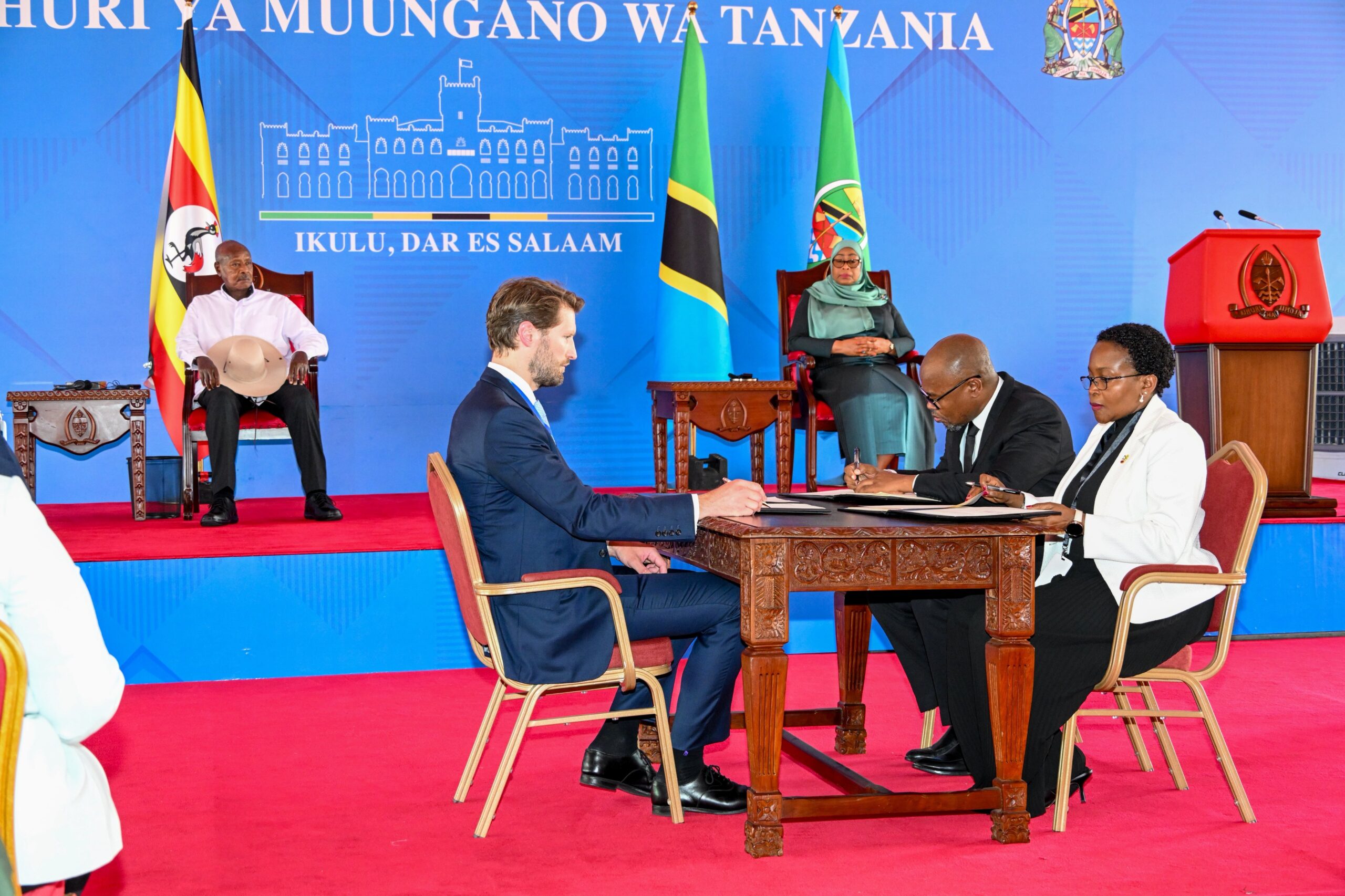
The agreement, signed between the Uganda National Oil Company (UNOC), the Tanzania Petroleum Development Corporation (TPDC), and Vitol Bahrain E.C., was witnessed by President Yoweri Kaguta Museveni and President H.E. Dr. Samia Suluhu Hassan during President Museveni’s two-day working visit to Tanzania. Beyond its commercial significance, the agreement reflects an evolving model of regional cooperation in which shared infrastructure is increasingly viewed as a catalyst for economic resilience, industrial development, and long-term energy security across East Africa.
The proposed Tanga Regional Energy Hub is expected to strengthen petroleum storage, distribution, and logistics while enhancing the efficiency of regional fuel supply chains. By expanding strategic infrastructure along the Indian Ocean corridor, the initiative seeks to improve access to energy markets, reduce supply vulnerabilities, and support growing demand across the East African Community (EAC).
The MoU builds upon years of collaboration between Uganda and Tanzania, whose partnership has steadily expanded beyond traditional diplomacy into infrastructure, transport, security, and energy development. The two countries have already demonstrated the strategic value of cross-border cooperation through major regional projects, most notably the East African Crude Oil Pipeline (EACOP). The Tanga Regional Energy Hub represents another step towards creating integrated energy systems capable of supporting industrialisation, investment, and intra-African trade.
For East Africa, where energy demand continues to rise alongside rapid urbanisation and industrial growth, coordinated infrastructure investments are becoming increasingly important. Shared facilities have the potential to reduce operational costs, improve supply reliability, and strengthen regional competitiveness in global energy markets.
The signing comes at a time when African governments are placing greater emphasis on value addition, strategic infrastructure, and regional value chains under the framework of the African Continental Free Trade Area (AfCFTA). Reliable energy infrastructure remains a cornerstone of these ambitions, influencing manufacturing, transport, agriculture, mining, and digital economies alike.
Rather than pursuing isolated national projects, countries across the continent are increasingly recognising that regional collaboration offers greater economic returns. Joint investments in energy corridors, logistics hubs, and transport networks can unlock economies of scale while attracting international investment into Africa’s growing markets.
The participation of an international energy company alongside national petroleum institutions also illustrates the evolving nature of public-private partnerships in strategic infrastructure development. Such collaborations can provide technical expertise, financial resources, and market access while maintaining national ownership of critical energy assets.
President Museveni’s working visit to Tanzania underscores the importance of economic diplomacy as a central pillar of contemporary foreign policy. Upon his arrival in Dar es Salaam, the Ugandan leader reaffirmed the longstanding relationship between the two neighbouring countries, describing it as one founded on shared history, Pan-African ideals, and a common commitment to regional integration.
His remarks reflected a broader diplomatic reality: economic partnerships are increasingly shaping bilateral relations alongside traditional political engagement. As global markets become more interconnected and supply chains more complex, infrastructure diplomacy has emerged as a practical instrument for advancing national interests while promoting regional prosperity. President Samia Suluhu Hassan’s participation in the signing ceremony similarly signals Tanzania’s continued commitment to positioning the country as a strategic gateway for regional trade and energy logistics within East Africa.
While the Memorandum of Understanding marks the beginning rather than the completion of the project, it establishes an important framework for technical cooperation and future investment. Successful implementation will depend on coordinated planning, regulatory alignment, financing, and sustained political commitment from all participating partners.
For East Africa, however, the significance extends beyond the infrastructure itself. The Tanga Regional Energy Hub represents a growing confidence that regional solutions can address shared development challenges more effectively than fragmented national approaches.
As Africa advances its agenda for industrialisation, energy transition, and economic integration, partnerships such as this illustrate how diplomacy, strategic investment, and regional cooperation are becoming increasingly intertwined. In that context, the Tanga Regional Energy Hub is more than an energy project it is part of a broader vision for a more connected, resilient, and economically integrated East Africa.