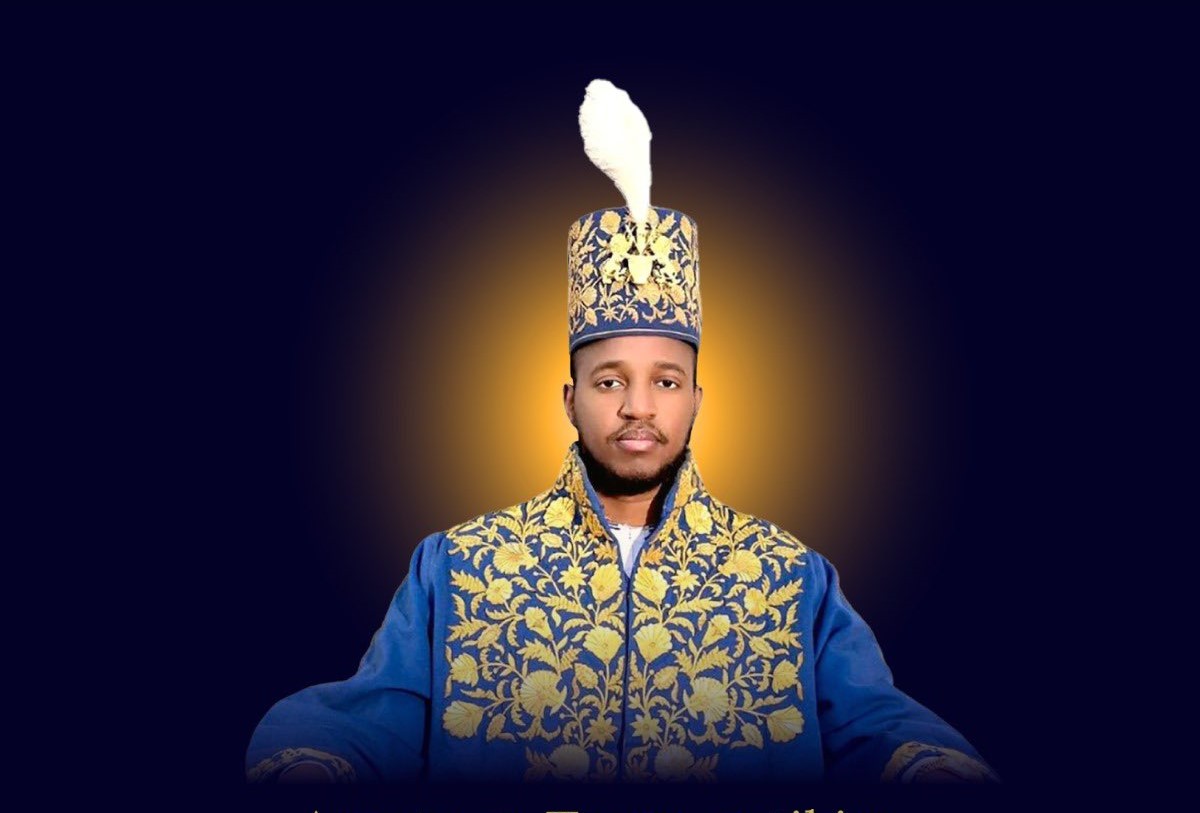
Fort Portal, UGANDA — In Tooro, the passing of a King is more than the departure of an individual. It is a moment when history, memory, identity and tradition converge. On Thursday, 27 August 2026, the people of Tooro received the news that His Majesty Omukama Oyo Nyimba Kabamba Iguru Rukidi IV had died at approximately 10:00 p.m. The announcement by the Prime Minister of Tooro Kingdom, Rt. Hon. Calvin Armstrong Rwomiire Akiiki, described the loss as immeasurable for the Royal Family, the people of Tooro and Uganda.“Omukama Atulize. Enkuba Etutire.” In the passing of Omukama Oyo Nyimba Kabamba Iguru Rukidi IV, Tooro mourns a King, remembers a generation and reflects on the enduring heritage of the Batooro
The words carry the solemnity of a Kingdom in mourning, yet beneath the grief lies another enduring reality: the institution of Tooro is larger than any one reign. The Crown continues. The traditions continue. The clans continue. The language continues. The stories continue to be told and through them, a people continue to understand who they are.
King Oyo was born on 16 April 1992 and ascended the Tooro throne on 12 September 1995, at only three years of age, following the death of his father, Omukama Patrick David Matthew Kaboyo Olimi III. His accession made him one of the world’s youngest monarchs and placed the ancient institution of the Tooro monarchy in the international spotlight. He subsequently grew from a child King into an adult cultural leader whose reign became one of the defining chapters in the modern history of the Kingdom.
For many Ugandans, particularly those who grew up during the late 1990s and 2000s, King Oyo was more than a traditional ruler. He was part of their own lifetime, His image was familiar far beyond Tooro — a young monarch growing into his responsibilities while carrying an institution whose history stretches back generations. His death at 34 therefore closes an unusually long chapter of contemporary African royal history but it also opens a moment of reflection.
- What does a traditional kingdom mean in modern Africa?
- What happens when ancient institutions encounter a rapidly changing world?
And how can cultural heritage remain relevant to generations increasingly shaped by technology, migration, urbanisation and globalisation?
Tooro’s answer lies partly in its ability to preserve its identity while allowing that identity to evolve. Tooro occupies a remarkable part of western Uganda, Its cultural heart is Fort Portal City, while the wider Kingdom encompasses areas including Kabarole, Bunyangabu, Kamwenge, Kitagwenda, Kyenjojo, Kyegegwa and Ntoroko. It is a landscape of rolling hills, fertile agricultural land, crater lakes, forests and the dramatic presence of the Rwenzori Mountains. Here, geography and culture are closely connected.
- The landscape is not merely scenery.
- It forms part of the memory of the people.
The hills, rivers, forests, farms, royal sites, clan territories and cultural spaces all contribute to a sense of belonging that has been passed from one generation to another. At the centre of this cultural landscape stands Karuziika Palace, an important symbol of the Tooro monarchy and the continuity of the Kingdom. The palace is more than a royal residence, it represents an institution through which generations of Batooro have connected the present with the past.
The history of Tooro reaches into the broader historical traditions of the Great Lakes region. Tooro’s own historical narrative connects the Kingdom to the ancient traditions associated with Kitara, including the Batembuzi, Bachwezi and Babiito dynasties. Much of the early history is preserved through oral tradition, clan memory, cultural practices and stories transmitted across generations.
The modern Kingdom emerged as an independent kingdom in the nineteenth century under Rukirabasaija Kaboyo Omuhundwa Kasusunkwanzi Olimi I, who is recognised as its first Omukama. The Kingdom later experienced periods of political change and conflict before its independence was re-established in 1891 under Omukama Daudi Kasagama Kyebambe IV. Like other traditional institutions in Uganda, Tooro experienced a profound rupture in 1967 when the country’s kingdoms were abolished.
The restoration of traditional kingdoms in 1993 reopened a new chapter, for Tooro, restoration was not simply the return of a royal title. It represented the revival of cultural institutions, traditions and a recognised space through which the Batooro could continue expressing their collective identity. The Kingdom today describes itself as a cultural institution committed to unity, cultural pride, heritage preservation and sustainable development.
The people of Tooro are known as the Batooro, while an individual is a Mutooro, their language, Rutooro, is one of the strongest vessels of cultural memory. A language carries more than words, it carries ways of greeting, expressions of respect, family relationships, humour, history, values and a people’s understanding of the world. For the Batooro, cultural identity is similarly expressed through family, community, clan, music, dance, ceremonies, oral history, traditional knowledge and hospitality.
Historically, agriculture and cattle keeping played important roles in the livelihoods of communities across Tooro. Crops including bananas, millet, sweet potatoes, sorghum, peas and vegetables formed part of traditional food systems, alongside livestock products such as milk, meat, butter and ghee. These were not simply economic activities, they were woven into social life, family relations and community cooperation.
One of the most important foundations of Tooro society is the clan, for many Batooro, knowing one’s clan is knowing part of one’s history. Clan identity establishes relationships between families and connects individuals to an ancestry that reaches beyond their immediate household. Traditionally, clan elders have played important roles as custodians of family history, advisers and mediators. They helped transmit knowledge from one generation to another at a time when much of African history was preserved not in written archives but through people.
In this sense, the clan is itself an archive, its stories, names, relationships and traditions constitute a living record of the community. This is why cultural preservation cannot be reduced to monuments and museums alone. A culture survives when people continue to speak its language, tell its stories, observe its traditions and teach its values to their children.
In Tooro culture, names can carry profound meaning, a name may reflect circumstances surrounding a child’s birth, family history or an event remembered by the household. Traditionally, elders have participated in naming children, making the process part of a wider system of family and cultural transmission.
The arrival of Christianity and Islam introduced additional naming practices, with many families adopting religious names alongside their traditional Rutooro names. The coexistence of these traditions illustrates an important feature of African culture: heritage is rarely static. The traditions surrounding twins and children born after twins also demonstrate the richness of the naming system, with particular names carrying meanings associated with birth order and family circumstances. Such traditions may appear simple on the surface, but they provide a cultural vocabulary through which communities interpret life, family and belonging.
The Omukama does not exercise political power in Uganda’s constitutional system, the significance of the institution is fundamentally cultural. The King serves as a symbol of unity, identity and continuity among the Batooro. That role becomes particularly important during moments of uncertainty or collective celebration. The institution provides a focal point around which people can gather as a community.
For a society living within a modern republic, with citizens participating in national politics, global markets, digital platforms and international institutions, the Kingdom provides another dimension of identity one rooted in history and culture. This dual identity is not necessarily contradictory, a person can be simultaneously a Mutooro, a Ugandan and an African citizen of an increasingly interconnected world. Indeed, cultural institutions can help people navigate globalisation without losing their sense of place.
King Oyo inherited the Crown as a child and grew into it before a global audience. His reign coincided with a period in which traditional leadership itself was being reimagined. Young people became increasingly central to conversations about development, entrepreneurship, education, technology, climate action and cultural preservation. The King was associated with efforts touching on areas including youth empowerment, education, environmental conservation, health and tourism. Uganda’s public institutions have also recognised his contribution to the preservation of Tooro’s heritage and his role as a cultural leader.
His public image also extended beyond the cultural sphere, He was known for his interest in sport and was particularly associated with football in Tooro and Uganda. The Federation of Uganda Football Associations described him as a supporter of the Uganda Cranes, the Tooro Kingdom Amasaza Cup and the FUFA Drum, a competition designed to celebrate Uganda’s cultural diversity through football. This intersection of culture, youth and sport reflected a broader reality. Traditional institutions do not have to remain frozen in the past. They can become platforms through which heritage engages with contemporary society.
The strongest cultural institutions are not simply those that preserve the past.They are those capable of making the past meaningful to the future. Tooro has enormous potential in this regard, its cultural heritage intersects naturally with tourism, education, creative industries, environmental conservation, agriculture, research and the growing global interest in African history and identity.
The Rwenzori landscape, crater lakes, forests, royal heritage, traditional knowledge, music, dance, language, food and oral traditions together create an extraordinary cultural ecosystem. For Uganda’s tourism and creative economy, Tooro’s heritage is therefore not merely something to remember. It is an asset for young people, it can become a source of knowledge, creativity, employment and innovation. For researchers, it provides an important field for documenting African history and indigenous knowledge. For the international community, it offers an opportunity to encounter Africa through the lived experiences of its communities rather than solely through externally constructed narratives and for the Batooro themselves, it remains a source of identity.
In announcing King Oyo’s death, the Prime Minister of Tooro Kingdom also stated that the continuity of the Crown was assured and that the late King had left behind a Prince whose identity would be formally revealed at the appropriate time in accordance with Tooro traditions and customs. That statement carries significance beyond succession, it reflects one of the central characteristics of traditional institutions: continuity.
Kings come and go. Generations change. Political systems evolve but institutions survive when societies continue to attach meaning to them. The current period of mourning is therefore both an ending and a beginning. The Batooro are grieving the King they knew, at the same time, they are preparing to welcome the next chapter of an institution that has survived political upheaval, abolition, restoration and profound social change.
Uganda is now preparing to give King Oyo an official final farewell. The Government has announced state-supported burial arrangements, while national leaders and institutions have joined the Royal Family and the people of Tooro in mourning but the most enduring tribute may not be found in the ceremonies surrounding his burial.
- It may be found in what happens afterwards.
- Will the language continue to flourish?
- Will young Batooro learn the histories of their clans?
- Will traditional knowledge be documented?
Will cultural sites be preserved? Will the Kingdom’s heritage contribute to responsible tourism and sustainable development? Will young people see culture not as something belonging only to their grandparents, but as something capable of shaping their own future? These are questions that extend beyond the life of one King. They belong to the future of Tooro.
The story of Tooro is ultimately not only the story of its Abakama, It is the story of its people. It is carried by grandparents who remember old stories, parents who teach their children Rutooro, elders who preserve clan histories, artists who perform traditional music, farmers who maintain generations-old practices, young people who reinterpret heritage through new media and communities that continue to gather around shared identity.
King Oyo’s reign became part of that story, His extraordinary accession at the age of three attracted international attention. His adulthood gave him an opportunity to redefine that childhood image through service and cultural leadership. His death at 34 has brought a generation face-to-face with the fragility of life and the durability of institutions.
His Majesty Omukama Oyo Nyimba Kabamba Iguru Rukidi IV will be remembered as a King whose extraordinary journey began in childhood and unfolded before the eyes of Uganda and the world. He inherited a centuries-old institution at an age when most children were only beginning to understand the world around them.
He grew into a symbol of Tooro’s continuity, identity and cultural pride. His passing is a profound loss to the Royal Family, the Batooro and Uganda but the most powerful expression of his legacy may be found in the continued strength of the people and culture he represented.
As Tooro mourns, it also remembers, as it remembers, it preserves and as it preserves, it prepares to pass its heritage to another generation. “The King has passed. The Kingdom remains. The people remain. The language remains. The stories remain.” This feature forms part of Daily Thinkers’ Africa Focus and Culture & Heritage coverage, exploring the histories, identities, institutions and living traditions that continue to shape Africa.
Omukama Atulize. Enkuba Etutire.