New York,— Uganda has called for stronger regional cooperation, coordinated border governance and sustainable support for African-led peace and security mechanisms as African states confront terrorism and violent extremism that increasingly operate across national boundaries.
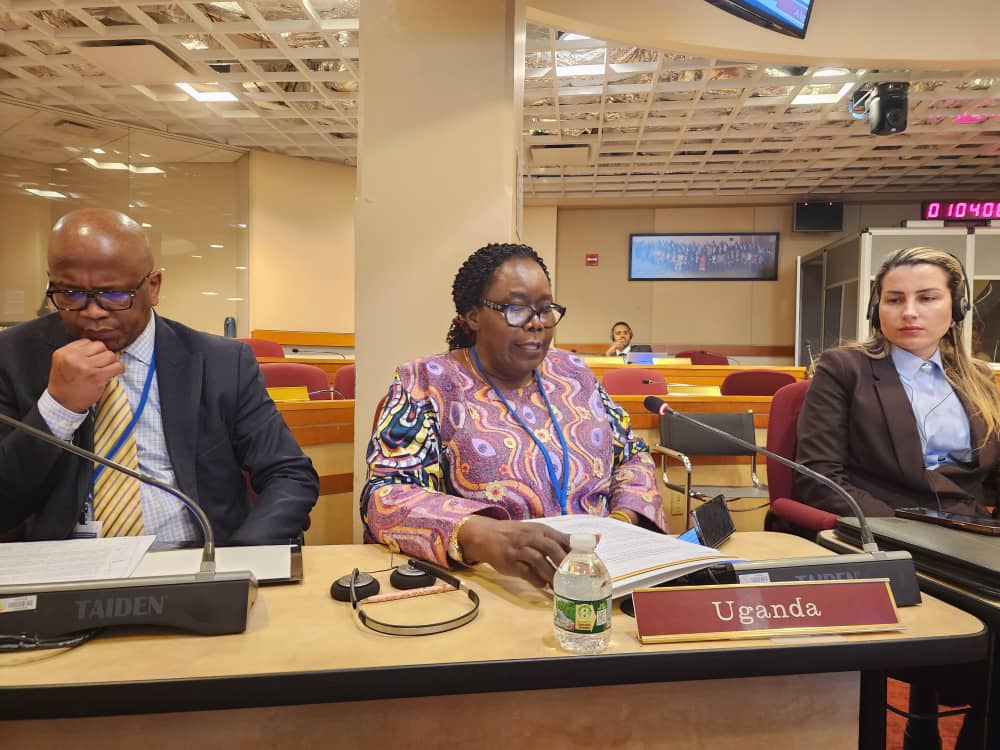
Uganda made the call during the 1369th Ministerial Meeting of the African Union Peace and Security Council, held in New York on 23 September 2026 on the margins of the 81st Session of the United Nations General Assembly. The meeting considered the theme “Good Neighbourliness and Regional Responses to Security and Terrorism Challenges in Africa.”
The African Union has confirmed that the session focused on strengthening African cooperation against security threats that transcend national borders, with particular attention to good neighbourliness, intelligence-sharing, early warning, border governance, terrorist financing and cooperation among Member States, Regional Economic Communities and Regional Mechanisms.
Representing Uganda, Ambassador Rebecca Amuge Otengo, Uganda’s Permanent Representative to the African Union and the United Nations Economic Commission for Africa, stressed that terrorism and violent extremism require responses that extend beyond individual national jurisdictions. “Terrorism and violent extremism do not respect borders,” Ambassador Otengo said, pointing to the exploitation of ungoverned spaces, local grievances, weak border controls, illicit financial flows and transnational criminal networks.
Uganda’s intervention placed good neighbourliness at the centre of the continental security response. In this context, good neighbourliness was presented not simply as a diplomatic principle but as a practical requirement for security cooperation among states sharing borders and facing common threats.
The approach is consistent with the wider AU discussion surrounding the 1369th PSC meeting. The African Union has emphasised that borders are simultaneously spaces of state sovereignty and areas where communities live, trade and maintain social and cultural connections. The AU has therefore called for stronger cooperation among neighbouring states while strengthening existing continental frameworks rather than creating parallel mechanisms.
Uganda called for enhanced intelligence-sharing, joint threat assessments and closer cooperation among security and law-enforcement agencies. It also advocated stronger support for the African Union Counter-Terrorism Centre to improve coordination, intelligence fusion and institutional capacity.
Border governance formed another important part of Uganda’s position. The delegation called for strengthened implementation of the African Union Border Programme and the Niamey Convention on Cross-Border Cooperation, while emphasising the importance of involving border communities in preventing insecurity.
The argument is that border security cannot be separated from the economic and social conditions of border populations. Investment in public services, livelihoods and legitimate cross-border trade can complement security measures and help transform border areas into spaces of economic interaction and cooperation.
Uganda also placed emphasis on the operational capacity of African peace and security institutions. It called for the African Standby Force and its regional components to develop the capabilities required for timely deployment, including sustainable logistics and predictable financing, while operating consistently with Member States’ sovereignty and international law.
Financing remains a central issue in the wider AU-UN peace and security partnership. UN Security Council Resolution 2719, adopted unanimously on 21 December 2023, established a framework under which African Union-led peace support operations authorised by the Security Council may access UN assessed contributions, subject to the conditions and arrangements set out in the resolution.
The UN has subsequently worked with the AU on operationalising that framework, including joint planning and decision-making, mission support, financing and budgeting, as well as human-rights compliance and protection of civilians.
Uganda’s intervention also connected security policy with the underlying conditions that can contribute to instability. The delegation identified exclusion, youth unemployment, radicalisation, disinformation, arms trafficking and terrorism financing among issues requiring attention alongside security operations.
Women, young people, traditional leaders, civil society and the private sector were identified as important participants in prevention, community resilience and efforts to address vulnerabilities that armed and terrorist groups can exploit.
Another priority was stronger institutional coordination. Uganda called for clearer cooperation among the African Union, Regional Economic Communities and Regional Mechanisms in order to reduce duplication and establish clearer responsibilities in responding to transnational threats.
The emphasis on coordination reflects the increasingly cross-border character of terrorism and organised crime. The AU’s own deliberations have highlighted the need for intelligence-sharing, harmonised legal frameworks, early warning and stronger action against terrorist financing.
Uganda’s position therefore linked continental security to regional integration. The argument is that effective cooperation against terrorism requires neighbouring states to maintain channels of communication even when political differences exist, while ensuring that national sovereignty and territorial integrity remain respected.
The wider international dimension is equally important. African-led security responses increasingly operate within a partnership involving the African Union, Regional Economic Communities, the United Nations and other international partners. Resolution 2719 provides one part of the emerging institutional framework for that partnership, while the AU continues to develop its own continental peace and security capabilities.
For Uganda, the central message from New York was therefore one of shared responsibility: terrorism cannot be addressed through isolated national measures when threats, financing networks, recruitment patterns and criminal activity cross borders. “Africa’s borders must not divide our security efforts,” Ambassador Otengo said, underscoring Uganda’s call for trust, coordinated action and stronger regional institutions.
Uganda’s contribution to the 1369th PSC Ministerial Meeting placed good neighbourliness, regional cooperation, effective continental institutions and sustainable financing within the broader African and international peace and security agenda. The challenge now lies in translating these principles into sustained cooperation on the ground: stronger intelligence networks, effective border governance, resilient communities, capable regional institutions and predictable support for African-led peace and security operations.