New York,— Uganda has reaffirmed its commitment to advancing legal equality for women and girls, calling for stronger implementation of laws and institutions to ensure that formal legal protections translate into meaningful rights and opportunities across communities.
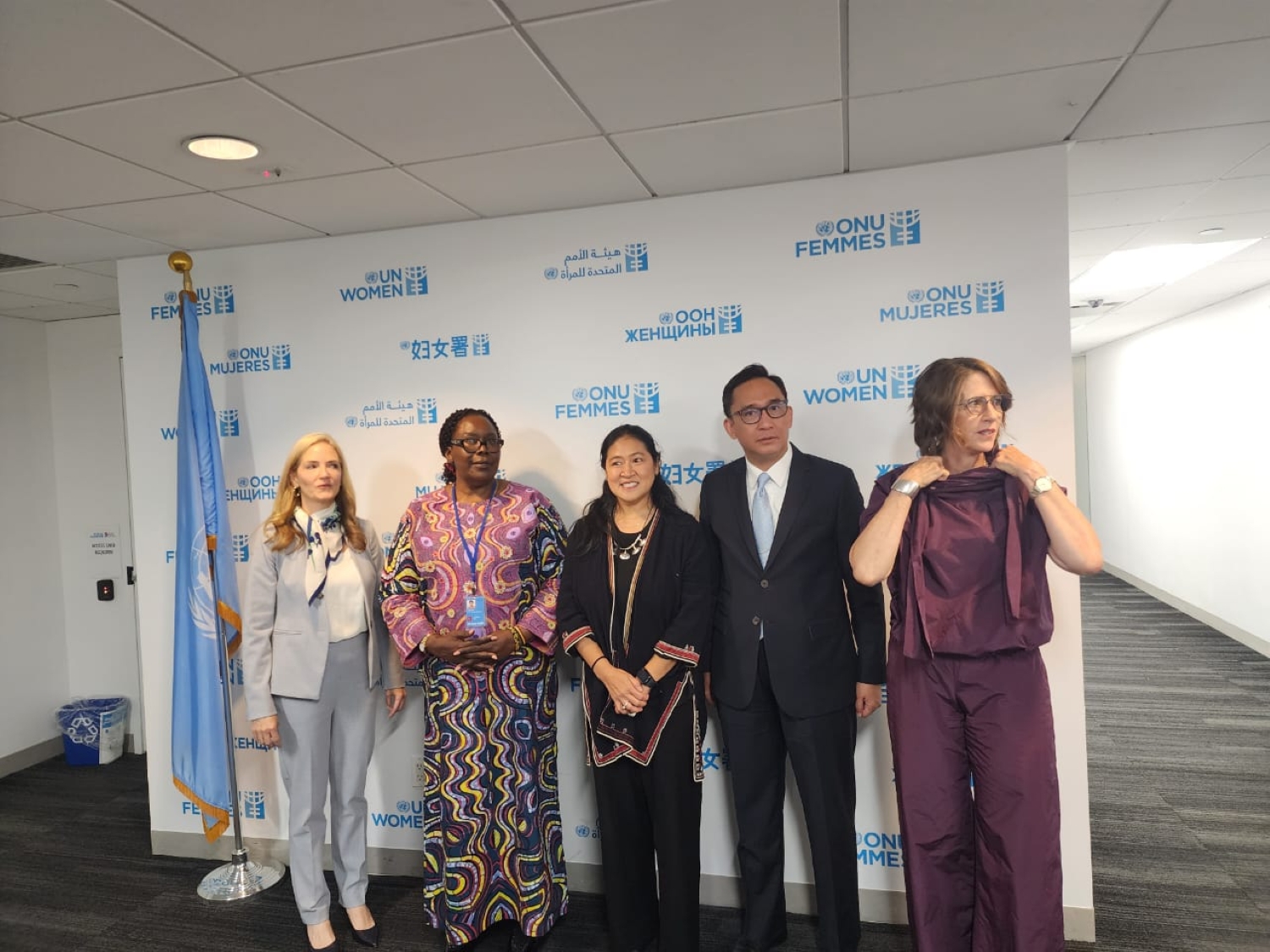
Uganda’s position was presented on 23 September at a high-level side event convened by UN Women at United Nations Headquarters in New York, on the margins of the 81st Session of the United Nations General Assembly. The discussion brought together governments, United Nations entities, civil society organisations and advocates around the continuing challenge of discriminatory laws affecting women and girls.
Representing the Government of Uganda, Ambassador Rebecca Amuge Otengo, Uganda’s Permanent Representative to the African Union, spoke on behalf of the Minister of Foreign Affairs, Ambassador Adonia Ayebare. She highlighted Uganda’s constitutional guarantees and recent legislative reforms while emphasising that the effectiveness of legal equality ultimately depends on implementation, institutional capacity and access to justice.
One of the reforms highlighted was Uganda’s Succession (Amendment) Act, 2022, which amended succession law to bring it into conformity with the Constitution and to strengthen gender equality in succession and inheritance. The legislation also provides for protection of principal residential property for surviving spouses and lineal descendants and removes discriminatory elements relating to customary heirs and heiresses.
The reform has particular significance for women’s economic security. UN Women’s country-level legal database notes that the amended succession framework expanded property-distribution provisions to both male and female dependants and spouses and refined the definition of customary heir or heiress to remove discrimination. Yet Uganda’s intervention placed equal emphasis on the distance that can exist between legislation and lived experience.
Amb. Otengo stressed the importance of ensuring that legal reforms are supported by accessible institutions, effective enforcement, public awareness, adequate financing and survivor-centred approaches to justice. The emphasis reflects a broader recognition that the passage of legislation is only one stage in achieving equality: rights must also be understood, accessible and enforceable.
This implementation dimension is particularly relevant to Africa, where questions of legal equality intersect with access to land and property, citizenship and nationality, political participation, justice systems and the economic position of women and girls.
Uganda therefore identified three areas requiring accelerated attention.
The first is the reform of discriminatory laws and the closing of the gap between legal provisions and their practical application. This includes strengthening institutions responsible for enforcement, ensuring adequate financing and developing accountability mechanisms capable of measuring whether legal protections are reaching intended beneficiaries.
The second is meaningful participation by women in the institutions responsible for making and enforcing laws. Uganda emphasised that women’s participation should extend beyond minimum numerical representation to substantive involvement in shaping legislation, public policy and justice systems.
The third is ensuring that legal equality reaches women who can face additional structural barriers, including women affected by conflict, women with disabilities and women living in rural and underserved communities.
The discussion also placed legal equality within the wider development agenda. Equal access to citizenship, property, inheritance and justice affects women’s ability to participate fully in economic and public life and therefore has implications beyond the legal sector.
For Africa, this connection between rights, institutions and development is particularly important as the continent advances regional commitments on women’s empowerment, inclusive governance and sustainable development.
Uganda’s intervention consequently framed legal equality not simply as a question of legislative drafting but as an institutional and societal responsibility. The objective is to ensure that constitutional guarantees and statutory reforms are reflected in the everyday experiences of women and girls.
The country’s position also underscores the importance of women’s leadership in sustaining legal and institutional reform. Women must not only be beneficiaries of legal protection but active participants in lawmaking, implementation, oversight and accountability.
As the international community works towards 2030, Uganda’s message from New York was that progress should be measured not only by the number of laws enacted, but by whether those laws are accessible, understood and enforced. The broader challenge for Africa is therefore one of implementation: converting commitments to equality into institutions that work, rights that can be exercised and justice that can be reached.
Uganda’s contribution placed that implementation challenge at the centre of its engagement, linking legal equality with equal citizenship, inclusive development and stronger institutions across the continent.