ENTEBBE, Uganda — Uganda and the European Union have an opportunity to redefine five decades of cooperation by placing industrialisation, technology transfer and higher-value trade at the centre of their economic relationship.
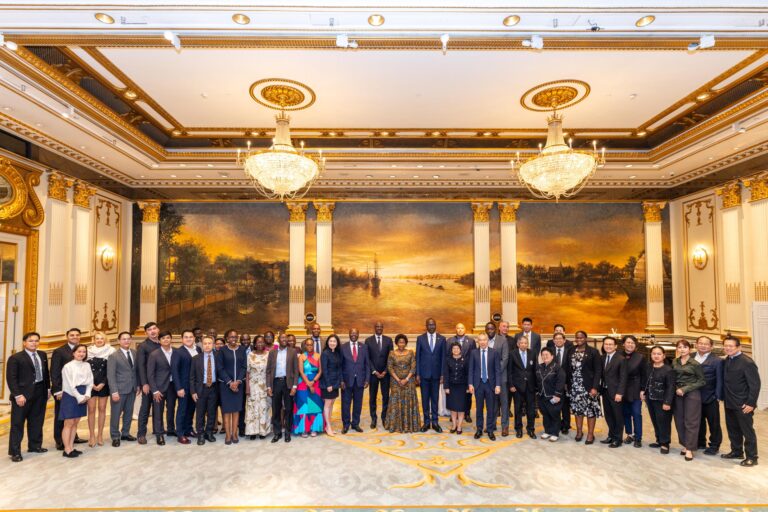
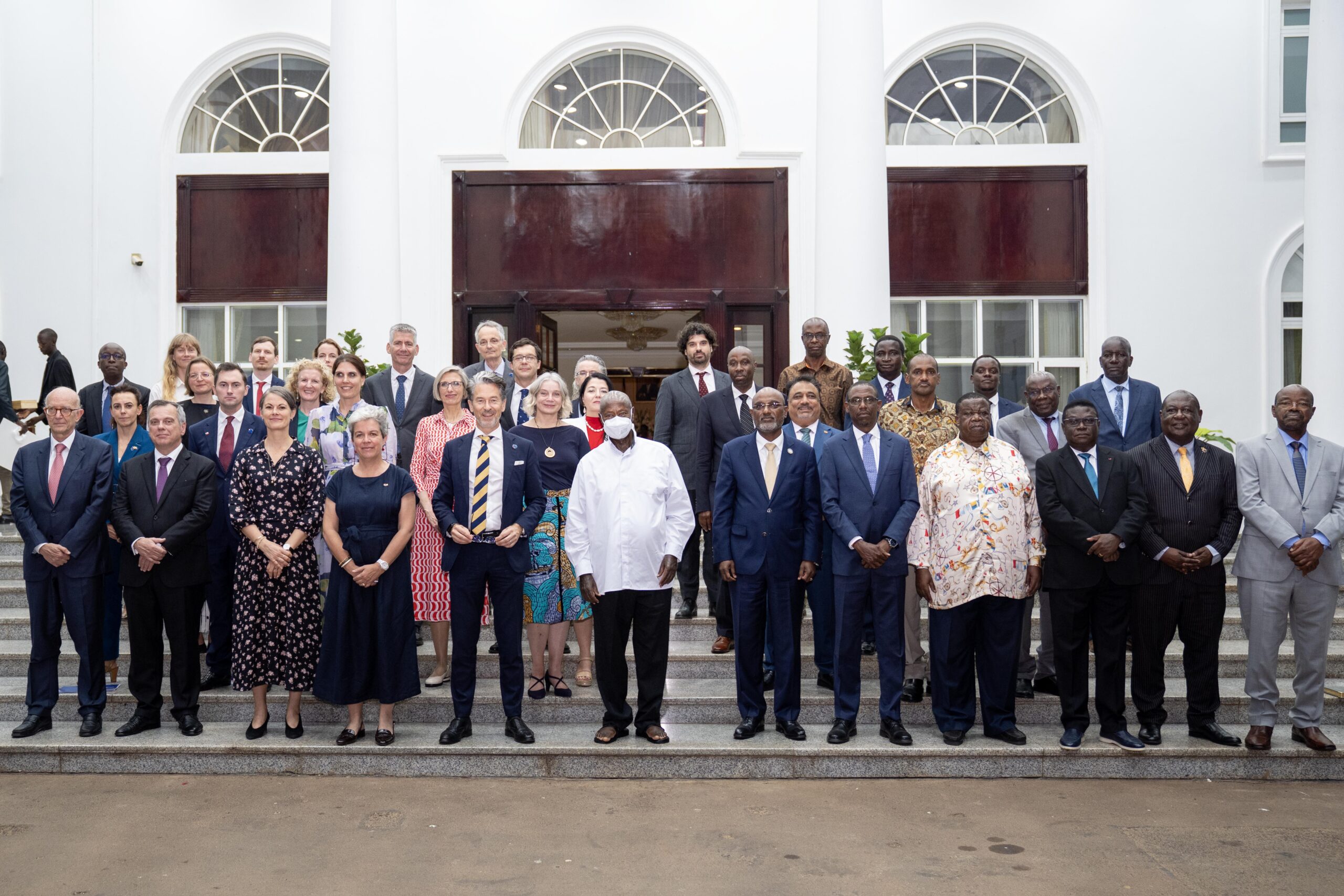
The issue took centre stage on October 14, 2026, when President Museveni hosted and co-chaired the first Uganda–EU Partnership Dialogue at State House, Entebbe. He urged European governments and businesses to invest in processing African raw materials locally, arguing that exporting finished products would enable African economies to retain more value, generate employment and become stronger trading partners. “Europe should really help Africa process its raw materials,” the President said, calling for a partnership in which both sides benefit from production and trade rather than an economic relationship that perpetuates dependence. His appeal comes against a significant economic disparity between the two partners.
According to World Bank data for 2025, Uganda’s gross domestic product (GDP) was approximately US$62 billion, while the European Union’s economy stood at approximately US$21.24 trillion. In nominal GDP terms, the EU economy was about 343 times the size of Uganda’s. Uganda, however, recorded economic growth of 6.3% in 2025, illustrating the potential of a growing economy to attract investment and expand production. The difference is not simply about economic size. It also concerns the capacity to manufacture, finance innovation, develop technology and influence the terms on which goods enter international markets.
For Uganda, the challenge is to convert agricultural production and natural resources into competitive industries. For European businesses, greater investment in Ugandan processing could open opportunities in manufacturing, machinery, logistics, renewable energy, food technology and other expanding sectors. Trade figures offer evidence of both progress and untapped potential. Uganda’s Ministry of Finance reported that exports to the EU increased from €377 million in 2015 to €1.8 billion in 2025, while Uganda recorded a trade surplus of approximately €950 million in 2025.
At the October dialogue, the meeting account put annual bilateral trade at approximately €2.4 billion, with Uganda enjoying a surplus of around €1 billion. President Museveni argued that these figures could rise substantially if more products were processed before export. The two figures should be read in their respective reporting contexts, as trade totals can vary according to the period and categories of goods and services included.
Coffee provided one of the President’s clearest illustrations of the industrialisation gap. He contrasted the approximate value of a kilogramme of unprocessed coffee with that of processed coffee products, arguing that roasting, packaging, branding and marketing could significantly increase the income retained by producing countries. He also cited estimates suggesting that the global coffee business generates hundreds of billions of dollars annually, while coffee-producing countries receive a much smaller share. These figures were presented in his remarks; the precise distribution depends on how the global coffee market is defined and which activities are included. The underlying economic question remains important: how much value is captured at the farm, processing plant, distribution centre and retail outlet?
Moving into higher-value activities requires more than a policy against exporting unprocessed materials. Uganda needs reliable and affordable electricity, modern processing facilities, skilled workers, access to finance, quality certification, efficient transport and predictable regulations. European investment can contribute to these requirements, provided projects develop local capabilities rather than operating as isolated export enclaves.
The EU delegation, led by its Ambassador to Uganda, H.E. Jan Sadek, reaffirmed the importance of the partnership. Sadek cited approximately €20 billion in European support to Uganda over 50 years and identified value-added coffee, Ugandan chocolate, mineral processing and private-sector development as areas with further potential. He also announced €50 million in new support for conservation and tourism, while highlighting cooperation in renewable energy and regional security.
The dialogue reflects a broader debate in international political economy: whether development partnerships can help countries move from dependence on primary commodities towards diversified production. Uganda’s position is that development cooperation should generate productive capacity, employment and stronger export earnings. Its appeal to Europe is therefore not only for aid, but also for investment, technology, industrial partnerships and access to markets.
The EU’s Global Gateway initiative, private-sector financing and cooperation in energy infrastructure could support this transition. The rehabilitation of Uganda’s Nalubaale and Kiira hydropower plants, for example, has a €170 million Team Europe financing package, according to Uganda’s Ministry of Finance. Reliable electricity is essential if local manufacturers are to compete on cost and quality.
Agriculture presents another opportunity. Support for irrigation, storage, processing and food standards could help Ugandan producers maintain consistent supplies and meet demanding export requirements. The President also called for European cooperation in environmental conservation, affordable energy and the Parish Development Model, which aims to move households from subsistence production into the money economy. These ambitions will require transparent project selection, commercially viable investments, measurable employment outcomes and environmental safeguards. Value addition should expand economic opportunity without undermining wetlands, forests or the communities whose livelihoods depend on them.
President Museveni also proposed that the EU consider associate membership of the African Union, presenting closer institutional engagement as one way to strengthen cooperation between the neighbouring continents. The proposal reflects a wider argument about global prosperity: wealthier economies benefit when trading partners have the purchasing power to buy their products. A Uganda with more productive farms, stronger manufacturing and higher household incomes could create additional demand for European machinery, medical equipment, industrial technology and other goods. However, achieving this outcome will depend on implementation rather than declarations. Uganda must strengthen industrial policy, workforce skills, infrastructure and institutions, while European partners must ensure that investment commitments translate into production and jobs on the ground.
The two sides agreed to hold the partnership dialogue annually, establish structured discussions on improving the business environment and pursue further engagement on market access, including a possible Economic Partnership Agreement. They also agreed to hold a dedicated security dialogue.The discussions covered climate action, renewable energy, refugee support and regional stability. According to the meeting account, Team Europe contributes more than €520 million to refugee-related interventions, while the EU has provided almost €2.8 billion in support for operations in Somalia since 2007.
These commitments demonstrate that the relationship extends beyond trade. Yet its long-term economic value will increasingly depend on whether cooperation can connect development finance, security, market access and private investment to productive transformation. The central test for Uganda and the European Union is whether their next 50 years of cooperation will produce a more balanced economic relationship: one in which Uganda exports more than raw materials, European businesses gain stronger markets, and prosperity becomes a foundation for deeper interdependence rather than continued economic inequality.