Uganda’s latest public-service reshuffle has reopened a national conversation that extends beyond the movement of officials between government offices. It raises questions about the distribution of leadership opportunities, institutional continuity and the representation of Uganda’s religious and social communities in the country’s highest decision-making structures.

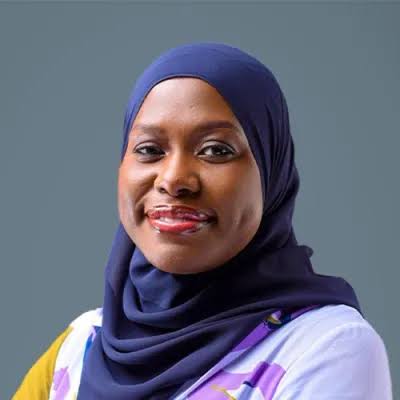
The designation of 12 Permanent Secretary Nominees and a new Clerk to Parliament by President Yoweri Kaguta Museveni comes against the background of an earlier debate over Muslim representation in the executive. Particular attention has fallen on Dr Aminah Zawedde, who has been designated for replacement as Permanent Secretary in the Ministry of ICT and National Guidance by Prof. Stephen Akandwanaho.
For the Muslim community, the development has renewed concerns about its presence in senior government positions. However, the debate must be examined through verified figures, constitutional responsibilities and the distinction between political appointments and professional public-service positions.
Uganda’s executive leadership is organised around the President, Vice President and Prime Minister, supported by Cabinet ministers and Ministers of State. The State House Cabinet listing for the 2026–2031 administration currently identifies 32 Cabinet ministers and 50 Ministers of State. This represents 82 ministerial positions, in addition to the country’s highest executive offices. There is, however, a numerical discrepancy worth noting, in May 2026, Parliament reported approving an increase to 30 Cabinet ministers and 51 Ministers of State. The latest State House listing presents a different distribution: 32 and 50 respectively. The two official records should be reconciled when presenting a definitive breakdown.
These positions carry substantial political and administrative influence as the President heads the executive, the Vice President and Prime Minister occupy constitutionally significant offices, while Cabinet ministers direct government policy across sectors. The three Deputy Prime Ministers, Attorney-General and other senior office holders also occupy influential positions in the national governance structure.
Below the political leadership, Permanent Secretaries serve as the senior administrative heads of ministries. Their responsibilities include organising and managing ministries, advising ministers, implementing government policy and overseeing public expenditure. They are therefore influential in the machinery of government, although they are not Cabinet ministers.
Muslim representation: a debate supported by population statistics
According to the Uganda Bureau of Statistics’ 2024 National Population and Housing Census, Muslims account for 13.2 per cent of Uganda’s population, representing 6,051,317 people out of approximately 45.9 million.
The debate over their representation became particularly visible in May 2026, when the Mufti of Uganda, Sheikh Shaban Ramadhan Mubajje, publicly expressed concern about what he considered limited Muslim representation in the newly announced Cabinet. He called for government to consider the community’s contribution and ensure broader inclusion.
A media analysis of the May Cabinet composition identified Muslims in two of the 30 full Cabinet minister positions and approximately seven of the 51 Minister of State positions. Taken together, that represented about nine out of 81 ministerial positions, or approximately 11.1 per cent. This was a reported assessment of the May composition, not an official government audit of religious affiliation.
When compared with the Muslim population’s 13.2 per cent national share, the figures raise a legitimate question about representation. However, population share alone does not establish a constitutional entitlement to a particular number of ministerial positions. Uganda’s public appointments must also be considered in relation to constitutional requirements, qualifications, regional balance, gender, professional experience and the principle of equal opportunity.
Dr Aminah Zawedde assumed office as Permanent Secretary of the Ministry of ICT and National Guidance on 15 July 2021, succeeding Vincent Waiswa Bagiire. She subsequently received a contract renewal in 2024. Her proposed replacement in November 2026 therefore marks the end of a tenure of more than five years, subject to the completion of the current appointment process.
Her departure has particular visibility because she was one of the senior Muslim professionals occupying a prominent administrative position in central government. It is important, however, to distinguish her professional position from a political Cabinet appointment. Permanent Secretaries are appointed through a separate constitutional process and are expected to serve the administrative and policy objectives of their respective institutions.
Her proposed replacement by Prof. Stephen Akandwanaho should consequently be assessed on the basis of institutional requirements, professional qualifications and the Ministry’s responsibilities in digital transformation, information and communications technology, and national guidance. At the same time, the wider question of whether Uganda’s religious communities have equitable access to senior public leadership remains a legitimate matter for public discussion.
What should inclusion mean for Uganda?
The challenge is not simply whether a particular religious community has received a particular office. It is whether Uganda’s public institutions provide fair opportunities for qualified citizens from all backgrounds to contribute to national leadership.
For a country of more than 45 million people, with significant religious, ethnic, regional and professional diversity, inclusive governance is important to public confidence and national cohesion. Government appointments should be transparent, merit-based and attentive to the country’s diversity without reducing public offices to religious allocations.
The latest changes also affect institutions central to Uganda’s development and continental engagement, including Foreign Affairs, Agriculture, Works and Transport, Water and Environment, ICT and East African Community Affairs. These ministries influence Uganda’s economic diplomacy, regional integration, infrastructure development, food security and participation in Africa’s digital economy.
The designation of Charles Ssentongo, formerly Chief of Protocol at the Ministry of Foreign Affairs, for Permanent Secretary is particularly relevant to Uganda’s diplomatic administration. His proposed transition, alongside the other changes, will place new administrative responsibilities on the designated leadership.
Ultimately, Uganda’s public-service restructuring should be judged by the quality of institutional leadership, public accountability and service delivery. But the question of representation should not disappear once the appointment headlines fade. The country’s diversity is a national asset, and its public institutions must continually demonstrate that leadership opportunities are accessible to qualified citizens across communities.
For Africa, Uganda’s experience illustrates a broader governance challenge: building institutions that are both effective and inclusive. Representation should not replace merit, and merit should not become an excuse to overlook inclusion. A credible public service must demonstrate both.