ENTEBBE, UGANDA | Uganda and Tanzania are moving to give their longstanding friendship a stronger economic and strategic expression, with a renewed commitment to accelerate cross-border infrastructure, expand trade and investment, strengthen energy cooperation and advance regional integration.

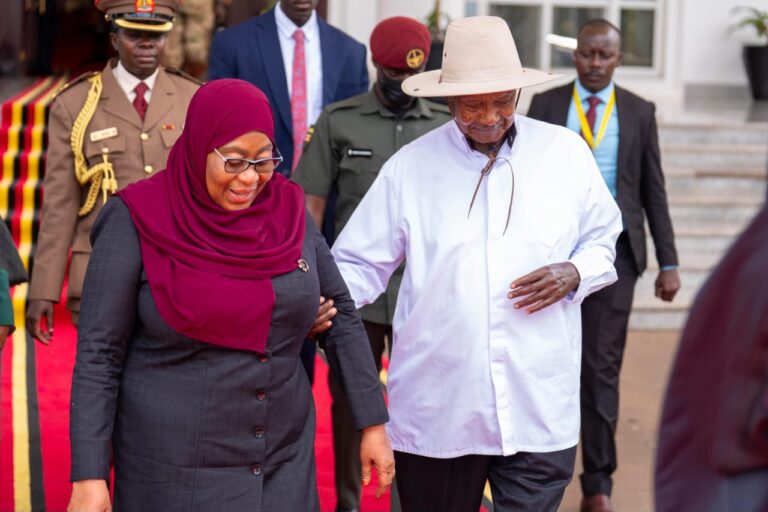
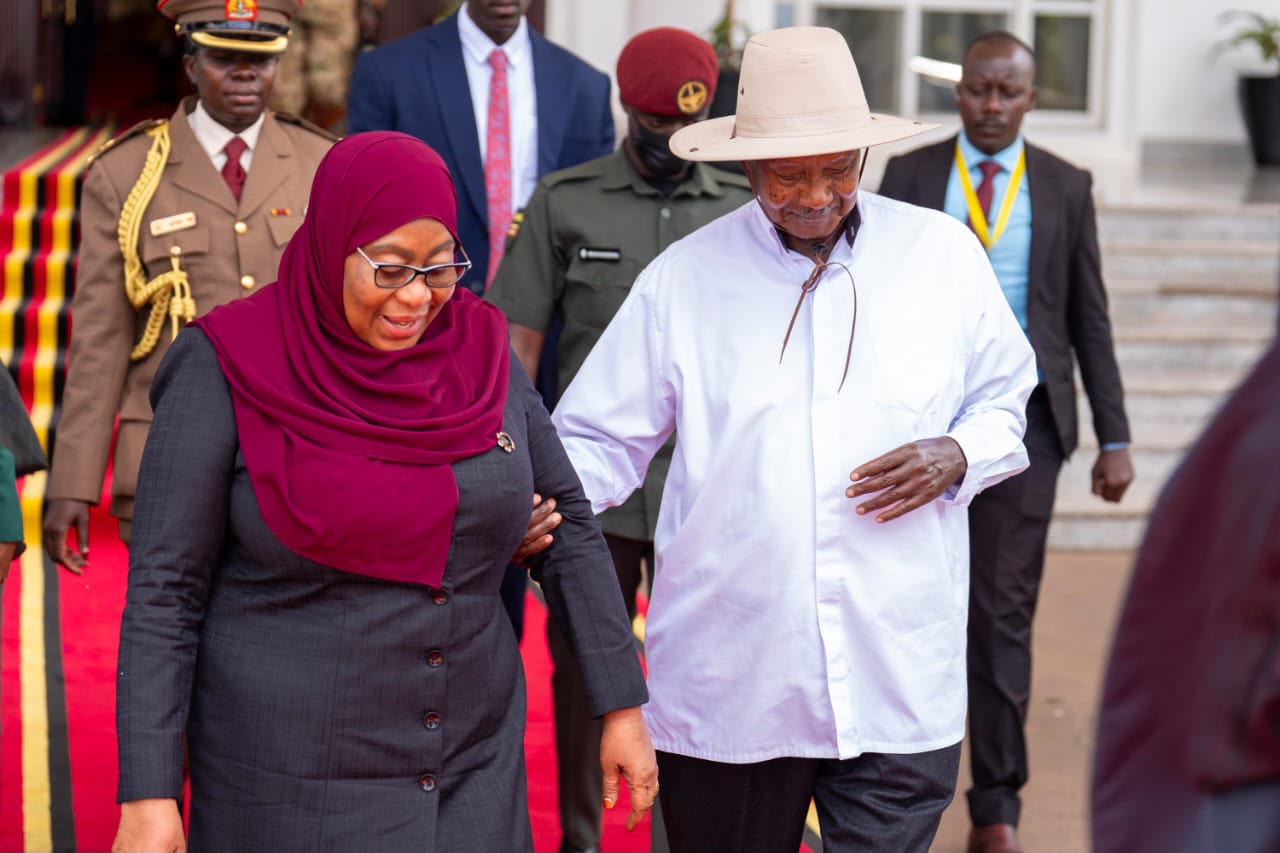
The commitment emerged during the State Visit of H.E. Dr. Samia Suluhu Hassan, President of the United Republic of Tanzania, to Uganda from 18 to 19 November 2026, at the invitation of H.E. Yoweri Kaguta Museveni, President of the Republic of Uganda. The visit reaffirmed the historic bonds of friendship, solidarity and cooperation between the two neighbouring countries, while placing renewed emphasis on the implementation of strategic projects with the potential to reshape East Africa’s economic geography.
At State House, Entebbe, the two Heads of State held bilateral discussions focused on accelerating priority projects in energy and transport, addressing barriers to trade, promoting investment and strengthening cooperation in regional peace and security. The discussions reflected a shared understanding that the prosperity of both countries is closely connected to the quality of their infrastructure, the efficiency of their trade corridors and their capacity to mobilise regional resources for shared development.
For Uganda and Tanzania, the relationship is particularly consequential. Tanzania provides Uganda with a strategic connection to the Indian Ocean through the Port of Dar es Salaam, while Uganda represents an important market, production base and gateway to the wider East African Community. Their cooperation therefore extends beyond bilateral relations: it is central to the movement of goods, energy, people and investment across the region.
Energy cooperation featured prominently in the bilateral agenda, particularly the East African Crude Oil Pipeline (EACOP), whose reported construction progress had reached 93.9 per cent at the time of the visit. The two Presidents welcomed the progress and called for the acceleration of remaining construction, testing and commissioning activities to enable the transportation of Uganda’s crude oil through Tanzania to the Indian Ocean coast.
The pipeline is one of the most significant cross-border energy investments in East Africa. Beyond its role in facilitating Uganda’s petroleum exports, it represents a major test of regional infrastructure cooperation, with implications for logistics, engineering services, employment, technology transfer and the development of supporting industries.
The two countries also underscored the importance of accelerating the development of Tanga as a Regional Energy Hub. The proposed hub is expected to strengthen petroleum storage, refining, trading, distribution and logistics, while creating opportunities for investment in petroleum-related industries.
This ambition broadens the economic significance of EACOP. Rather than treating the pipeline solely as an export route, Uganda and Tanzania are positioning energy infrastructure as a foundation for a wider regional value chain—one capable of supporting industrial activity, improving supply resilience and expanding commercial opportunities.
The two governments further prioritised cooperation in natural gas and refined petroleum products pipelines, as well as the proposed 400kV Wobulenzi–Masaka–Ibadakuli–Shinyanga electricity interconnector. Once implemented, such infrastructure would strengthen cross-border electricity trade, improve the reliability of supply and support the region’s expanding industrial and commercial requirements.
A major outcome of the visit was the signing of a Framework Agreement for the Isaka–Lusahunga–Murongo/Kikagati–Mpondwe Standard Gauge Railway (SGR) project. The proposed railway is intended to improve regional connectivity, facilitate the movement of goods and passengers, reduce transport costs and strengthen links between production centres and markets across the two countries and the wider region.
The Presidents directed the relevant ministries and railway institutions to expedite feasibility studies, designs, financing arrangements and other preparatory work required to advance the project.
The significance of the agreement lies not only in the construction of a railway line, but in the economic possibilities that improved rail connectivity can unlock. More efficient freight movement can reduce the cost of transporting agricultural produce, manufactured goods, construction materials and other commodities. It can also strengthen the competitiveness of businesses that depend on predictable and affordable access to regional markets.
The discussions also addressed the improvement of Port Bell infrastructure and railway connectivity to Kampala, alongside the planned MV Mwanza service linking Mwanza and Port Bell. These initiatives point to a more integrated approach to transport, combining rail and lake-based logistics to improve cargo handling and the movement of passengers across Lake Victoria.
For land-linked Uganda, stronger connections to Tanzania’s transport network offer an opportunity to diversify trade routes, improve access to maritime gateways and reduce logistical constraints. For Tanzania, they reinforce the strategic value of its transport infrastructure as a regional service platform.
Trade facilitation was another central pillar of the discussions, with both governments committing to promote balanced trade, diversify traded goods and services, expand market access and encourage value addition. The two Presidents directed the relevant agencies to urgently address outstanding Non-Tariff Barriers (NTBs) that continue to affect the movement of goods and services between the two countries. They also emphasised the establishment of a Tanzania–Uganda Joint Trade Committee to provide an institutional mechanism for identifying trade constraints, coordinating responses and monitoring progress.
The proposed committee is particularly important because regional trade agreements can only deliver their intended benefits when businesses can access markets without unnecessary administrative delays, inconsistent procedures or avoidable border restrictions.
For traders, manufacturers, farmers and investors, the practical value of regional integration is measured not simply by the signing of agreements, but by whether goods move efficiently, standards are understood, payments are facilitated and market opportunities are accessible.
Uganda and Tanzania therefore have an opportunity to deepen commercial cooperation in agriculture, agro-processing, manufacturing, petroleum-based industries, logistics and services. Greater private-sector engagement will be essential in translating the political commitments into investment, employment and stronger regional value chains. The emphasis on balanced trade also reflects the need to ensure that both economies participate meaningfully in the opportunities created by closer integration. A stronger bilateral trading relationship should encourage productive capacity, rather than simply increase the volume of goods exchanged.
The economic ambitions underpinning the visit were given a practical expression on 19 November 2026, when Presidents Museveni and Samia jointly officiated at the commissioning of the Double Q Automotive Assembly Plant in Nakirebe, Mpigi District.
The commissioning highlighted the growing importance of industrialisation, local manufacturing and private-sector investment in Uganda’s economic transformation agenda. It also provided an opportunity to demonstrate how investment in productive industries can complement regional trade and infrastructure cooperation.
Automotive assembly has potential linkages across a broad industrial ecosystem, including component supply, metal fabrication, engineering, logistics, maintenance, technical training and distribution. The extent to which these benefits are realised will depend on the development of local supplier networks, workforce skills, competitive production capacity and access to regional markets.
The plant’s commissioning therefore carries significance beyond the opening of an individual industrial facility. It reinforces the case for a more productive East African economy—one that increasingly processes, assembles and manufactures goods within the region, rather than relying predominantly on imported finished products.
For Uganda and Tanzania, the next opportunity is to connect such industrial investments to the wider regional market through improved transport corridors, predictable trade procedures and investment partnerships.
Beyond the economic agreements, the visit carried important diplomatic symbolism. President Samia commended Uganda for being the first country to commence construction of its Chancery Building in Dodoma, Tanzania’s capital. The recognition reflected the importance both countries attach to diplomatic representation and the enduring confidence underpinning their bilateral relations.
Diplomatic infrastructure is more than a physical presence. Embassies and chancery buildings provide platforms for political engagement, consular services, commercial diplomacy, cultural exchange and the promotion of investment opportunities. Uganda’s investment in its diplomatic presence in Dodoma therefore complements the broader ambition of deepening engagement with Tanzania. The recognition also reinforces the importance of reciprocity in diplomatic relations: sustained political dialogue, effective institutional cooperation and a commitment to maintaining strong channels of communication.
The two Presidents reaffirmed their commitment to promoting peace, stability and security through the East African Community (EAC), African Union (AU), Intergovernmental Authority on Development (IGAD) and United Nations. Their discussions underscored the importance of diplomacy, peaceful dispute resolution and coordinated responses to conflicts, terrorism and other security threats affecting the region and the continent.
The two countries also reiterated the need for reform of the United Nations system, particularly the question of equitable African representation on the UN Security Council, in line with the Ezulwini Consensus and the Sirte Declaration. This position reflects a longstanding African demand for a more representative international governance system in which the continent has an appropriate voice in decisions affecting international peace and security.
President Museveni further commended President Samia for her continental leadership roles in advancing child and maternal health, women’s and youth participation in trade under the African Continental Free Trade Area (AfCFTA), and clean cooking initiatives. Uganda pledged support for these initiatives, signalling opportunities for continued cooperation in areas that connect development priorities with Africa’s broader transformation agenda.
Public health cooperation also featured in the bilateral commitments, with both countries agreeing to strengthen disease surveillance, information sharing and cross-border preparedness. The two governments recognised the importance of resilient health systems, improved access to vaccines, medicines and essential health commodities, and stronger coordination in responding to public health threats.
Given the movement of people and goods across their shared border, health security is inherently a regional concern. Effective surveillance, timely information exchange and coordinated preparedness can help protect communities while supporting the continuity of trade, travel and economic activity. This dimension of the partnership is a reminder that regional integration must extend beyond infrastructure and commerce to include the protection of human welfare.
The State Visit has reinforced a clear message: Uganda and Tanzania intend to deepen their partnership through projects and institutions that directly support economic transformation. However, the real measure of its success will be implementation.
The EACOP must move from construction progress towards safe and responsible operational readiness. The Tanga Energy Hub requires coordinated investment and clear implementation arrangements. The SGR framework agreement must be followed by technically sound feasibility studies, financing and construction preparations. Port Bell and Lake Victoria connectivity must translate into more efficient movement of cargo and passengers. Trade barriers must be addressed through practical, time-bound interventions.
Equally important will be the work of the proposed Joint Trade Committee and the relevant ministries, agencies and private-sector institutions in ensuring that commitments are followed through. A credible implementation framework, with clear institutional responsibilities, timelines and periodic progress reviews, will be essential in maintaining momentum beyond the State Visit.
The Uganda–Tanzania relationship is strategically important because its outcomes extend well beyond the borders of the two countries. Energy infrastructure, railway connectivity, lake transport and trade facilitation are interconnected elements of a wider East African economic system. When these projects advance together, they can improve the movement of goods, strengthen industrial competitiveness, create investment opportunities and support the ambitions of the East African Community and the AfCFTA.
The State Visit of President Samia Suluhu Hassan has therefore provided an opportunity to renew the political commitment behind this partnership and to give greater urgency to its economic agenda. Ultimately, the strength of Uganda–Tanzania relations will not be measured only by the number of agreements signed or the frequency of high-level visits. It will be reflected in the infrastructure delivered, businesses connected, trade barriers removed, industries established and opportunities created for citizens on both sides of the border.
The challenge now is to convert diplomatic goodwill into institutional discipline, regional investment and tangible development outcomes. Uganda and Tanzania are not simply strengthening relations between two neighbouring states; they are investing in the infrastructure of a more connected, competitive and economically integrated East Africa.