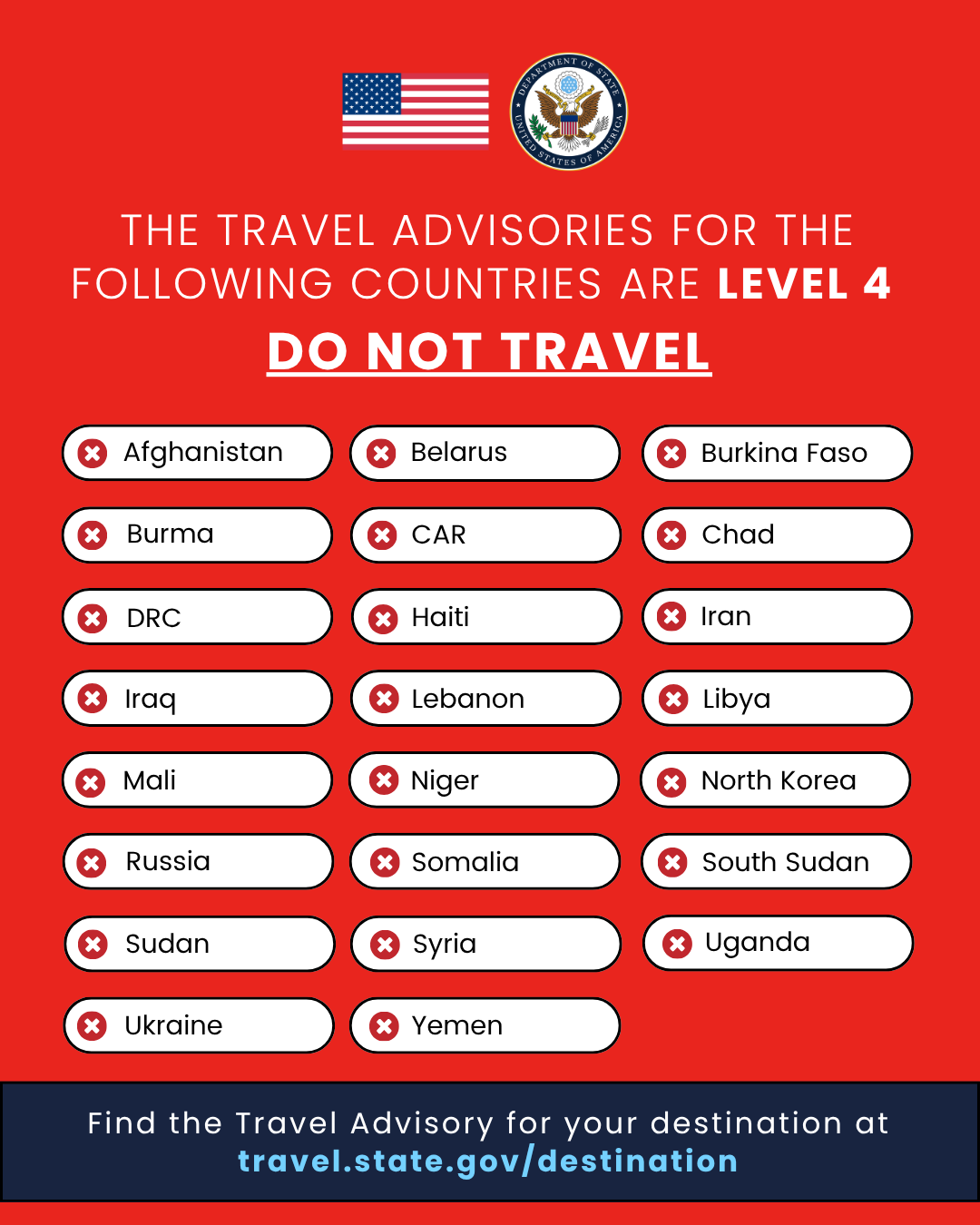
A travel warning is more than a notice to tourists. It can influence where people invest, which destinations airlines prioritise, where international conferences are hosted and how countries are perceived by the global community. A current travel advisory published by the United States Department of State places 11 African countries among destinations classified at Level 4: Do Not Travel, the highest category in its four-level international travel advisory system.

The African countries on the list are Burkina Faso, the Central African Republic, Chad, the Democratic Republic of the Congo (DRC), Libya, Mali, Niger, Somalia, South Sudan, Sudan and Uganda. Globally, the Department’s current list contains 24 Level 4 destinations, including Gaza. The classification reflects different security and health concerns, not one common explanation for every country.
The distinction matters. Level 4 is not a declaration that every part of a country is equally dangerous, nor is it an international travel ban. It is an assessment by the United States of risks facing its own citizens. The Department identifies threats including terrorism, violent crime, kidnapping, political unrest, armed conflict, wrongful detention and health emergencies. It advises Americans not to travel to such destinations or to leave when it is safe to do so. In emergencies, the ability of the U.S. government to provide assistance may be very limited or unavailable.
The concentration of 11 African countries in the highest-risk category reflects several overlapping crises. In the Sahel, Burkina Faso, Mali and Niger continue to face terrorism, insecurity and political instability. In the Horn of Africa, Somalia confronts persistent militant violence, while Sudan remains affected by a devastating conflict. South Sudan faces insecurity and political instability. In Central Africa, the DRC and Central African Republic experience complex security and humanitarian challenges. Libya’s prolonged instability continues to affect its security environment, while Chad faces regional insecurity and cross-border threats.
These situations have consequences beyond national borders. Conflict disrupts transport corridors, displaces populations, weakens public institutions and complicates trade. Insecurity also affects humanitarian access, regional investment and the ability of governments to deliver public services. For neighbouring countries, the effects may include refugee movements, border-management pressures and disruption to cross-border commerce.
The economic implications are particularly relevant to tourism. According to UN Tourism, Africa recorded approximately 81 million international tourist arrivals in 2025, representing 5 per cent of global arrivals. The continent nevertheless registered 8 per cent growth compared with 2024 and stood 17 per cent above its 2019 pre-pandemic level. Globally, international arrivals reached approximately 1.523 billion in 2025, generating an estimated US$2.2 trillion in international tourism export revenues.
These figures demonstrate that Africa’s tourism sector is expanding despite persistent security challenges. They also show why destination reputation matters. Travel advisories do not automatically determine visitor numbers, but they can influence travel decisions, insurance assessments, tour operators, conference organisers and business travellers. Countries therefore have an interest in communicating security improvements with credible evidence rather than relying exclusively on promotional campaigns.
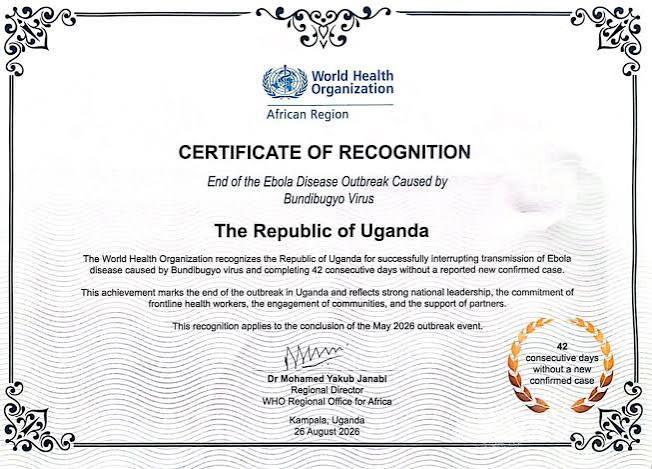
Uganda’s inclusion deserves particular examination, the U.S. advisory page currently displays Level 4, last issued on 4 June 2026, citing crime, health, terrorism and unrest. The health indicator was connected to the Bundibugyo Ebola outbreak involving Uganda and the DRC. However, the subsequent public-health record is important, Uganda’s Ministry of Health announced that the outbreak had ended on 28 July 2026, while the World Health Organization and Africa CDC formally welcomed the end of transmission in Uganda on 27 August after 42 consecutive days without a new confirmed case. The DRC outbreak remained a separate regional concern.
As of 9 November 2026, the U.S. advisory page still displays the June 4 classification and includes the health indicator. This creates a legitimate question about whether the advisory should be reviewed to reflect the later public-health developments. It does not automatically invalidate the other security concerns listed by the United States, including crime, terrorism and unrest. Rather, it highlights the importance of timely, evidence-based updates.
For Uganda, this has implications for tourism promotion, investment confidence, international events and economic diplomacy. Government communication must distinguish between a national health emergency that has ended and security risks that require continued attention. Equally, the country’s tourism industry must maintain credible safety standards and transparent communication with visitors.
The wider African response should not be limited to challenging negative travel classifications. Governments must address the underlying threats through stronger institutions, regional intelligence cooperation, effective border management, conflict prevention and improved emergency response. The African Union, regional economic communities and national governments have important roles in strengthening peace and security as foundations for economic integration.
Diplomatic missions also have a responsibility to communicate accurate country information, engage foreign governments when advisories become outdated and provide timely evidence of improvements. Such engagement should be factual rather than confrontational: a credible advisory review is more persuasive when supported by verifiable security, health and institutional data.
Africa’s global image cannot be separated from the realities experienced by citizens and visitors. The continent’s 2025 tourism growth shows that international demand remains strong, but sustained progress requires more than natural attractions, cultural heritage and investment opportunities. It requires security, public confidence and institutions capable of responding to emerging risks.
Ultimately, travel advisories are not permanent verdicts on countries. They are assessments that can change as conditions change. For Africa, the challenge is to make that change visible through measurable improvements in peace, public safety, health preparedness and governance. The objective should not simply be to leave the Level 4 list, but to build destinations where citizens, visitors and investors can travel and operate with confidence.