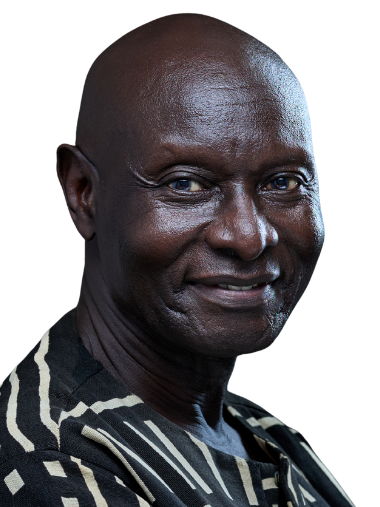
NEW YORK— As debates over the effectiveness, legitimacy and future relevance of multilateral institutions continue to shape international relations, Uganda’s candidate for United Nations Secretary-General, Amb. Olara Otunnu, has released a comprehensive reform programme setting out how he would seek to restructure and refocus the global organisation if appointed to lead it.

In a document titled Reforming the United Nations: No Longer an Option; It Is an Imperative, Otunnu presents a nine-area programme of action intended to address institutional bureaucracy, administrative duplication, the effectiveness of peace operations, human rights, staff engagement and the relationship between Member States and the UN Secretariat. Uganda’s UN Secretary-General candidate outlines a nine-point reform agenda focused on institutional accountability, peace operations, human rights, administrative efficiency and bringing the United Nations closer to the people it serves.
The proposals place institutional reform at the centre of the debate about the United Nations’ future, arguing that the organisation must demonstrate greater accountability, operational coherence and measurable impact if it is to remain relevant to the challenges confronting the international community.
At the heart of the document is a question that speaks to the wider credibility of multilateralism: whether the United Nations will continue to matter in the everyday lives of ordinary people. “I believe that the UN can rise to the moment, but only if we are willing to change how it works,” Otunnu writes, arguing that reform should become a continuous institutional process rather than an occasional response to financial or political pressure.
Amb. Otunnu’s proposed reform agenda covers nine areas: reducing bureaucracy and reviewing senior positions; bringing the UN closer to the communities it serves; consolidating administrative functions and accelerating digital transformation; reforming peace operations; ending major wars; rebuilding consensus on human rights; engaging UN personnel; restoring Member States to a central role in driving reform; and ensuring that the organisation reflects the diversity of the world it represents.
The proposals seek to address a longstanding tension within multilateral institutions: the gap between international policy commitments and the capacity of global organisations to deliver results at country and community levels.
On administrative reform, Amb. Otunnu argues that the process must begin with senior management and the institutional structures responsible for decision-making. He calls for an immediate review of senior positions, the elimination of duplication and redundancy, and stronger alignment between institutional priorities and available resources. He also proposes relocating more substantive political, humanitarian and development functions to regional levels, bringing decision-making and operational capacity closer to the environments in which the United Nations carries out its work.
The underlying argument is that institutional efficiency should not be measured simply by reductions in expenditure or staffing, but by whether the organisation becomes more responsive, coordinated and effective in addressing the needs of the populations it serves.
Peace and security occupy a central place in the proposed programme, Amb.Otunnu calls for more focused and accountable peace operations, alongside impartial mediation aimed at ending major armed conflicts. He argues that the United Nations must strengthen its ability to prevent the escalation of crises, support political settlements and ensure that peace operations have clear objectives and measurable outcomes.“Ending these deadly conflicts would constitute an immediate and absolute priority for me,” he writes.
The proposal is particularly relevant to regions experiencing protracted insecurity, humanitarian emergencies and contested political transitions. Across Africa, the effectiveness of multilateral peace and security arrangements remains an important concern, particularly in the Great Lakes region, the Horn of Africa and the Sahel. However, translating the proposed reforms into practice would require sustained cooperation among Member States, the Security Council, regional organisations, host governments and other actors involved in conflict prevention and peacebuilding.
On human rights, Amb. Otunnu calls for the restoration of consensus around the principles of the United Nations Charter and a more consistent application of international human rights standards. He states that, if appointed Secretary-General, he would invoke the Charter and its principles in an impartial and non-selective manner. The emphasis on impartiality addresses a recurring challenge in international affairs: perceptions that the application of international norms is sometimes influenced by geopolitical interests, strategic alliances or differences in the political influence of states.
Rebuilding confidence in the UN’s human rights work would therefore require more than declarations. It would depend on institutional consistency, credible engagement with Member States, cooperation with human rights mechanisms and a willingness to address violations without selective application of established principles.
Another dimension of the reform programme concerns the relationship between the Secretariat, Member States and UN personnel. Amb. Otunnu argues that meaningful institutional transformation cannot be achieved through administrative restructuring alone. It requires the participation of the organisation’s workforce and a stronger sense of ownership among Member States.
His proposal places Member States in the driving seat of reform while calling for greater engagement with UN staff, whose institutional knowledge and operational experience are essential to implementing organisational change. This approach recognises that the Secretary-General operates within a complex multilateral system. Although the office carries significant administrative, diplomatic and agenda-setting responsibilities, institutional reform also depends on the political will and cooperation of the organisation’s membership.
The proposal also addresses the need for the United Nations to reflect the contemporary international system and the diversity of the people and regions it represents. This issue has particular relevance for Africa, whose representation in the principal decision-making structures of the United Nations, especially the Security Council, remains a major subject of multilateral reform debates.
For African countries, the discussion extends beyond geographical representation. It concerns the capacity of the international system to accommodate changing global power relations, recognise regional perspectives and respond to the priorities of developing countries.
Amb. Otunnu’s emphasis on institutional representation and Member State ownership therefore connects the proposed administrative reforms to the broader question of the legitimacy and responsiveness of global governance.
Amb. Otunnu brings to the candidacy a career spanning diplomacy, international public service, human rights and peacebuilding. He served as Uganda’s Permanent Representative to the United Nations, Vice-President of the General Assembly, Chair of the Commission on Human Rights and Minister of Foreign Affairs. Between 1997 and 2005, he served as UN Under-Secretary-General and Special Representative for Children and Armed Conflict.
During his tenure in that role, he advanced the protection of children affected by armed conflict within the Security Council’s agenda and contributed to the development of the monitoring and reporting arrangements associated with Security Council Resolution 1612. His earlier engagement with the United Nations also included service as President of the Security Council in 1981, when he introduced the straw-poll approach, commonly associated with the selection process for the Secretary-General and known as the Otunnu Formula. He subsequently chaired the General Assembly’s Credentials Committee during the 1983 Grenada crisis, where he helped develop an approach to resolving an institutional deadlock.
Outside the United Nations, Otunnu has been involved in peacebuilding initiatives, including Rocco Paco, a movement he co-founded to support rebuilding and healing in post-war northern Uganda. His professional and academic background includes education at Makerere University, Oxford and Harvard Law School.
While the document presents a detailed vision for organisational change, the practical challenge will be translating its proposals into reforms that can secure political support and produce measurable improvements. Reviewing senior positions, decentralising substantive functions, reforming peace operations and strengthening human rights consistency would involve complex institutional, financial and political negotiations. The Secretary-General can exercise leadership and administrative authority, but the implementation of many reforms depends on decisions and cooperation by Member States and other UN organs.
The question, therefore, is not simply whether the United Nations needs reform. It is how reform can be pursued while preserving the organisation’s founding principles, strengthening its operational capacity and maintaining the confidence of its diverse membership.
For Africa, the discussion carries particular significance. A more responsive United Nations would have implications for peacebuilding, development financing, climate action, international trade, humanitarian assistance and the continent’s participation in global decision-making.
Amb. Otunnu concludes that reform should be embedded in the institutional culture of the organisation, supported by consensus-building, innovation and resolve. He describes his contribution as combining deep institutional knowledge with an independent perspective on the United Nations.His document now places a detailed reform programme before the international community. Its wider significance will ultimately depend on how its proposals engage with the political realities of the UN system and whether they can translate into practical institutional change.
The broader challenge remains one confronting the United Nations itself: restoring confidence in multilateral cooperation by demonstrating that international institutions can respond effectively to the problems they were established to address.