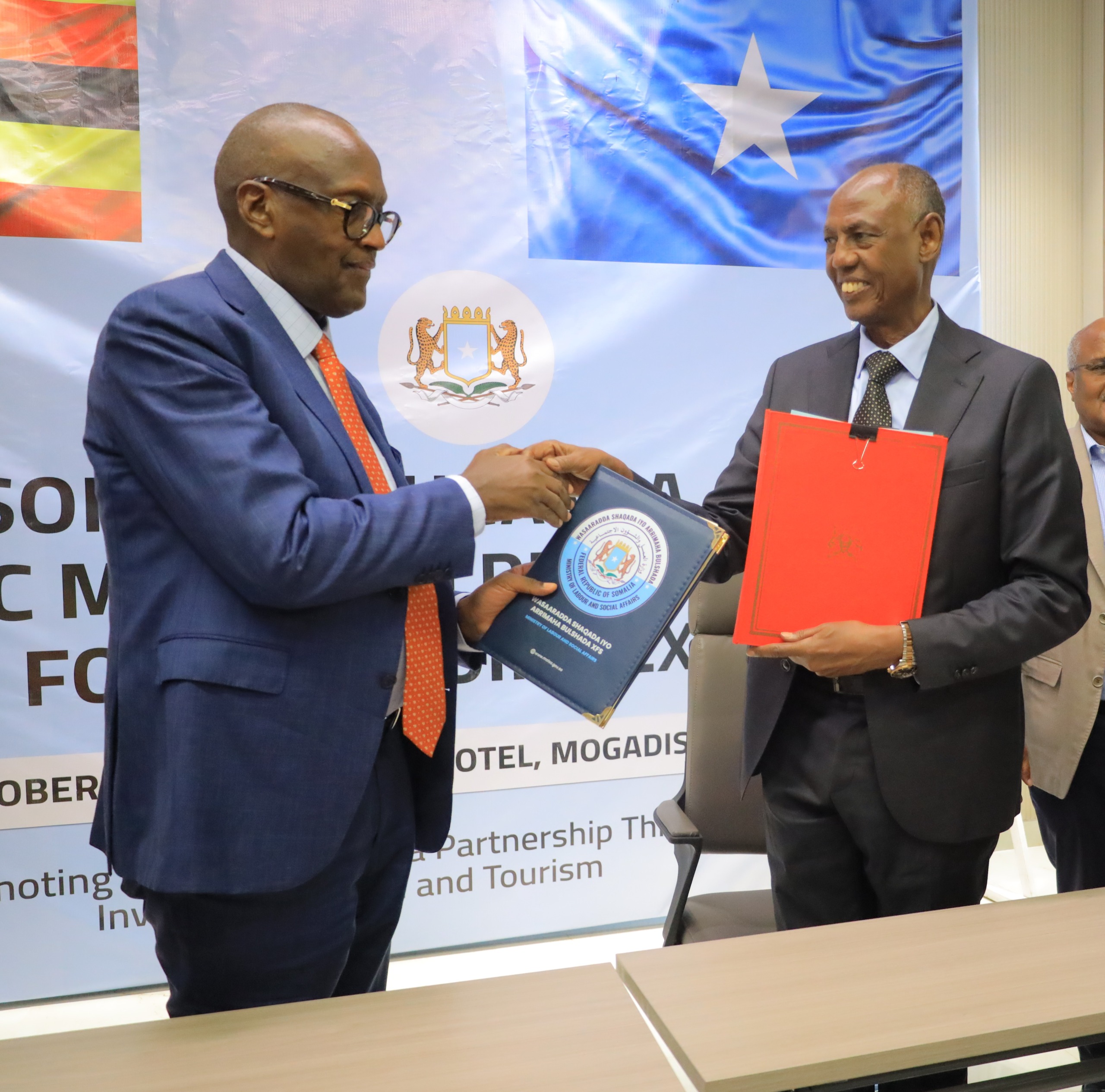
MOGADISHU, SOMALIA | Uganda and Somalia have renewed their commitment to deepening bilateral relations following the second day of the Mid-Term Review of the Second Joint Permanent Commission (JPC), Business Forum and Joint Exhibition in Mogadishu, with the signing of a Bilateral Labour Agreement marking a key milestone in efforts to translate diplomatic engagement into practical economic cooperation.

The engagements reviewed progress on commitments agreed during the Second Session of the Uganda–Somalia Joint Permanent Commission held in Kampala in October 2025, covering trade, investment, defence, security, immigration, education, health, labour and civil aviation. Mid-term review advances commitments on trade, investment, labour mobility and regional economic cooperation, with a new investment and business council targeted for establishment by November 2026.
The high-level discussions brought together Uganda’s Minister of Gender, Labour and Social Development, Hon. Gen. Henry Tumukunde; Somalia’s Minister of Foreign Affairs and International Cooperation, H.E. Abdisalam Abdi Ali; and senior government officials from both countries.
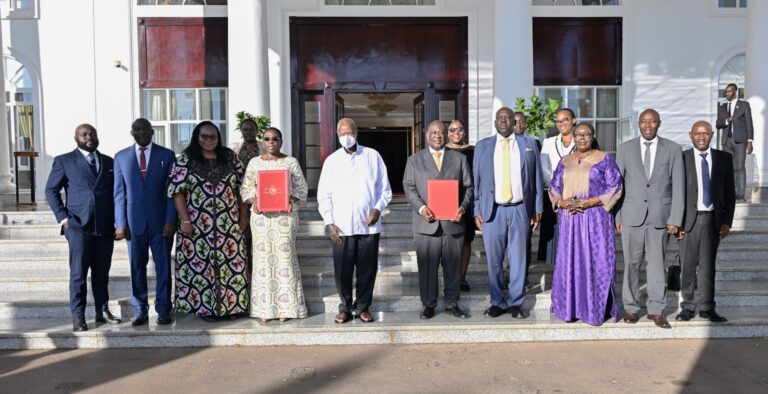
A central outcome was the signing of the Bilateral Labour Agreement by Hon. Gen. Henry Tumukunde and Somalia’s Minister of Labour and Social Affairs, Prof. Salim Alio Ibro. The agreement establishes a framework for regulated employment, fair recruitment and the protection of workers’ rights and welfare in both countries. It is intended to strengthen labour cooperation, facilitate the exchange of skills and expertise, and support employment opportunities through more structured bilateral arrangements.
Speaking after the signing, Tumukunde emphasised the importance of translating diplomatic goodwill into practical commitments, describing the agreement as a step towards strengthening cooperation and improving opportunities for citizens of both countries. The agreement comes against a wider African policy priority: improving the governance of labour mobility as countries seek to expand employment opportunities, address skills gaps and strengthen protections for migrant workers.
For Uganda and Somalia, effective implementation will be important in ensuring that recruitment practices are transparent, employment terms are clear and workers have access to appropriate mechanisms for addressing grievances.
The two governments also signed the Agreed Minutes of the Mid-Term Review, documenting progress and setting out commitments for continued implementation of decisions reached under the Joint Permanent Commission.
Ambassador Richard Kabonero, Head of Regional Economic Cooperation at Uganda’s Ministry of Foreign Affairs, signed on behalf of Uganda’s Permanent Secretary, Mr. Vincent Bagiire Waiswa. Somalia was represented by Mr. Hamza Adan Haadoow, Permanent Secretary of the Ministry of Foreign Affairs and International Cooperation.
On the economic front, both countries committed to strengthening private-sector partnerships and fully constituting the Joint Permanent Investment and Business Council by 30 November 2026. The proposed council is expected to provide a structured platform for business engagement, investment promotion and follow-up on agreed commercial initiatives. Its effectiveness will depend on translating commitments into practical measures, including sustained dialogue between businesses, the identification of investment opportunities and mechanisms for resolving barriers to cross-border trade.
Held under the theme “Harnessing Trade, Tourism and Investment Opportunities in Both Countries and Beyond,” the Business Forum and Joint Exhibition brought together commercial interests from Uganda and Somalia to showcase products and services and explore opportunities for investment and business partnerships. The initiative reflects the broader potential for stronger commercial engagement between the two countries, particularly through improved private-sector connections and coordinated efforts to identify opportunities in trade, tourism and investment.
For Uganda, deeper engagement with Somalia offers an opportunity to strengthen commercial links within the Horn of Africa and the wider East African region. For Somalia, closer economic cooperation can support business partnerships, market access and the development of commercial relationships with regional partners. However, the long-term impact of business forums depends on what follows the meetings: investment commitments converted into projects, commercial agreements translated into transactions and institutional mechanisms that sustain engagement beyond individual events. The decision to strengthen follow-up arrangements under the JPC therefore forms an important part of the implementation agenda.
The Mid-Term Review also addressed outstanding bilateral agreements and the need to strengthen mechanisms for tracking implementation. Annual reviews were agreed upon to monitor progress on decisions taken by the Joint Permanent Commission, creating an opportunity for both governments to assess delivery, identify implementation gaps and establish priorities for subsequent engagements.
Somalia is expected to host the Third Session of the Joint Permanent Commission and Investment and Business Forum in 2027, with dates to be agreed through diplomatic channels. The next phase will require sustained coordination across government institutions, alongside active participation from businesses and other stakeholders involved in bilateral cooperation.
The Uganda–Somalia engagements illustrate how bilateral diplomacy can serve as a practical instrument for advancing economic cooperation, labour governance and regional partnerships. The Bilateral Labour Agreement provides a framework for cooperation on employment and worker protection, while the proposed Joint Permanent Investment and Business Council offers a platform for strengthening private-sector engagement. The agreed annual reviews could further support accountability by connecting diplomatic commitments to measurable implementation.
As African economies pursue greater regional integration, the value of bilateral arrangements will increasingly be assessed by their contribution to trade, investment, employment and institutional cooperation.
For Uganda and Somalia, the priority now is to convert the outcomes of the Mogadishu engagements into sustained partnerships that deliver tangible benefits to citizens and businesses in both countries. The proceedings concluded with appreciation to the Government of Somalia for hosting the Mid-Term Review and a renewed commitment by both sides to strengthen their longstanding bilateral relations.