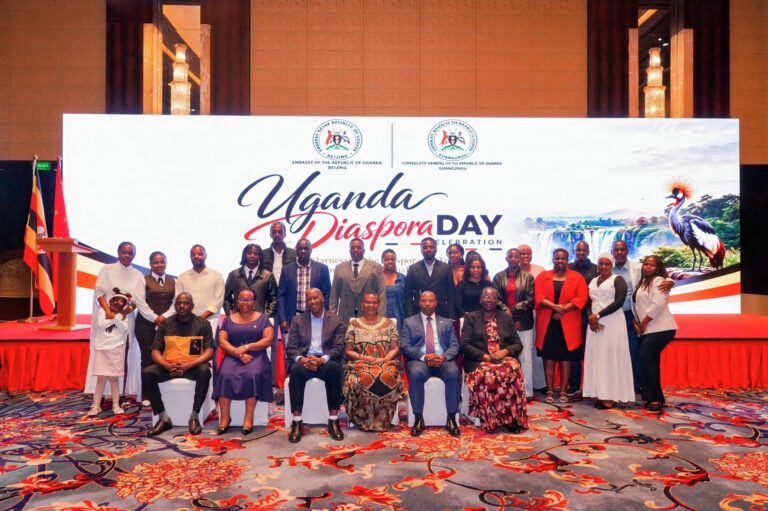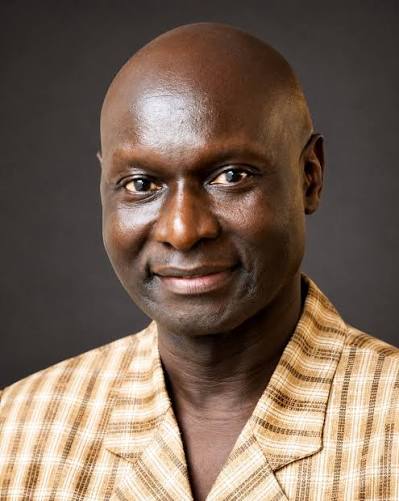
Kampala — Uganda has formally entered one of the world’s most consequential diplomatic contests by nominating veteran diplomat Ambassador Olara Otunnu for the position of the 10th Secretary-General of the United Nations, whose five-year term begins on 1 January 2027 following the expiry of António Guterres’ mandate at the end of this year.
The announcement has been welcomed in some diplomatic circles as a recognition of one of Africa’s most accomplished international civil servants. Yet it has also generated mixed reactions online, with supporters celebrating Uganda’s decision to field an internationally respected statesman while critics question both the timing of the nomination and his prospects in an increasingly complex geopolitical contest. Beyond the immediate reactions, however, the more important question is whether Ambassador Otunnu possesses the diplomatic profile required to navigate one of the most demanding leadership positions in global governance and whether the international political environment is favourable to his election.
Unlike most international elections, the Secretary-General is not elected by a popular vote, the process begins with nominations by UN Member States. Candidates are then informally assessed through consultations and straw polls conducted by the 15-member United Nations Security Council. A candidate must secure the support of at least nine Council members while avoiding a veto from any of the five permanent members (China, France, Russia, the United Kingdom and the United States). Only after the Security Council agrees on a single candidate does it recommend that individual to the 193-member United Nations General Assembly, which traditionally confirms the recommendation by consensus.
In practice, therefore, the decisive contest occurs inside the Security Council rather than the General Assembly. Ironically, Ambassador Otunnu occupies a unique place in the history of this very process. As President of the Security Council in December 1981, he introduced the confidential straw-balloting procedure widely known in diplomatic circles as the “Otunnu Formula” which has remained central to every Secretary-General selection since.
As of late July 2026, formal nominations remain limited, and several governments are still consulting internally before declaring candidates. However, diplomats and international observers have repeatedly mentioned a number of individuals who could either remain in contention or emerge during the process, including:
- Mia Amor Mottley (Prime Minister of Barbados), widely respected for her leadership on climate finance and reform of the international financial system.
- Michelle Bachelet (former President of Chile and former UN High Commissioner for Human Rights), regarded as one of Latin America’s most experienced multilateral leaders.
- Rebeca Grynspan (Costa Rica), Secretary-General of UNCTAD and former Vice-President of Costa Rica, with extensive UN leadership experience.
- Amina J. Mohammed (Nigeria), current UN Deputy Secretary-General, who has played a central role in advancing the Sustainable Development Goals.
- Other senior diplomats from Eastern Europe, a region many Member States argue has never produced a UN Secretary-General and therefore deserves consideration under the informal principle of regional rotation.
The final list, however, will only become clear once the nomination window closes.
The Politics Behind the Election
Selecting a UN Secretary-General is rarely determined solely by qualifications.The office sits at the intersection of international law and global geopolitics. Candidates must command broad confidence across developed and developing countries while remaining acceptable to competing major powers. Historically, successful candidates have shared several characteristics:
- Extensive diplomatic and multilateral experience.
- Demonstrated political independence.
- Credibility across different geopolitical blocs.
- Proven ability to mediate international crises.
- Acceptance by all five permanent members of the Security Council.
These political realities often outweigh regional endorsements or national lobbying efforts.
Otunnu’s Diplomatic Strengths
Measured against these criteria, Ambassador Otunnu presents one of the strongest diplomatic résumés Africa has produced in recent decades. His career spans more than forty years in international diplomacy, including service as Uganda’s Permanent Representative to the United Nations, Minister of Foreign Affairs, President of the International Peace Academy (now the International Peace Institute), and the first UN Special Representative for Children and Armed Conflict.
His greatest institutional achievement arguably remains the creation of the UN monitoring and reporting mechanism under Security Council Resolution 1612, which fundamentally reshaped international protection for children affected by armed conflict. Unlike many candidates who have spent their careers exclusively in national politics, Otunnu combines experience inside the UN Secretariat, Security Council diplomacy, government service, academia and grassroots peacebuilding. From a purely professional standpoint, few prospective candidates possess such a broad institutional understanding of the United Nations.
The Challenges Ahead
Nevertheless, qualifications alone rarely determine the outcome, several factors may complicate Otunnu’s path. First, the informal expectation of regional rotation has gained renewed attention. Since no Secretary-General has come from Eastern Europe, many governments continue to argue that the region should finally assume the position. Second, geopolitical competition between the permanent members has intensified considerably since António Guterres first assumed office in 2017. Consensus among the United States, China and Russia is now more difficult than at almost any point in recent decades.
Third, there is growing international advocacy for the appointment of the first female Secretary-General, a campaign supported by many governments, civil society organisations and former world leaders. These broader political dynamics may shape the contest as much as the individual merits of any candidate. Ambassador Otunnu has previously been mentioned in discussions surrounding the UN’s top office. Ahead of the 2006 Secretary-General selection, his name featured among respected African diplomats considered capable of succeeding Kofi Annan. However, Uganda did not ultimately mount the level of formal diplomatic campaign required to transform that possibility into a fully competitive international candidacy.
The 2006 race eventually shifted decisively toward Asia under the informal principle of regional rotation, resulting in the election of Ban Ki-moon of the Republic of Korea. In retrospect, Otunnu’s prospects then were constrained less by his credentials than by geopolitical expectations favouring an Asian candidate after two consecutive African Secretaries-General (Boutros Boutros-Ghali of Egypt and Kofi Annan of Ghana).
How Do His Chances Compare Today?
Today’s landscape is considerably more fluid, Professionally, Ambassador Otunnu arguably possesses an even stronger legacy than he did two decades ago. His contributions to peacebuilding, children’s rights and international diplomacy have matured into enduring institutional achievements. Politically, however, the environment has become more competitive.
The debate over regional rotation, calls for gender representation, and increasing rivalry among major powers mean that no candidate enters the race as a clear favourite. From an analytical perspective, Otunnu’s greatest advantage lies in his reputation as a principled multilateral diplomat respected across ideological divides. His greatest challenge lies in assembling the broad geopolitical coalition necessary to survive successive Security Council straw polls without attracting a veto.
Who Appears Most Suitable?
Assessing suitability depends on the criteria applied. If the benchmark is experience within the United Nations system, institutional knowledge, diplomatic credibility and conflict mediation, Ambassador Olara Otunnu ranks among the strongest potential candidates internationally. If the benchmark incorporates political feasibility including regional expectations, gender considerations and Security Council dynamics the outcome becomes significantly less predictable.
The next Secretary-General must simultaneously reassure major powers, maintain the confidence of developing countries, defend the UN Charter, manage multiple armed conflicts, respond to climate challenges, strengthen peacekeeping operations and restore confidence in multilateralism.
- No candidate can satisfy every constituency completely.
- Ultimately, the Security Council will not simply ask who is the most qualified.
- It will ask who is the most acceptable.
For Uganda, however, the nomination itself carries diplomatic significance. It signals confidence in African leadership at a moment when the continent continues to advocate for greater representation within global governance institutions. Whether Ambassador Olara Otunnu ultimately secures the office or not, his candidature has already elevated Uganda’s diplomatic visibility and reopened an important conversation about Africa’s contribution to shaping the future of multilateral cooperation. In a world increasingly defined by geopolitical competition, the election of the next UN Secretary-General will be as much a test of international consensus as it will be a choice of individual leadership.