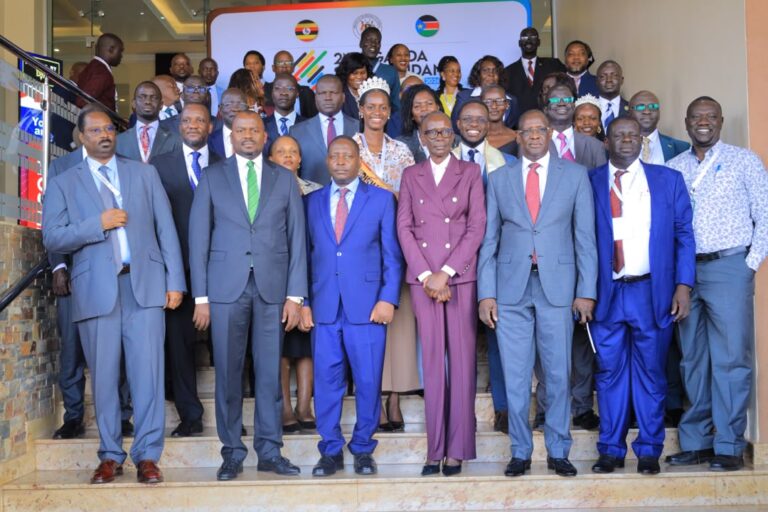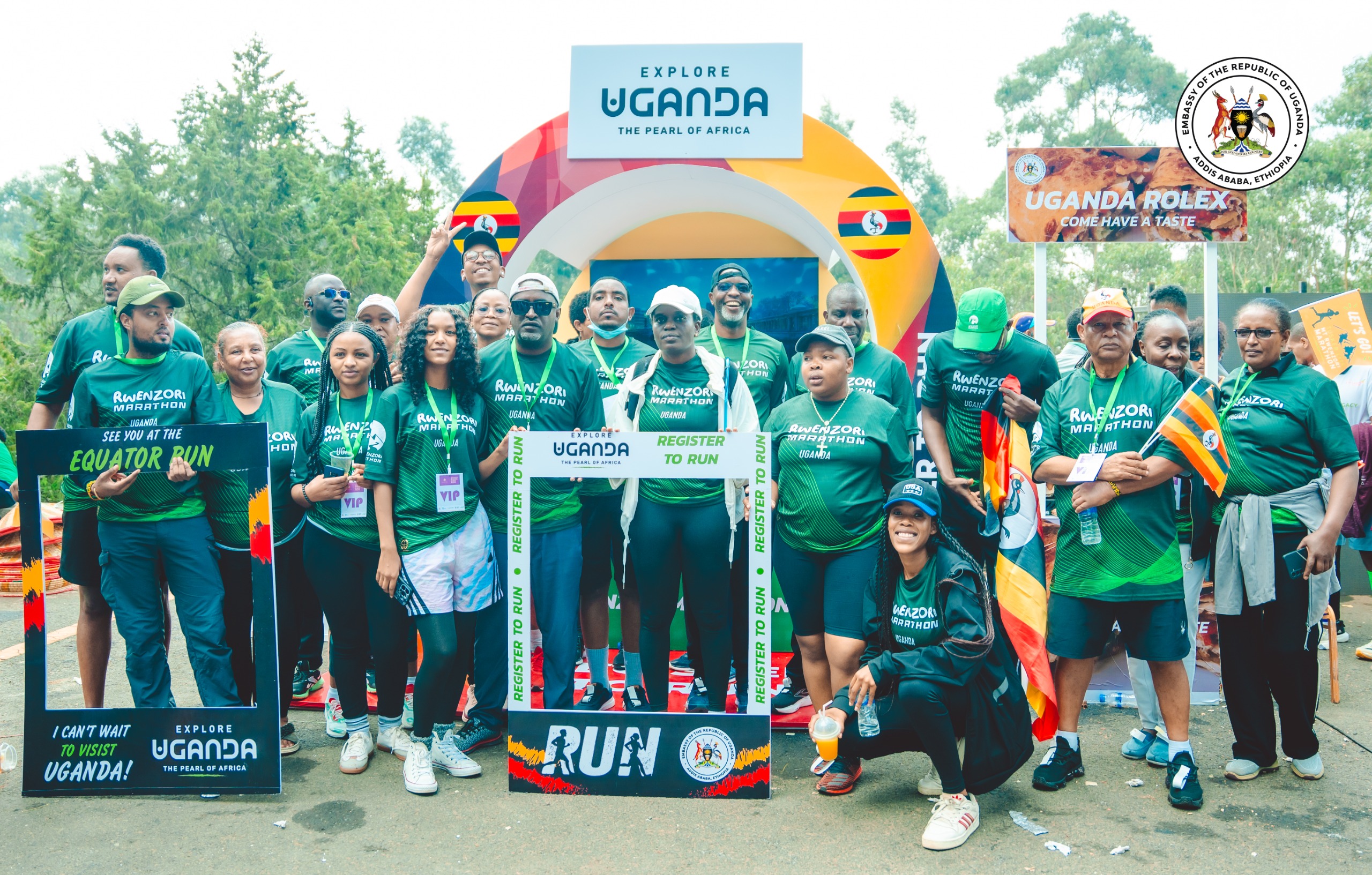
Addis Ababa, Ethiopia — Uganda’s Embassy in Addis Ababa launches the 2026 Tusker Lite Rwenzori Marathon activation, promoting tourism, sports diplomacy, trade, investment, and Uganda-Ethiopia economic cooperation bringing together more than 500 Ethiopian runners, diplomats, tourism stakeholders, media practitioners, and business leaders at Entoto Park in Ethiopia’s capital.
The high-profile promotional run formed part of Uganda’s broader strategy to leverage sports as a vehicle for tourism promotion, regional integration, trade facilitation, and people-to-people diplomacy. The initiative aligns with Uganda’s Economic and Commercial Diplomacy (ECD) Strategy, the country’s Tenfold Growth Strategy, the 4ATMS framework, and Vision 2040, all of which position economic diplomacy as a central pillar of Uganda’s foreign policy and national development agenda.
The activation reflects the Ministry of Foreign Affairs’ growing emphasis on sports diplomacy as an instrument for advancing national interests beyond traditional diplomacy. As an official partner of the Tusker Lite Rwenzori Marathon, the Ministry works closely with Uganda’s diplomatic missions to promote international participation while strengthening the country’s global visibility as a tourism and investment destination.
The marathon has gained international significance following its certification by World Athletics, enabling elite athletes to register internationally recognised qualifying times for major global competitions, including the Olympic Games. That recognition has elevated the event beyond a domestic sporting competition into an internationally accredited sporting platform capable of attracting elite athletes, recreational runners, tourists, investors, and international media.
Representing Uganda’s Ambassador to Ethiopia and Permanent Representative to the African Union, Ms. Daphine Teddy Nyanduri, First Secretary at the Embassy, described Ethiopia as a natural strategic partner owing to its globally recognised excellence in long-distance running. She observed that collaboration between the two countries extends beyond athletics and presents opportunities to strengthen tourism, investment, cultural exchange, and regional economic integration. According to Nyanduri, Uganda’s diplomatic missions continue implementing the Economic and Commercial Diplomacy Strategy by cultivating partnerships that generate commercial opportunities while enhancing Uganda’s international profile.
The activation also highlighted the increasingly important role of public-private partnerships in advancing tourism diplomacy. Speaking during the event, Mr. Amos Wekesa, Founder of the Tusker Lite Rwenzori Marathon, commended the Uganda Embassy in Addis Ababa for working closely with the private sector to market Uganda internationally. He invited Ethiopian athletes, adventure enthusiasts, and international travellers to participate in the marathon scheduled for 22 August 2026 in Kasese District, describing the event as an opportunity to experience Uganda’s mountain landscapes, biodiversity, cultural heritage, and hospitality. Wekesa noted that collaboration between government institutions and private enterprise provides an effective model for promoting sustainable tourism while contributing to broader economic development objectives.
Beyond official engagements, the activation demonstrated the value of people-to-people diplomacy in strengthening bilateral relations. Many Ethiopian participants expressed interest in visiting Uganda for the marathon after interacting directly with Ugandan officials and tourism representatives. One participant, Ashu Z-Arada, said that while Uganda had long been recognised as the “Pearl of Africa,” engaging with Ugandans during the activation encouraged many first-time participants to consider travelling to experience the country firsthand. The event builds upon the Embassy’s earlier initiatives, including a ten-day familiarisation tour organised in May 2026 for Ethiopian tour operators, media professionals, digital influencers, and prospective investors. That programme sought to translate diplomatic engagement into tangible tourism, investment, and commercial opportunities.
Speaking at the activation, Mr. Robert Sembule, Uganda’s Financial Attaché, underscored the growing importance of sports tourism within Uganda’s economic diplomacy agenda. He noted that internationally recognised sporting events generate economic value beyond athletics by stimulating tourism receipts, attracting foreign investment, strengthening business partnerships, and expanding Uganda’s international visibility. Such initiatives, he observed, increasingly demonstrate how diplomacy can create measurable economic outcomes through strategic international engagement.
Uganda’s Head of Public Diplomacy, Margaret Kafeero, praised Uganda’s diplomatic missions for actively promoting international participation in the Tusker Lite Rwenzori Marathon through sports diplomacy initiatives. She described the marathon’s certification by World Athletics in 2024 as a significant milestone for Uganda’s sporting sector. According to Kafeero, the Tusker Lite Rwenzori Marathon remains the only Ugandan-organised marathon certified by World Athletics, placing it among a select group of internationally recognised road races. She noted that the Ministry of Foreign Affairs continues using Uganda’s diplomatic missions to encourage international athletes, influencers, and tourists to participate in the marathon as part of broader efforts to position Uganda as a world-class tourism destination.
The activation also coincided with another notable milestone in Uganda-Ethiopia economic relations. Uganda recorded its first export of value-added processed beef to Ethiopia through Ranchers Finest Ltd, with approximately 20 tonnes of premium meat products expected to be supplied monthly to Diamond Hotel and Restaurant Group in Ethiopia. The development illustrates the increasingly interconnected nature of trade promotion and diplomatic engagement, reinforcing efforts to diversify Uganda’s exports while strengthening regional commercial partnerships. Officials described the achievement as evidence that economic diplomacy can simultaneously promote tourism, facilitate trade, attract investment, and deepen bilateral cooperation.
As African governments continue exploring innovative approaches to economic transformation, Uganda’s use of sports diplomacy reflects a broader continental trend of leveraging cultural, sporting, and tourism assets to advance foreign policy objectives. By combining international sporting events with trade promotion, investment outreach, and cultural exchange, Uganda seeks to position diplomacy not merely as a political instrument but as a catalyst for economic growth and regional integration. For Uganda and Ethiopia, initiatives such as the Tusker Lite Rwenzori Marathon activation demonstrate how sporting platforms can foster stronger bilateral relationships while creating opportunities that extend beyond the finish line.