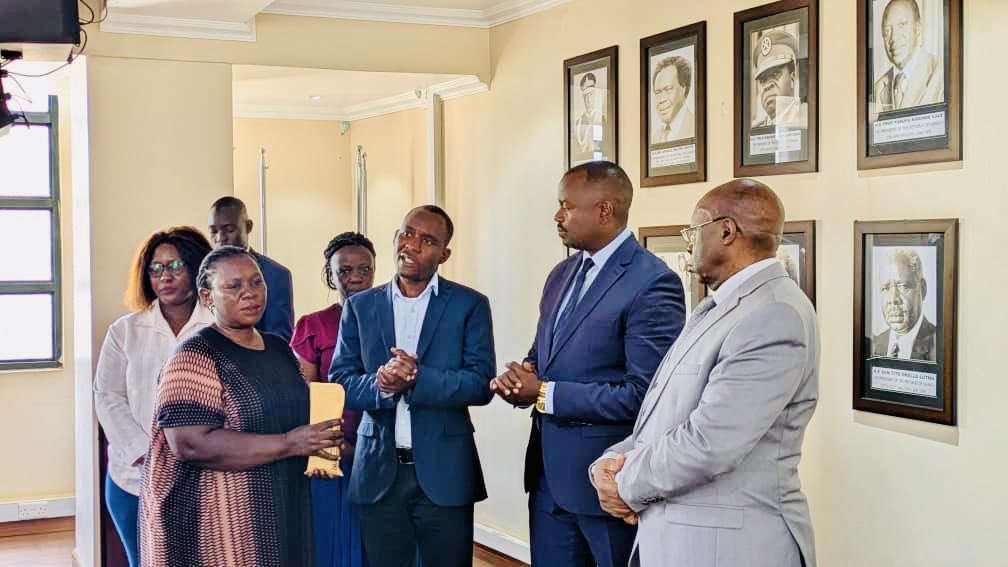
KAMPALA, Uganda — The Government of Uganda has reaffirmed its commitment to protecting the welfare of its citizens abroad after extending financial and humanitarian support to families of Ugandans who lost their lives in recent xenophobic attacks in South Africa. The Ag. Minister of Foreign Affairs Hon. Haruna Kasolo Kyeyune, acting on behalf of President Yoweri Kaguta Museveni, met the families of three Ugandan nationals who were killed during the attacks and handed over a condolence contribution of UGX 10 million to each family. The gesture, officials said, reflects the government’s broader commitment to supporting Ugandan citizens beyond its borders while strengthening assistance for families affected by tragedies abroad.
During the meeting in Kampala, Hon. Kasolo conveyed the President’s and the Government’s heartfelt condolences, assuring the bereaved families that the nation stood with them during one of the most difficult moments of their lives. He noted that the Ministry of Foreign Affairs, working with other government institutions and Uganda’s diplomatic mission in South Africa, facilitated the repatriation of the deceased to ensure they received dignified burials at home. “The Government remains committed to standing with its citizens, both at home and abroad, particularly during times of crisis,” the Minister emphasized.
Beyond returning the deceased to Uganda, the Ministry is continuing to coordinate with relevant authorities to facilitate the voluntary return of other Ugandans who wish to leave areas affected by violence in South Africa. Government officials also highlighted plans to assist returnees through existing socio-economic empowerment initiatives aimed at rebuilding livelihoods. Among these is the Parish Development Model (PDM), which seeks to improve household incomes by expanding access to financial services, enterprise support, and local economic opportunities. Officials said the programme offers one avenue through which returning migrants can reintegrate into their communities while pursuing sustainable economic activities.
Representatives of the bereaved families thanked President Museveni and the Government of Uganda for what they described as consistent support throughout the difficult process. They expressed appreciation for the swift repatriation of their loved ones, the financial assistance extended to the families, and the regular communication maintained by government officials during the crisis. For many relatives, the support offered reassurance that Ugandan citizens abroad remain connected to their homeland, even in moments of tragedy.
During the engagement, Ambassador Johnny Muhindo, Head of the Diaspora Department at the Ministry of Foreign Affairs, briefed the families on the Ministry’s ongoing efforts to strengthen engagement with Ugandan communities living overseas. He outlined measures aimed at enhancing the protection, welfare, and consular support available to Ugandan migrants, workers, students, and professionals across different regions of the world. The Ministry continues to encourage Ugandans living abroad to maintain contact with Uganda’s diplomatic missions to facilitate assistance whenever emergencies arise.
The deaths of the three Ugandans once again draw attention to the recurring challenge of xenophobic violence in parts of Africa, where migrants from across the continent have periodically become targets during episodes of social and economic tension. While governments continue to strengthen diplomatic cooperation and consular support, the incidents also highlight the need for sustained regional dialogue on migration, social cohesion, and the protection of African citizens exercising their right to live and work across the continent.
For Uganda, the response underscores an important dimension of modern diplomacy: safeguarding nationals beyond national borders while ensuring that those affected by international crises receive both humanitarian assistance and pathways toward rebuilding their lives. As African economies become increasingly interconnected through labour mobility, trade, and regional integration, protecting citizens abroad is likely to remain an essential component of diplomatic engagement and public policy.