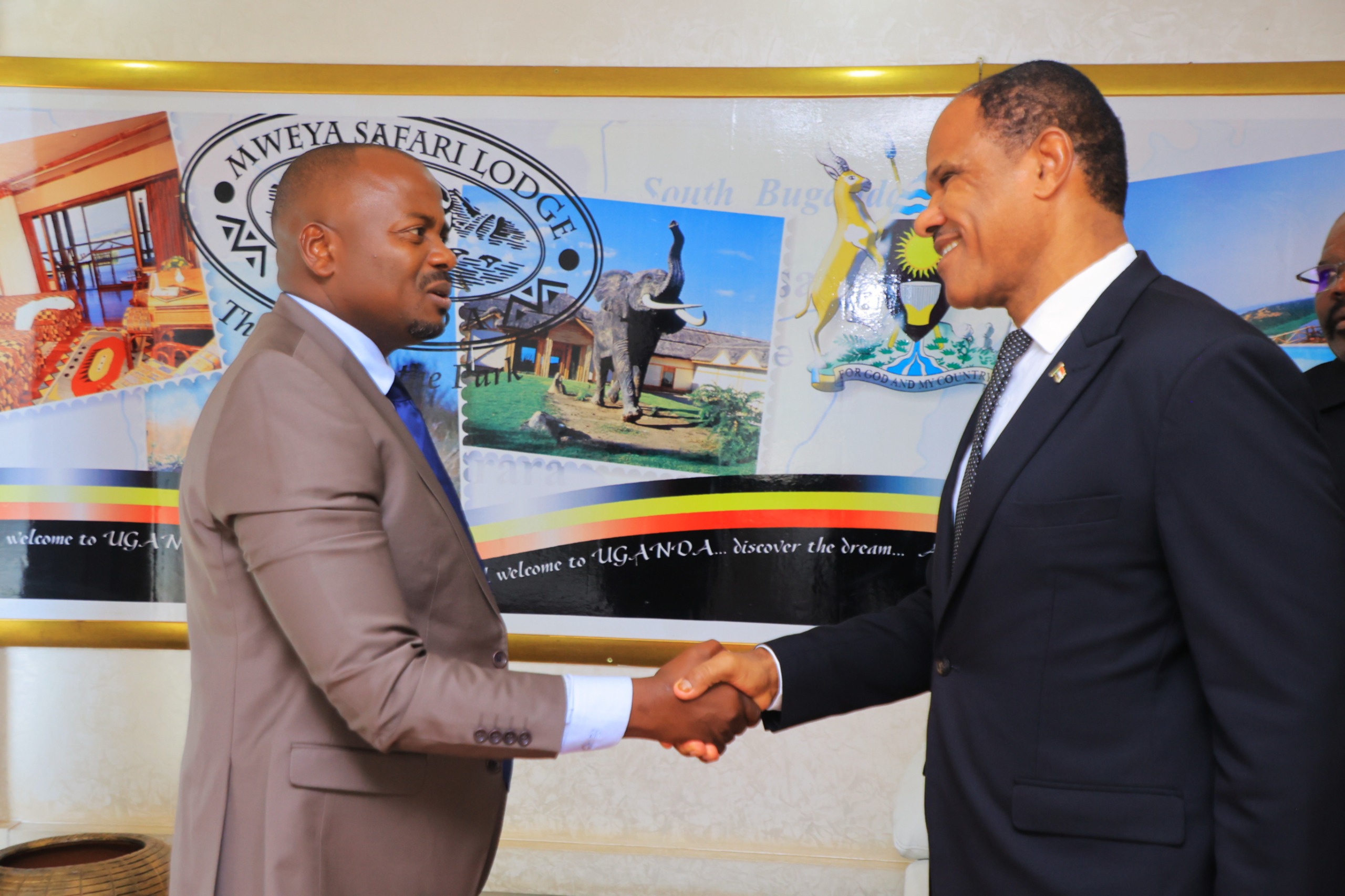
Kampala, Uganda — Uganda has reaffirmed its commitment to strengthening bilateral relations with Sudan following a farewell meeting between the Acting Minister of Foreign Affairs (Regional Affairs), Hon. Haruna Kyeyune Kasolo, and the outgoing Head of the Sudanese Mission to Uganda, H.E. Ahmed Ibrahim Ahmed, whose four-year diplomatic assignment has come to an end.
The meeting, held at the Ministry of Foreign Affairs on Thursday, reflected the enduring diplomatic engagement between the two countries while providing an opportunity to review areas of cooperation and discuss emerging regional priorities. Ambassador Ahmed expressed appreciation to the Ugandan Government for the cooperation extended throughout his tenure and congratulated Hon. Kasolo on his recent appointment as Acting Minister. He affirmed Sudan’s commitment to maintaining constructive engagement with Uganda and voiced confidence that the longstanding partnership between the two nations would continue to deepen.
Reflecting on his diplomatic service, the Ambassador described Uganda as a “second home,” acknowledging the hospitality and goodwill he experienced during his posting. His remarks underscored the importance of diplomacy not only as an instrument of statecraft but also as a bridge for fostering lasting people-to-people connections.
Among the notable areas of collaboration highlighted during the meeting was education. Ambassador Ahmed revealed that approximately 250 Ugandan lecturers are currently teaching in Sudanese universities, describing their contribution as a tangible demonstration of the strong human capital partnership between the two countries.
The exchange illustrates the increasingly important role that educational cooperation plays within Africa’s diplomatic landscape. Beyond academic instruction, such engagements facilitate knowledge transfer, professional exchange, and institutional partnerships that strengthen regional integration while contributing to sustainable development. The Ambassador also identified opportunities to expand cooperation in trade, healthcare, and cultural exchange, arguing that broader economic and social partnerships will be essential in unlocking the full potential of Uganda–Sudan relations.
Infrastructure and connectivity also featured prominently in the discussions. Ambassador Ahmed observed that limitations in transport links—particularly through South Sudan—continue to constrain trade, investment, and the movement of people between the two countries. His observations reflect broader challenges facing regional integration across the Horn of Africa and the East African region, where physical connectivity remains a critical determinant of economic growth. Improved transport corridors, logistics infrastructure, and cross-border cooperation have increasingly become priorities for governments seeking to expand intra-African trade under the African Continental Free Trade Area (AfCFTA).
The conversation also addressed developments in Sudan and the wider regional security environment. Ambassador Ahmed appealed for Uganda’s continued diplomatic support toward restoring peace and stability in Sudan while expressing hope that the country would eventually achieve conditions conducive to peaceful, credible, and inclusive elections. He also called for regional support for Sudan’s reinstatement to the African Union, describing continental solidarity as an important element in addressing the country’s ongoing challenges.
The Ambassador commended Uganda for maintaining what he described as a principled position that respects Sudan’s sovereignty and territorial integrity throughout the country’s period of conflict. Responding to the Ambassador’s remarks, Hon. Kasolo reaffirmed Uganda’s longstanding commitment to constructive relations with Sudan, emphasizing that the two countries have built decades of diplomatic cooperation founded on mutual respect and shared regional interests.
He stressed that security and development within the region are inseparable, observing that instability in one country inevitably affects neighbouring states through economic disruption, humanitarian pressures, and broader security implications. He called for sustained dialogue and regional cooperation as essential mechanisms for promoting lasting peace and collective prosperity.
As Ambassador Ahmed concludes his assignment in Kampala, the farewell meeting served as more than a ceremonial engagement. It reflected the continuity that characterises diplomatic relations even as individual representatives complete their missions.
In diplomacy, transitions provide opportunities to assess achievements while laying the groundwork for future cooperation. The discussions between Uganda and Sudan demonstrated that enduring bilateral relationships are sustained not only through political engagement but also through educational exchange, economic cooperation, regional dialogue, and shared commitments to peace and stability. As East Africa and the Horn of Africa continue to navigate evolving geopolitical and economic realities, the Uganda–Sudan partnership remains an example of how sustained diplomatic engagement can contribute to regional understanding, resilience, and long-term cooperation.