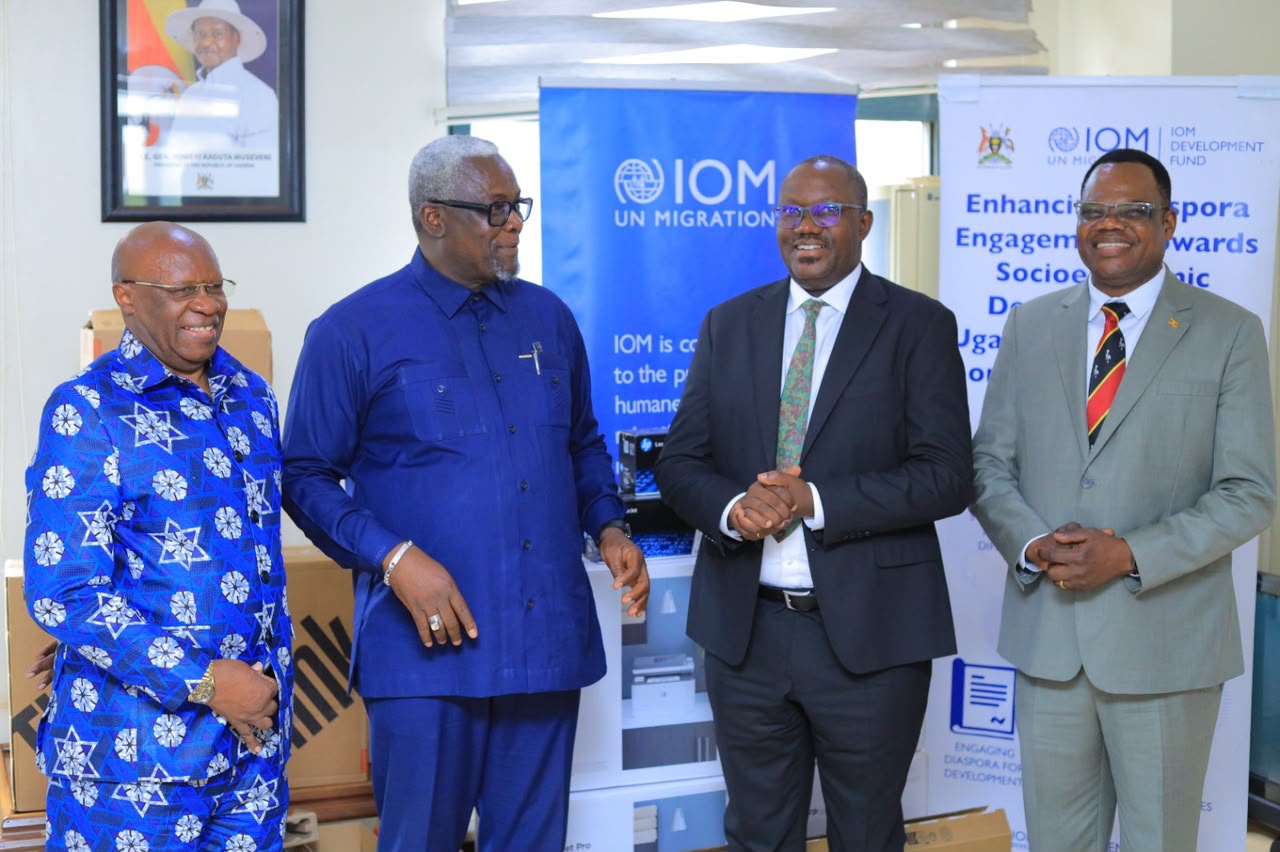
Uganda’s efforts to transform its global diaspora into a more structured development partner received a boost following the handover of Information and Communication Technology (ICT) equipment by the International Organization for Migration (IOM) to the Ministry of Foreign Affairs. The support is intended to strengthen institutional capacity, improve digital service delivery and advance the implementation of Uganda’s forthcoming National Diaspora Policy.

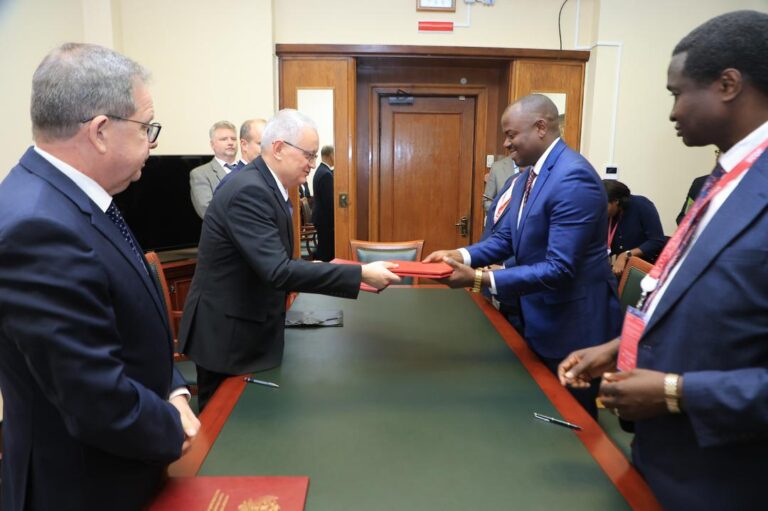
The handover, held at the Ministry’s headquarters in Kampala, formed part of the IOM-supported project, Enhancing Diaspora Engagement towards Socioeconomic Development in Uganda, with a Focus on Climate Action. It also marked progress in aligning diaspora services with the Ministry’s Integrated Foreign Affairs System (IFAS), a move intended to strengthen national ownership and the long-term sustainability of digital engagement mechanisms.
Speaking at the ceremony, Mr. Vincent Bagiire Waiswa, the Permanent Secretary commended IOM for its continued partnership in migration management, institutional capacity building and the protection of Ugandans abroad. He particularly acknowledged its support in facilitating the repatriation of distressed Ugandans from countries including Myanmar and Cambodia.
Mr. Bagiire underscored the importance of harnessing the skills, expertise, networks and resources of Ugandans living abroad to support national development. Drawing lessons from countries such as India and Ethiopia, he emphasised the need for institutional mechanisms that enable diaspora communities to contribute more systematically to Uganda’s economic and social transformation.
The economic significance of this engagement is reflected in remittance flows. According to the Bank of Uganda, diaspora remittances reached approximately US$2.5 billion in 2025, equivalent to about 3.8 per cent of Uganda’s Gross Domestic Product (GDP). More than 16 million remittance transactions were recorded during the year, with an average transaction value of approximately US$152. Over 93 per cent of transfers were below US$499, illustrating the importance of these inflows to household expenditure, including education, healthcare and daily livelihoods.
The figures demonstrate that diaspora engagement is not simply a consular responsibility; it is also an economic diplomacy priority. Beyond financial transfers, Ugandans abroad represent potential sources of investment, professional expertise, technological innovation, international market connections and knowledge transfer.
In his remarks, Mr. Sanusi Tejan Savage, IOM Uganda Chief of Mission highlighted the milestones achieved through the partnership. These included benchmarking visits to study international diaspora engagement practices, completion of a diaspora skills mapping and assessment, capacity-building engagements with selected Ugandan diplomatic missions, diaspora dialogues and training on the Integrated Foreign Affairs System.
The collaboration also supported the finalisation of the draft Diaspora Engagement and Support Policy, its Implementation Strategy and a Costed Work Plan, which were presented to Government for consideration. Together, these instruments are intended to provide a framework for translating diaspora engagement priorities into coordinated interventions.
The policy process addresses an important institutional gap. An IOM assessment of Uganda’s migration governance framework had previously identified the absence of a dedicated government programme and policy specifically focused on attracting and mobilising nationals who had migrated abroad. The proposed policy therefore represents an opportunity to establish clearer structures for engagement, investment facilitation, skills transfer and support for returning nationals.
The initiative was undertaken in collaboration with the Ministry’s Diaspora Department, headed by Ambassador Johnnie Muhindo. Its work reflects the growing importance of diplomatic missions as channels for maintaining contact with Ugandans abroad, identifying their professional capabilities and facilitating meaningful connections with opportunities at home.
For Uganda, the next phase will depend on translating the equipment and draft policy instruments into practical services, reliable diaspora data, accessible investment channels and sustained engagement with communities abroad. The US$2.5 billion remittance contribution provides a compelling economic indicator, but the broader ambition is to mobilise the diaspora’s financial, intellectual and professional resources in support of national development. The handover consequently represents more than a transfer of equipment. It is part of a wider effort to position diaspora diplomacy as a coordinated instrument of economic cooperation, citizen engagement and Uganda’s international development partnerships.