Addis Ababa, Ethiopia | Uganda has called on its citizens living in Ethiopia to contribute to national development through investment, trade, skills transfer and stronger partnerships, as Kampala and Addis Ababa seek to deepen economic cooperation and people-to-people relations.
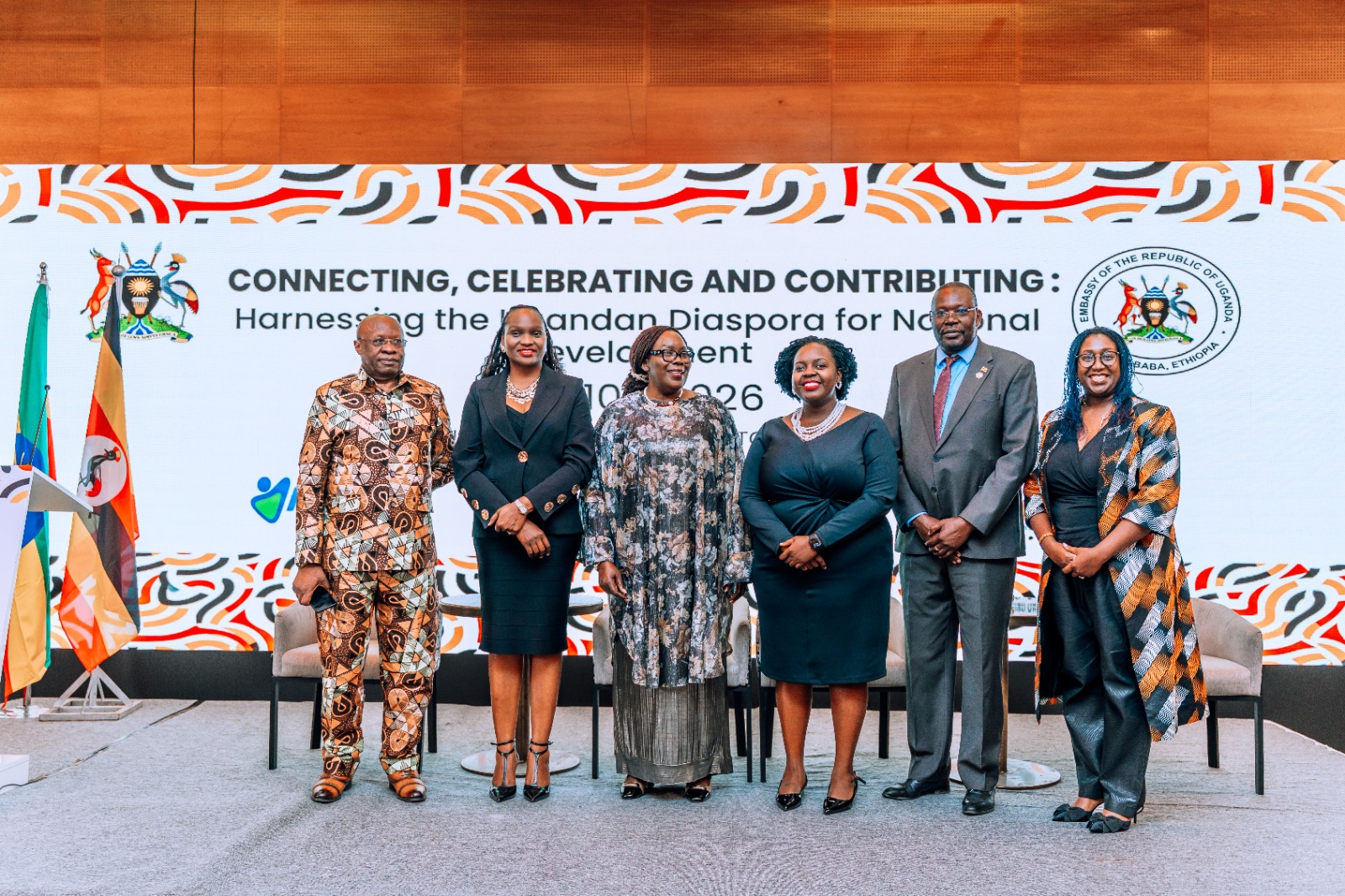
The appeal was made during a two-day diaspora engagement forum at the Hilton Addis Ababa under the theme “Connecting, Celebrating and Contributing: Harnessing the Ugandan Diaspora for National Development.” The event brought together Ugandan professionals, students, entrepreneurs, researchers, families and representatives of government institutions to explore ways of connecting the diaspora with Uganda’s development priorities.
Speaking at a dinner hosted by the Uganda Embassy, Uganda’s Ambassador to Ethiopia, H.E. Rebecca Amuge Otengo, conveyed the best wishes of President Yoweri Kaguta Museveni and encouraged Ugandans to remain connected to their country while making positive contributions to their host communities. She noted that Ugandans abroad influence the country’s international image through their professional conduct, businesses, studies and everyday interactions. She urged them to use their experience and networks to support Uganda’s transformation, including by investing at home, sharing expertise and identifying opportunities for collaboration.
The economic case for stronger engagement is significant. World Bank data for 2025 put Ethiopia’s population at approximately 135.5 million, compared with Uganda’s 51.4 million. Ethiopia’s gross domestic product was estimated at US$126.36 billion, against Uganda’s US$61.99 billion. The same data recorded economic growth of 9.8% in Ethiopia and 6.3 % in Uganda in 2025. These figures point to complementary opportunities for trade, enterprise and investment between the two markets, although they do not, by themselves, establish the scale of bilateral trade.
Mr. Wondafrash Debere Tolera, representing Ambassador Zerihun Abebe, Director-General for African Affairs at Ethiopia’s Ministry of Foreign Affairs, commended the Ugandan community for its conduct and developmental contribution. He highlighted the growing Ethiopian community in Kampala’s Muyenga, Kansanga and Buziga neighbourhoods, popularly associated with “Little Ethiopia,” as an illustration of the people-to-people connections linking the two countries. He expressed hope that these social ties would increasingly translate into commercial and business partnerships.
Ambassador Johnnie Muhindo, Head of the Diaspora Services Department at the Ministry of Foreign Affairs, said diaspora mobilisation was central to the country’s economic and commercial diplomacy strategy. He added that the Government was in the final stages of drafting the National Diaspora Policy following consultations with Ugandans living abroad.
The forum also connected participants with government services. Representatives of the National Identification Registration Authority (NIRA) distributed newly issued national identity cards to attendees who had registered in May 2026, while the National Social Security Fund (NSSF) provided information on services and opportunities relevant to Ugandans overseas. Registration and advisory services were also scheduled at Uganda’s Embassy Chancery in Addis Ababa on October 15.
Beyond cultural exchange, the gathering underscored the potential for diaspora networks to connect Ugandan products and businesses with Ethiopian markets, facilitate professional knowledge-sharing and encourage investment partnerships. Practical follow-through including business-to-business links, market information, investment facilitation and sustained engagement with diaspora entrepreneurs will be important to turning these opportunities into measurable outcomes.
As Uganda and Ethiopia strengthen their engagement, the diaspora can serve as a bridge between diplomatic relations and economic cooperation, helping convert longstanding friendship into shared commercial opportunities and development gains.