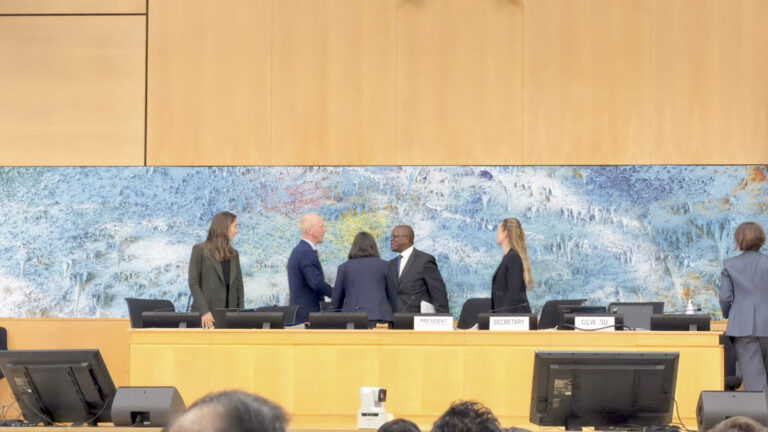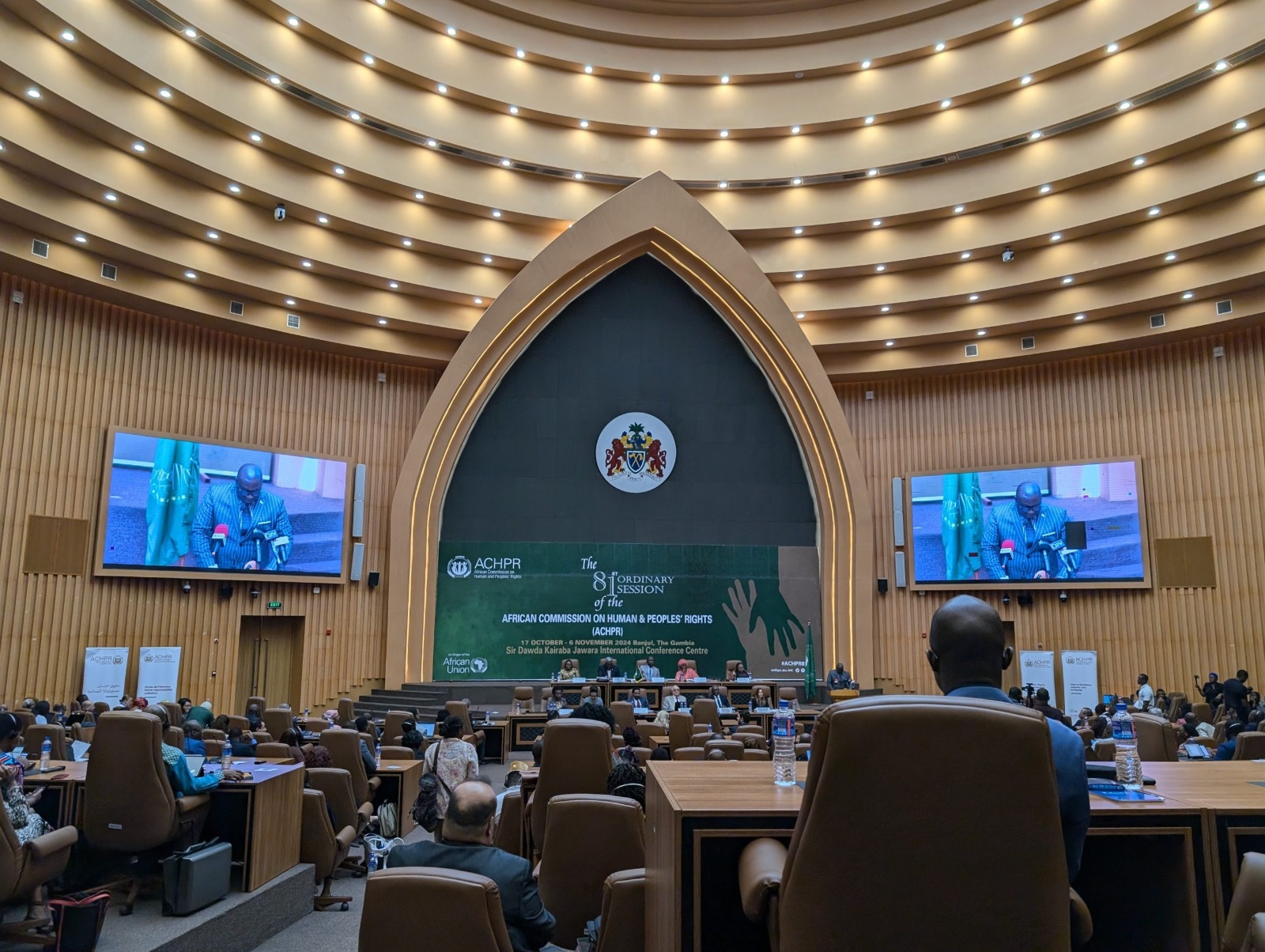
DAKAR, SENEGAL | Africa’s regional human rights framework has reached a significant milestone, with the African Commission on Human and Peoples’ Rights (ACHPR) convening its Third Joint Special Mechanisms Forum in Dakar, Senegal, on 20–21 October to mark 40 years since the African Charter on Human and Peoples’ Rights entered into force.

Held under the theme “Adoption and Implementation of the African Charter: A Journey Towards the Africa We Want,” the Forum brought together stakeholders to reflect on four decades of continental human rights commitments and consider how to strengthen their implementation over the next decade. The African Commission on Human and Peoples’ Rights is advancing a decade-long human rights agenda focused on accountability, emerging digital challenges and translating continental commitments into tangible improvements in people’s lives.
The meeting coincided with African Human Rights Day on 21 October, marking the anniversary of the Charter’s entry into force in 1986. The Commission’s stated priorities included strengthening coordination among its Special Mechanisms, addressing emerging human rights challenges and developing a proposed 2026–2036 roadmap with practical actions, benchmarks and resource requirements. The milestone is significant not only for the longevity of the Charter but also for the question it places before African institutions: how can commitments adopted at continental level translate more consistently into rights that people can exercise and enjoy in their everyday lives?
Adopted on 27 June 1981, the African Charter entered into force on 21 October 1986, establishing a foundational treaty for the promotion and protection of human and peoples’ rights across the continent. The Charter encompasses civil and political rights alongside economic, social and cultural rights, as well as collective rights commonly described as peoples’ rights. Its framework recognises the relationship between individual dignity, community welfare and the responsibilities associated with membership in society.
This broader scope distinguishes the Charter within the international human rights system. It provides a regional framework through which questions of freedom of expression, political participation, equality, education, health, development and environmental protection can be considered within Africa’s legal and institutional context.
The African Commission, established under Article 30 of the Charter, plays a central role in promoting and protecting these rights and interpreting the Charter’s provisions under Article 45. Its work includes considering communications, examining state reports, developing human rights standards and engaging with African Union member states and other stakeholders.
Over the past four decades, the continental system has developed through additional institutions and legal instruments, including the African Court on Human and Peoples’ Rights and the Protocol to the African Charter on the Rights of Women in Africa, commonly known as the Maputo Protocol. These developments have broadened the institutional and legal mechanisms available to address human rights concerns. Their effectiveness, however, depends on implementation, institutional cooperation and the willingness of states to translate applicable commitments into domestic practice.
The ACHPR currently has 16 Special Mechanisms, comprising special rapporteurs, committees and working groups addressing specific thematic and administrative areas of human rights protection. Their mandates cover a wide range of issues, including human rights defenders, freedom of expression, women’s rights, refugees and migrants, Indigenous populations, economic, social and cultural rights, older persons and persons with disabilities, environmental justice, the death penalty, extrajudicial killings, detention conditions and the prevention of torture.
These mechanisms contribute to the development of standards, identify emerging concerns and provide guidance to states and other stakeholders. Their work also creates opportunities for cooperation among national human rights institutions, civil society organisations, academic institutions and African Union bodies.
The Third Joint Special Mechanisms Forum built on earlier editions held in Dakar in 2024 and Banjul in 2025. Its purpose was to strengthen coordination across thematic mandates and encourage collective responses to human rights challenges that frequently overlap. For example, environmental degradation may affect health, livelihoods and access to water, while digital technologies can influence privacy, freedom of expression, political participation and access to information. Coordinated institutional responses are therefore important where a single issue falls within several human rights mandates.
A central message from the anniversary discussions concerned the role of national parliaments in translating continental standards into enforceable laws and effective public policies. Pan-African Parliament President Dr. Fateh Boutbig called for stronger parliamentary oversight to ensure that the African Charter’s principles are reflected in national legislation, policy decisions and institutional practice. Addressing the Third Joint Forum, Boutbig emphasised that interpretation alone is insufficient unless it produces practical changes in the way rights are protected and experienced.His intervention highlighted three areas for parliamentary action: reviewing legislation against African human rights standards, scrutinising public policies and their effects on rights, and using parliamentary diplomacy to strengthen cooperation across African institutions.
The message places national legislatures at an important point in the implementation process. Continental standards can establish common principles, but national laws, budget decisions, oversight procedures and public institutions often determine how those principles operate in practice. Effective oversight also requires access to reliable information, meaningful engagement with affected communities and mechanisms for tracking whether public authorities respond to recommendations. The challenge is therefore not simply to reaffirm commitments but to establish clear responsibilities, measurable indicators and follow-up processes through which progress can be assessed.
The Forum’s agenda also reflects changes in the human rights environment since the Charter entered into force four decades ago. Climate justice has become increasingly important as environmental pressures affect livelihoods, food security, public health and access to natural resources. The Charter’s protection of the right to a generally satisfactory environment under Article 24 provides a regional legal reference point for addressing environmental concerns.
Digital rights and artificial intelligence present another set of challenges. The use of digital platforms, automated decision-making and emerging surveillance technologies raises questions about privacy, freedom of expression, discrimination, access to information and accountability. For African institutions, the policy task is to consider how existing human rights obligations apply to new technologies while ensuring that innovation and digital development respect individual rights and public interests.
The Forum also identified shrinking civic space, economic governance and the right to development as areas requiring continued attention. These issues intersect with the ability of citizens and civil society organisations to participate in public affairs, monitor government performance and contribute to decisions affecting their communities. Addressing these challenges requires cooperation among governments, independent institutions, civil society, researchers and development partners. It also requires human rights considerations to be integrated into broader development and governance programmes rather than treated as a separate policy concern.
One of the Forum’s stated objectives was to develop a roadmap for 2026–2036, outlining concrete actions, benchmarks and resource requirements to improve the effectiveness of the ACHPR’s Special Mechanisms. The proposed framework is intended to support stronger coordination, renewed cooperation by states parties and closer partnerships among national human rights institutions, civil society, African Union bodies, academia and development partners. Its potential value will depend on the level of detail in the eventual framework and the arrangements established for implementation.
A practical roadmap would need to clarify institutional responsibilities, identify priorities, establish timelines and define indicators for measuring progress. It would also benefit from transparent reporting on state cooperation, follow-up to recommendations and the resources available to the Commission’s mechanisms. Funding and institutional capacity are particularly important considerations. Mandates can have limited practical impact if mechanisms lack the resources, technical support or sustained cooperation required to carry out their work.
As of publication, the Commission’s announcement set out the roadmap as an expected outcome. A final adopted roadmap, its detailed commitments and any confirmed implementation timetable should be reported separately once the relevant official documentation becomes available.
The 40th anniversary of the African Charter provides an opportunity to assess both institutional progress and the continuing distance between legal commitments and their practical application. For citizens, the significance of the Charter ultimately rests on whether its principles contribute to fair treatment, access to justice, protection against abuse, meaningful participation in public life and the enjoyment of economic, social and cultural rights.
For governments, the challenge is to ensure that regional commitments are reflected in legislation, public administration and accountability systems. For the African Commission, it involves sustaining credible monitoring, developing standards and strengthening cooperation with states and other institutions. For civil society and national human rights institutions, the work includes documenting concerns, engaging communities, contributing evidence and following up on recommendations.
The Forum’s emphasis on coordination and a decade-long roadmap reflects the importance of linking these roles within a more consistent implementation process. Four decades after the African Charter entered into force, Africa’s human rights agenda remains both a legal undertaking and a development priority. Its next phase will be measured not only by the strength of its institutions or the number of commitments adopted, but by the extent to which those commitments make a tangible difference in people’s lives.