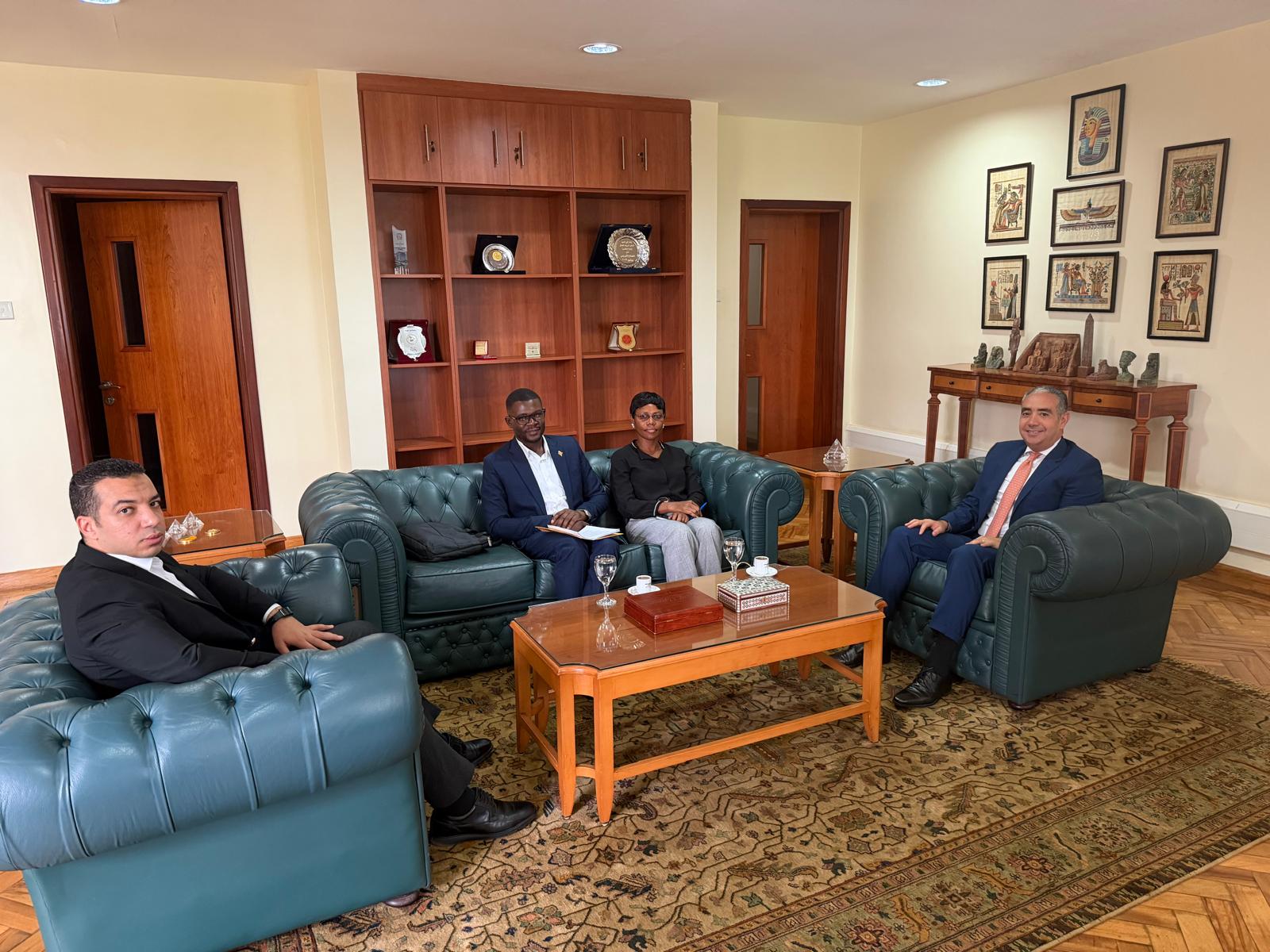
Kampala, Uganda– Diplomacy is most effective when it moves beyond official engagements and creates meaningful connections between people, institutions and opportunities. It is in this spirit that Daily Thinkers, a Ugandan media and public affairs platform, paid a courtesy visit to the newly accredited Ambassador of the Arab Republic of Egypt to Uganda, H.E. Sherif Mohamed Abdellatif Elgammal, to explore practical ways of strengthening public diplomacy and development communication between the two countries.

The delegation, led by Amiri Wabusimba, Founder and Chief Editor of Daily Thinkers, presented a proposal titled “Strategic Public Diplomacy, Media Capacity Development and Egypt–Uganda Development Communication Partnership.” The proposal outlines a practical framework through which media engagement, professional exchange, youth participation and development-focused storytelling could complement the longstanding diplomatic relationship between Egypt and Uganda.
Welcoming the initiative, Ambassador Elgammal commended the delegation for taking the initiative to engage the Mission with a concrete proposal. He observed that Daily Thinkers was the first media organisation to approach the Embassy with such a partnership initiative since his accreditation to Uganda.
In remarks reflecting Egypt’s commitment to strengthening relations beyond government-to-government engagement, the Ambassador emphasised the importance of connecting the two countries through their younger generations and informed public participation. He noted that Egypt’s relationship with Uganda extends beyond the engagement of the two Heads of State, reaching into the lives of young people, professionals, institutions and communities. He welcomed initiatives that seek to improve public understanding, promote clarity and create constructive platforms for engagement.
The Ambassador further indicated that the Mission would review the proposal and identify areas in which cooperation could be explored. His response provides an encouraging opening for continued dialogue, while the proposed areas of collaboration remain subject to the Embassy’s assessment and consideration.
The meeting comes at a time when Egypt–Uganda relations are increasingly defined by practical cooperation in areas of shared strategic interest. The recent high-level engagements have highlighted opportunities in trade and investment, agriculture, water resource management, infrastructure, pharmaceuticals, renewable energy, education and regional cooperation.
The April 2026 Egypt–Uganda consultations and subsequent presidential engagement reinforced the importance of translating political goodwill into practical programmes that contribute to economic transformation and shared development.
For Daily Thinkers, the opportunity is to help communicate these developments in ways that are accessible, accurate and relevant to the public. Diplomacy is not only about agreements signed at official meetings; it is also about ensuring that citizens, entrepreneurs, researchers, students and communities understand the opportunities emerging from those agreements.
The proposal therefore presents five areas for possible cooperation: a sustained Egypt–Uganda public diplomacy and development communication programme; professional media exchange and mentorship; newsroom equipment and multimedia production capacity; specialised professional training in Egypt; and improved digital and physical media infrastructure.
Editorial coverage would focus on bilateral relations, Nile Basin cooperation, economic and commercial diplomacy, agriculture, health and pharmaceuticals, education, youth leadership, cultural exchange and tourism. The intention is to connect official policy priorities with public knowledge and practical opportunities.
For Amiri Wabusimba, the engagement carries a personal and professional significance shaped by his previous experiences in Egypt. Having travelled to Cairo twice for professional development programmes supported by the Egyptian Government, including the Nasser International Leadership Fellowship in 2025 and professional training in Anglophone public communication, Wabusimba described Egypt as a country that has contributed meaningfully to his professional journey. “Egypt has become my home, and Uganda is my clan. My experiences in Cairo have strengthened my appreciation of what international cooperation can achieve when it invests in people, knowledge and professional development. I have benefited from opportunities made possible through the support of the Egyptian Government, and I believe the greatest value of such opportunities is realised when we bring that knowledge back home and use it to build bridges between our countries,” he said.
He added that the engagement presents an opportunity to bring together Ugandans and other professionals who have benefited from Egyptian Government-supported scholarships, fellowships, exchange programmes and professional training. “One of the things I would like to see grow from this engagement is a stronger connection among the alumni of Egyptian-supported programmes. We have people who have studied, trained and built professional relationships in Egypt across different fields. Bringing them together would create a valuable network for knowledge exchange, mentorship, public engagement and stronger Egypt–Uganda cooperation. We should not allow the value of these experiences to end when a training programme concludes; we should turn them into lasting relationships and practical contributions to our societies,” Wabusimba noted.
His remarks place alumni engagement within a wider public diplomacy framework: people who have experienced a country’s educational, professional and cultural environment can become meaningful links between institutions and communities. A coordinated alumni network could support knowledge-sharing activities, youth mentorship, professional exchanges and initiatives that make bilateral cooperation more visible to the public.
The proposed engagement also raises a broader question for international missions operating in Uganda: how can diplomatic partnerships invest in the local communication institutions and young professionals who help explain international cooperation to the public?
For Daily Thinkers, the answer lies in practical collaboration that strengthens professional standards and institutional capacity. This could include access to technical expertise, newsroom mentorship, training opportunities, interviews with subject specialists, participation in selected public events and support for multimedia production infrastructure.
The platform’s interest is not simply to report diplomatic activities, but to develop the capacity to explain their policy significance, economic implications and public value. Such an approach can help audiences understand how international partnerships connect to employment, investment, education, technology, health and community development. The proposal also recognises the importance of editorial independence, accurate reporting and transparent institutional engagement. Any future cooperation would be guided by professional media ethics and clear arrangements that distinguish development support from editorial influence.
The meeting with Ambassador Elgammal marks an encouraging step in Daily Thinkers’ efforts to build constructive relationships with diplomatic missions and development institutions. It is not an announcement of an approved partnership or funding commitment; rather, it opens a conversation about areas where shared interests may translate into practical cooperation.
For Egypt and Uganda, the value of such engagement lies in extending the relationship beyond formal diplomatic exchanges and into the professional networks, institutions and communities that sustain international friendship.
For Daily Thinkers, the ambition is equally clear: to become a credible platform through which diplomacy is understood, development opportunities are communicated and partnerships are connected to the people they are intended to serve. The strongest diplomatic relationships are not measured only by the number of agreements signed, but also by the knowledge shared, the institutions strengthened and the people brought closer together.