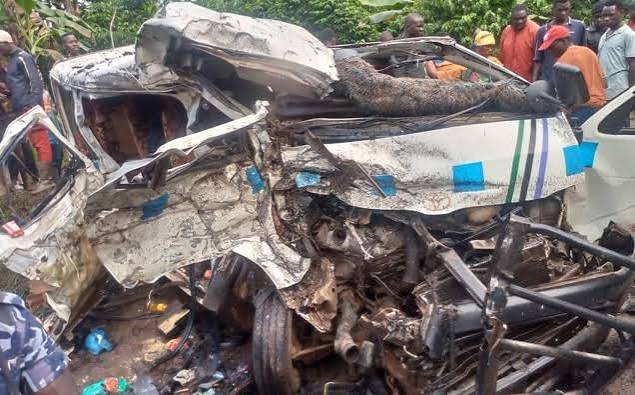
As the world marks significant progress in road safety, a sobering reality remains: every day, thousands of families continue to lose loved ones to preventable road crashes. Yet beneath the tragedy lies an important lesson—road deaths are not inevitable. They are largely preventable through sound public policy, safer infrastructure, stronger enforcement, and responsible road use.
According to the World Health Organization (WHO), the global road traffic death rate has declined by 21 percent since 2011, despite more than one billion additional vehicles being added to roads worldwide. The achievement demonstrates that investments in safer roads, stronger vehicle standards, and evidence-based transport policies can save lives. Nevertheless, approximately 1.16 million people still die every year in road crashes, while road traffic injuries remain the leading cause of death among children and young adults aged between 5 and 29 years. More than half of those killed are pedestrians, cyclists and motorcyclists—the most vulnerable users of public roads.
This global progress, however, is unevenly distributed, High-income countries have recorded consistent reductions in road fatalities through stricter enforcement of traffic laws, investment in intelligent transport systems, safer urban planning, mandatory vehicle safety standards, and sustained public awareness campaigns. In contrast, many low- and middle-income countries continue to shoulder a disproportionate share of the global burden, accounting for over 90 percent of road traffic deaths despite having far fewer vehicles.
While the international community celebrates declining fatality rates, Uganda continues to witness an alarming increase in road crashes. The Uganda Police Annual Crime Report for 2025 recorded 26,044 road crashes, an increase from the previous year. The country also registered 5,383 road deaths, averaging approximately 15 fatalities every day, while fatal crashes rose from 4,434 in 2024 to 4,602 in 2025.
Recent tragedies have reinforced the urgency of the crisis. Only days ago, Uganda mourned the loss of more than 20 schoolchildren following a devastating bus crash in Kapchorwa District, prompting government authorities to suspend school trips nationwide pending a review of safety measures.
These statistics reveal more than isolated accidents—they point to a broader governance and development challenge.
Road safety extends beyond transport. It is intrinsically linked to public health, economic productivity, education, tourism, investment, and national competitiveness. Every fatal crash imposes significant social and economic costs through lost productivity, increased healthcare expenditure, insurance claims, and the long-term burden placed on affected families and communities.
For Uganda, improving road safety should therefore be viewed not merely as a traffic management issue but as a strategic development priority.
The factors contributing to Uganda’s rising accident rate are well documented. Speeding, reckless driving, dangerous overtaking, driving under the influence of alcohol, poor vehicle maintenance, inadequate road signage, weak enforcement, and the growing number of motorcycles operating in urban centres all contribute to the country’s road safety challenge. Expanding urbanisation and increasing vehicle ownership have further intensified pressure on infrastructure that has not always kept pace with demand.
International experience demonstrates that meaningful reductions in road deaths are achieved through a Safe System Approach one that recognises human error while designing roads, vehicles and transport systems that minimise the consequences of mistakes. This includes better road engineering, stricter enforcement of speed limits, compulsory helmet and seatbelt use, improved emergency medical response, safer public transport standards, and stronger public education campaigns.
Individual responsibility remains equally important, every road user has the power to reduce risk by wearing approved motorcycle helmets, observing speed limits, avoiding distracted driving, never driving under the influence of alcohol or drugs, and giving priority to pedestrians and cyclists. These simple decisions save lives.
For Africa, where rapid urbanisation and economic growth continue to increase mobility, road safety will increasingly become a measure of governance quality and sustainable development. Countries that invest in safer transport systems are not merely reducing fatalities—they are protecting human capital, strengthening investor confidence, and building more resilient economies.
Uganda’s growing economy requires roads that are not only wider but safer. The country’s aspiration to become a regional trade and logistics hub under the African Continental Free Trade Area (AfCFTA) must be matched by equal commitment to protecting the lives of those who use its transport corridors every day.
The global experience has already demonstrated that progress is possible, The question facing Uganda is no longer whether road deaths can be reduced. It is whether the country is prepared to make road safety a national development priority rather than treating each tragedy as an isolated incident.