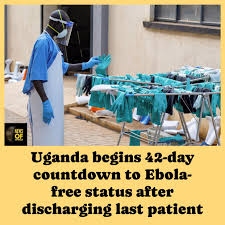
KAMPALA, Uganda — Uganda has entered a critical new phase in its response to the Ebola disease outbreak, officially commencing the 42-day countdown required before the country can be declared free of the virus. The milestone follows the recovery of the last confirmed Ebola patient, who tested negative twice in accordance with international public health protocols. A milestone in public health diplomacy underscores Uganda’s preparedness, regional cooperation and resilient health systems.
The countdown, guided by the World Health Organization (WHO), represents an important benchmark in outbreak response. However, health experts caution that the declaration can only be made if no new Ebola cases are detected throughout the 42-day surveillance period. The development marks significant progress in Uganda’s efforts to contain the outbreak, which began in May. During the response, 20 confirmed cases were recorded, while two people lost their lives. Through coordinated action involving the Ministry of Health, the World Health Organization, the Uganda Virus Research Institute, frontline health workers and development partners, authorities successfully traced all 836 identified contacts, strengthened disease surveillance and expanded emergency response capacity across affected areas.
Uganda’s response once again highlights the country’s growing capacity to manage infectious disease outbreaks through rapid detection, coordinated surveillance and community engagement. The country’s experience in responding to previous outbreaks has contributed to stronger emergency preparedness systems, enabling health authorities to mobilise resources quickly and interrupt transmission chains before wider community spread could occur.
Health workers were deployed and trained, laboratory testing capacity was enhanced, and surveillance systems were reinforced to detect and respond rapidly to suspected cases. These interventions reflect years of investment in public health infrastructure and partnerships that continue to strengthen Uganda’s resilience against emerging health threats. While the progress is encouraging, health officials continue to emphasise that vigilance remains essential.
The ongoing transmission of Ebola in neighbouring Democratic Republic of the Congo (DRC) means Uganda remains at risk of imported cases through cross-border movement. Consequently, surveillance at border points, health facilities and within communities continues to play a critical role in safeguarding public health. The outbreak serves as a reminder that infectious diseases do not recognise national boundaries. Regional cooperation, timely information sharing and coordinated cross-border surveillance remain indispensable components of effective disease prevention.
Uganda’s Ebola response also illustrates the growing importance of global health diplomacy. Public health emergencies increasingly require collaboration that extends beyond national governments to include international organisations, research institutions, humanitarian agencies and neighbouring states. The partnership between Uganda’s Ministry of Health, the World Health Organization and other stakeholders demonstrates how diplomacy can facilitate technical cooperation, resource mobilisation and knowledge sharing in addressing common health challenges. Such collaboration contributes not only to national health security but also to regional and global efforts aimed at preventing future outbreaks.
Although Uganda has reached an important milestone, health authorities continue to encourage the public to remain alert throughout the monitoring period. Early detection remains the most effective defence against Ebola transmission. Members of the public are advised to seek immediate medical attention if they experience symptoms such as:
- Fever
- Severe headache
- Muscle pain
- Vomiting
- Diarrhoea
- Unexplained bleeding
Prompt reporting and treatment remain essential to protecting individuals, families and communities. If Uganda completes the 42-day surveillance period without recording another confirmed Ebola case, the country will officially be declared free of the outbreak under international public health guidelines. Until then, continued vigilance, responsible community behaviour and sustained cooperation between health authorities and international partners will remain essential.
Uganda’s progress demonstrates that strong health systems, informed communities and effective partnerships can successfully contain deadly infectious diseases. It is a reminder that every recovered patient, every successfully traced contact and every timely intervention strengthens not only national resilience but also global health security. As the countdown continues, the country’s response offers a powerful example of how preparedness, science and international cooperation can save lives and reinforce confidence in public health systems across Africa.