Mogadishu, Somalia | Uganda and Somalia have officially opened the Uganda–Somalia Business Forum and Joint Exhibition 2026 in Mogadishu, renewing efforts to strengthen bilateral trade, investment and commercial diplomacy as the two countries seek to translate their longstanding political and security partnership into tangible economic benefits.

The two-day initiative, hosted at Airport Hotel in Mogadishu, brings together government representatives and private-sector stakeholders to explore business opportunities, strengthen commercial connections and advance outstanding commitments under the countries’ bilateral cooperation framework.
The opening follows the Second Session of the Uganda–Somalia Joint Permanent Commission (JPC), held in Kampala in October 2025, where both governments reviewed existing cooperation and pursued new agreements covering security, immigration, education and labour. The latest forum places particular emphasis on trade expansion, investment partnerships, aviation, employment and regional integration, reflecting a shared interest in making bilateral relations deliver more direct economic value for businesses and citizens.
In his opening remarks, Uganda’s Permanent Secretary in the Ministry of Foreign Affairs, Mr. Vincent Bagiire Waiswa, highlighted progress in implementing commitments made during the October 2025 JPC. He called for stronger cooperation in trade, investment, security and aviation, emphasising the importance of building on existing diplomatic relations to unlock practical opportunities for the private sector.
The focus on implementation is significant. Joint commissions provide governments with a structured mechanism to agree on priorities, coordinate institutions and review progress. Their effectiveness ultimately depends on whether commitments lead to completed agreements, functioning partnerships, increased commercial activity and measurable improvements in citizens’ livelihoods.
Speaking on behalf of the Federal Republic of Somalia, the Minister of Foreign Affairs and International Cooperation, H.E. Abdisalam Abdi Ali, acknowledged Uganda’s longstanding contribution to peace and security in Somalia. He emphasised the need for clear timelines and stronger follow-up mechanisms to ensure that bilateral commitments translate into tangible benefits for the people of both countries. His remarks placed implementation at the centre of the partnership: diplomatic agreements must be accompanied by coordinated action, accountable institutions and sustained engagement with businesses.
Uganda and Somalia have developed a relationship spanning security cooperation, diplomatic engagement, trade and people-to-people connections. Several figures help illustrate the scale and potential of that partnership.
- More than 20,000 Ugandans: Uganda’s Embassy in Somalia has reported that more than 20,000 Ugandan citizens work in Somalia, highlighting the importance of labour mobility, employment protections and consular cooperation.
- 2022: The first session of the Uganda–Somalia Joint Permanent Commission was held in Kampala on 7–8 August 2022, establishing a structured mechanism for advancing cooperation across political, economic and social sectors.
- October 2025: The second JPC and Business Summit took place in Kampala on 7–8 October, reviewing earlier commitments and advancing cooperation in areas including security, immigration, education and labour.
- 31 additional export products: Uganda’s Ministry of Foreign Affairs highlighted that Uganda had added 31 products to its export markets over the preceding 15 years, pointing to opportunities for regional trade diversification.
These indicators demonstrate that the relationship extends beyond formal diplomacy. It encompasses workers, businesses, institutions and opportunities to expand the exchange of goods and services. However, a current, comparable figure for total bilateral trade between Uganda and Somalia was not established from the available sources. Reliable trade statistics will be important for measuring the commercial impact of the forum and tracking progress over time.
In his keynote address, Uganda’s Minister of Gender, Labour and Social Development, Hon. Gen. Henry Tumukunde, underscored the importance of regional integration, youth employment and stronger labour cooperation. He emphasised the need for a binding Bilateral Labour Agreement between the two countries to safeguard the rights and welfare of workers.
With more than 20,000 Ugandans reported to be working in Somalia, labour cooperation is a significant dimension of the bilateral relationship. A clear legal framework could help establish transparent recruitment procedures, clarify employer and worker responsibilities, strengthen access to dispute-resolution mechanisms and improve cooperation between the relevant labour authorities.
The proposed agreement also has implications for skills mobility. Cooperation could create more structured opportunities for qualified professionals and other workers while helping both governments address concerns associated with recruitment practices and employment conditions.
For young people in both countries, the broader objective is to connect regional economic cooperation with productive employment and skills development. The proposed agreement should not be confused with an agreement already in force. Its practical value will depend on the terms negotiated, the institutions responsible for implementation and the mechanisms established to monitor compliance.
The business forum offers an opportunity to identify areas where the two economies can complement one another. Ugandan enterprises could explore opportunities to supply goods and services to Somali markets, while Somali businesses and investors could consider partnerships in Uganda across sectors supported by the countries’ respective commercial priorities.
Agricultural products, food processing, education, professional services, logistics and investment facilitation are among the areas that could be explored through business-to-business engagement, subject to market demand and commercial feasibility. Aviation is another priority identified by the Ugandan delegation. Improved air connectivity and commercial aviation cooperation could facilitate business travel, tourism, cargo movement and links between companies operating in the two markets.
For these opportunities to become commercially viable, businesses will need reliable market information, clear regulatory requirements, efficient logistics and accessible financing. The exhibition component of the forum provides a platform for companies to present their products and services, identify prospective partners and develop contacts that may continue beyond the event.
Uganda’s relationship with Somalia has been strongly shaped by regional peace and security cooperation. Uganda was the first country to deploy troops to Somalia under the African Union Mission in Somalia in March 2007. Its subsequent participation in regional security arrangements has contributed to a partnership that both governments are seeking to extend into trade, investment and development.
The connection between security and economic development is particularly relevant in the region. Predictable operating conditions, functioning institutions and effective cooperation against security threats help create an environment in which businesses can assess risks and pursue long-term investments.
Nevertheless, translating security cooperation into commercial growth requires deliberate economic measures. Businesses need practical support to identify markets, understand regulations, establish partnerships and navigate cross-border transactions. The Mogadishu forum therefore represents an opportunity to broaden the relationship from government-to-government engagement towards sustained government–business cooperation.
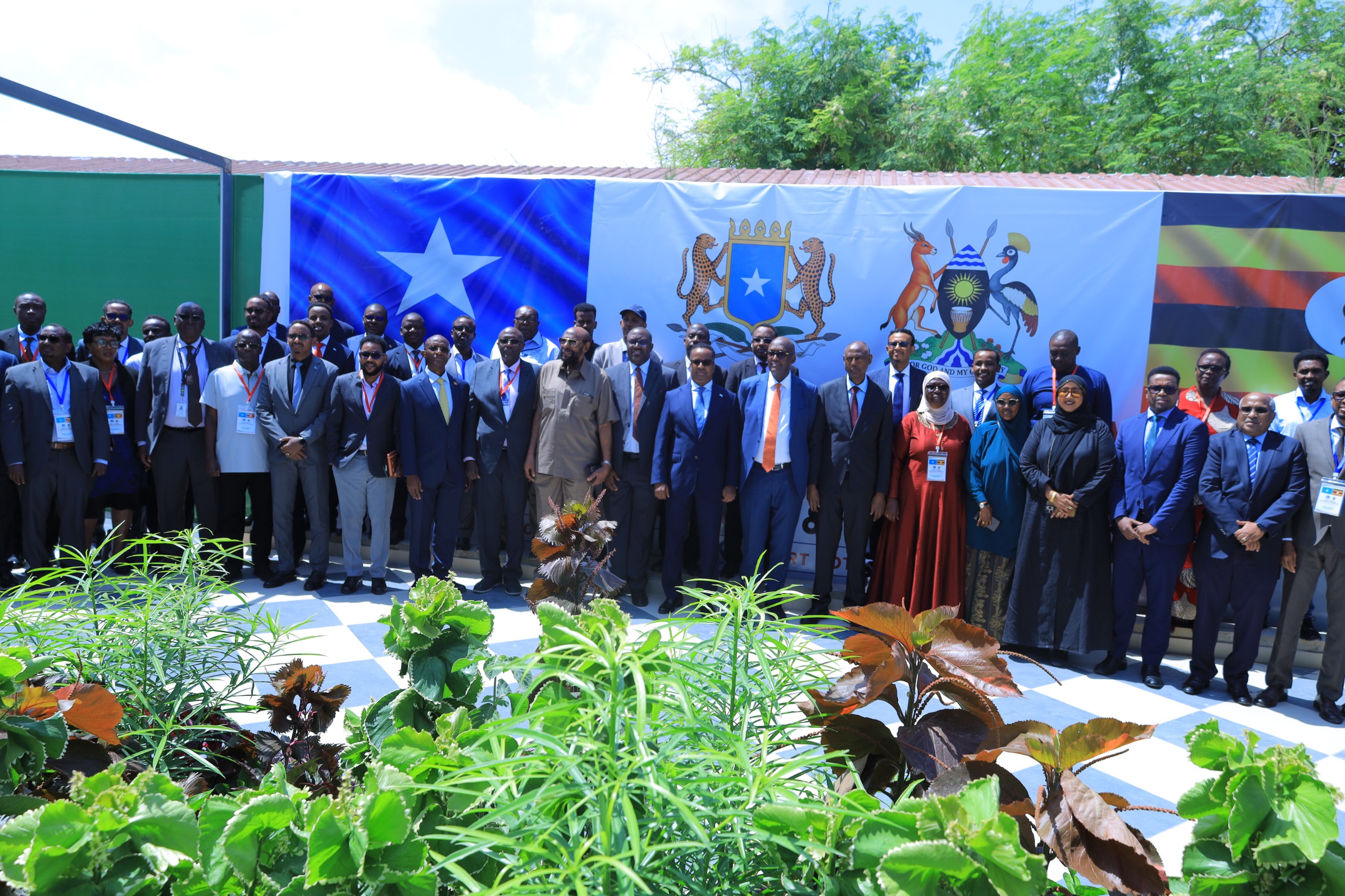
The opening session concluded with a group photograph of the two delegations, marking the formal launch of discussions on shared priorities and outstanding commitments. The next stage will be to determine how those discussions translate into specific partnerships, implementation timelines and follow-up arrangements.
For both governments, progress could be assessed through measurable indicators, including new business agreements, investment commitments that reach financial close, growth in bilateral trade, improved aviation links and the establishment of a functioning bilateral labour framework. Such indicators would help distinguish expressions of interest from completed transactions and allow both countries to assess whether the forum is generating lasting economic value.
Uganda and Somalia have established a foundation for cooperation through diplomatic engagement, security collaboration and the Joint Permanent Commission. The task now is to strengthen the commercial dimension of that relationship and ensure that agreements deliver practical outcomes. As the Uganda–Somalia Business Forum and Joint Exhibition 2026 continues in Mogadishu, its wider significance lies in the opportunity to convert longstanding bilateral ties into stronger markets, productive investment and employment opportunities for the people of both countries.