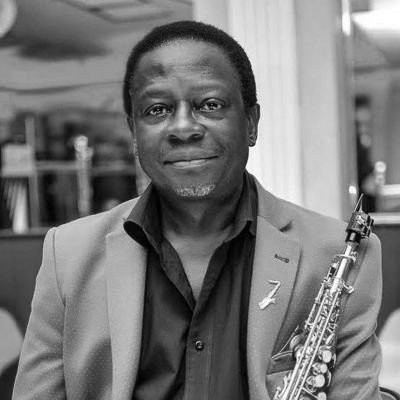
A person can die, but what they have done can outlive their life. That is perhaps the most enduring way to remember Moses Matovu, the legendary musician, saxophonist, composer and longtime leader of Afrigo Band, who died on September 24, 2026, at the age of 77. His death has brought grief to Uganda’s music fraternity and to generations of people who encountered his music not simply as entertainment, but as part of the soundtrack of their lives. Yet, as Uganda mourns, there is a larger story worth remembering. It is the story of a man whose cultural contribution crossed generations, communities and social boundaries.
For more than five decades, Moses Matovu helped carry Ugandan live music through changing political, social and technological landscapes. Afrigo Band, which emerged in the mid-1970s, became one of the country’s longest-running musical institutions, reaching its 50th anniversary in 2025. Matovu remained central to that journey as vocalist, instrumentalist, composer, arranger and bandleader. That longevity is not merely a musical achievement. It is a cultural achievement.
Diplomacy is often associated with ambassadors, treaties, official visits and negotiating tables. But nations also communicate through culture. Musicians, artists, writers and filmmakers can carry a country’s identity across borders in ways that formal diplomacy sometimes cannot.
Moses Matovu was one of those cultural ambassadors, through Afrigo Band, Ugandan rhythms, melodies and stories travelled beyond the conventional boundaries of diplomacy. His work helped demonstrate that Uganda’s international identity is not defined only by political institutions or economic statistics, but also by its creativity, heritage and cultural memory. That is why his legacy belongs not only to the entertainment industry. It belongs to Uganda’s broader cultural history.
There is another dimension of Matovu’s life that has emerged with particular poignancy following his death. Many people who knew his music may not have known that he was Muslim. His funeral prayers were held at Kibuli Mosque before his body was taken to the National Theatre and later to Kyanja for burial. Perhaps that tells us something important about the man.
His faith did not need to become a public identity competing with his art. His music brought people together without requiring them to first ask who he was, what faith he followed or which community he belonged to. In death, that dimension of his identity has become another reminder of Uganda’s plural cultural character. A Muslim musician could become a national cultural figure whose work was embraced across religious and social communities. That, too, is a form of cultural diplomacy.
Matovu’s greatest achievement may not have been any individual performance or song.
It may have been continuity, He remained with Afrigo through generations of musicians and audiences, helping nurture younger talent and sustaining a band whose history became intertwined with Uganda’s own musical evolution. Afrigo’s survival for half a century speaks to more than individual talent; it speaks to discipline, mentorship, institutional memory and an understanding that culture must be handed from one generation to another. That is the lesson cultural institutions everywhere can learn from his life. Talent can create a moment.
At Daily Thinkers, where we believe that journalism should preserve context, memory and meaning beyond the day’s headlines, we remember Moses Matovu not simply because he was famous, but because he contributed something that cannot easily be measured.
He helped give Uganda a sound.
He helped preserve a generation.
He helped introduce younger musicians to a tradition that might otherwise have disappeared and he demonstrated that culture can remain relevant without abandoning its roots.
On behalf of Shanix Marketing and Media Agency, and personally, I extend my deepest condolences to the family of Moses Matovu, his colleagues at Afrigo Band, the Ugandan music fraternity and all those whose lives were touched by his music. His saxophone may have fallen silent but the music continues and perhaps that is the greatest tribute a musician can receive. Moses Matovu is gone. The legacy remains. The music remains. Uganda remembers.
May his soul rest in eternal peace.