The arrival of a child into a royal family is ordinarily a moment of private celebration. Yet, in societies where cultural institutions remain part of the collective identity, such an occasion can carry a meaning that extends beyond the household. In Busoga, the birth of Prince Nadiope Ezra Josiah has offered precisely such a moment: an opportunity to celebrate family, reflect on history and recognise the continuing place of cultural heritage in Uganda’s national story.

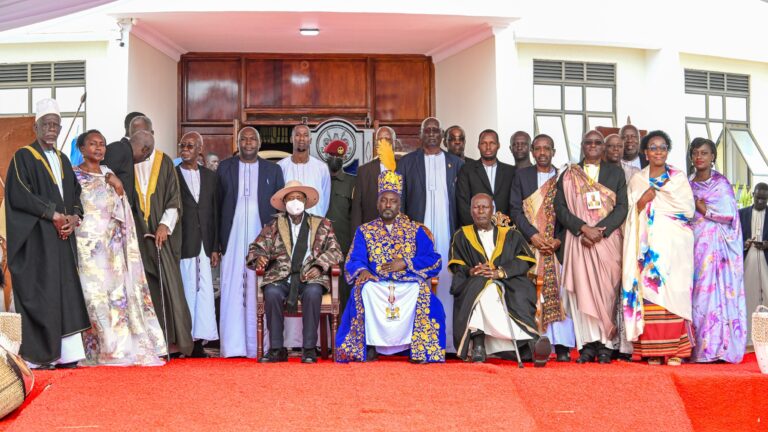
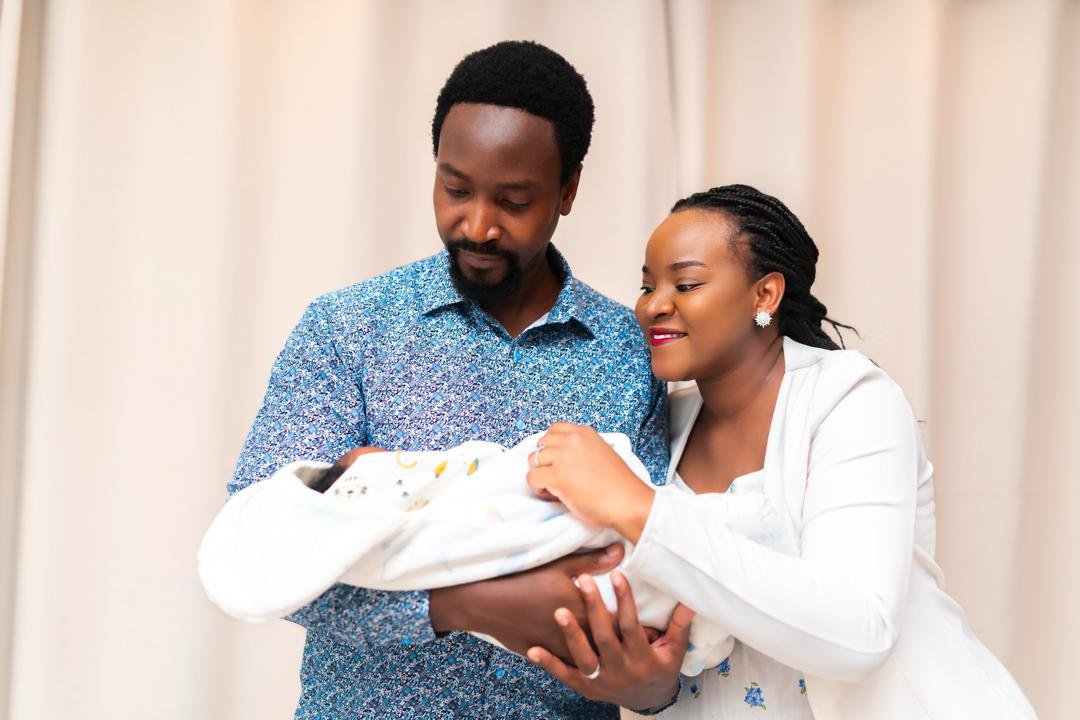
His Majesty William Gabula Nadiope IV, the Kyabazinga of Busoga, and Her Royal Highness Jovia Mutesi, the Inhebantu, announced the birth of their third son, Prince Nadiope Ezra Josiah, on 1 November 2026. The announcement carried an additional significance: father and son share the same birthday. The Royal Family confirmed that both the Inhebantu and the newborn were in excellent health and expressed gratitude to God and to the people of Busoga for their prayers and goodwill.
The announcement drew on Psalm 127:3, describing children as a heritage from the Lord. Its closing words, “Busoga Okwisania N’Amanhi,” reinforced a message of unity and togetherness that resonates beyond the royal household but the significance of this birth is also found in the history behind the name Nadiope.
The Nadiope name occupies an important place in Busoga’s political and cultural history. The current Kyabazinga is the grandson of William Wilberforce Kadhumbula Nadiope, a former Kyabazinga who also served as Uganda’s Vice-President. His public life reflected a period in which traditional leadership, education and the emerging institutions of the modern Ugandan state intersected.
The name Josiah in the newborn prince’s full name also carries family significance. At the announcement of the birth, members of the royal family explained that it honours their grandfather, Josiah Nadiope, remembered for his education, industriousness and contribution to the development of the Budhumbula royal palace. His story offers a reminder that royal heritage is not sustained by titles alone. It is also carried through education, service, memory and the values passed between generations.
This is an important distinction in understanding Busoga’s institution. The Kyabazinga is selected through the kingdom’s traditional leadership arrangements involving its eleven chiefdoms; the birth of a prince therefore represents the continuation of a royal family and its history, rather than an automatic succession to the throne. The distinction is essential because it recognises both the dignity of the royal household and the cultural processes through which Busoga sustains its leadership institution.
Busoga’s story is part of a much larger national heritage, with Uganda being a home to more than 52 distinct ethnic communities, each contributing languages, customs, music, food, oral traditions, systems of leadership and collective memory to the country’s cultural identity. The Basoga, whose heritage is closely associated with eastern Uganda and the Lake Victoria basin, share this national space with communities whose histories have developed in different geographical and social settings.
In Buganda, the Kabakaship has remained a powerful symbol of the Ganda people’s historical identity, with the Kabaka and the institution of the kingdom connected to language, clan heritage, cultural education and the preservation of traditions. In Bunyoro-Kitara, the Omukama represents a historical institution associated with the Babiito dynasty and the kingdom’s long-standing cultural memory. To the west, the Tooro Kingdom, under the Omukama, preserves traditions associated with the Rutooro language, royal ceremonies and the cultural identity of the people of Tooro.
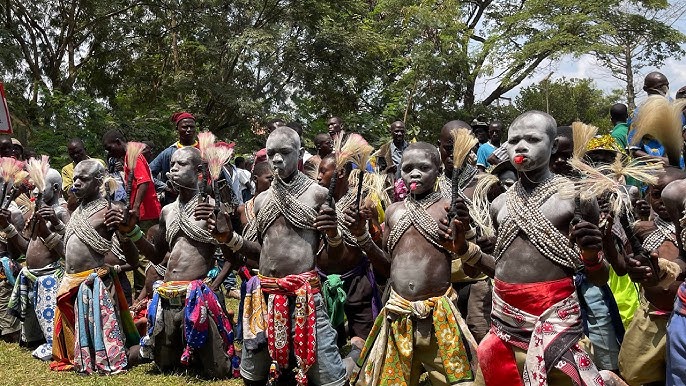
The Ankole cultural institution, associated with the Omugabe and the heritage of the Banyankole, offers another expression of Uganda’s diverse traditional leadership. In northern Uganda, the Acholi cultural institution, Ker Kwaro Acholi, demonstrates how cultural leadership can support community identity, customary practices, reconciliation and the transmission of oral history. Among the Karamojong communities in the northeast, age-set traditions, cattle-centred livelihoods, distinctive attire, music and communal ceremonies preserve a cultural heritage shaped by the region’s environment and history.
These institutions are not identical, nor do they serve precisely the same functions. Their importance lies in the different ways they preserve identity and provide communities with a connection to their past. Together, they demonstrate that Uganda’s national identity is not built by erasing cultural differences, but by bringing different histories into a shared national experience.
The birth of Prince Ezra Josiah also provides an opportunity to reconsider the role of cultural institutions in contemporary Uganda. Cultural heritage is not simply a ceremonial inheritance. Properly supported, it can contribute to tourism, creative industries, cultural education, community cohesion and international engagement.
Royal ceremonies, traditional music, dance, storytelling, heritage sites, crafts and indigenous knowledge can introduce international audiences to Uganda beyond its conventional tourism attractions. Busoga, for example, has cultural and historical assets that can complement the country’s wider tourism identity, including its connection to the source of the Nile, the heritage of Jinja and the traditions of its eleven chiefdoms.
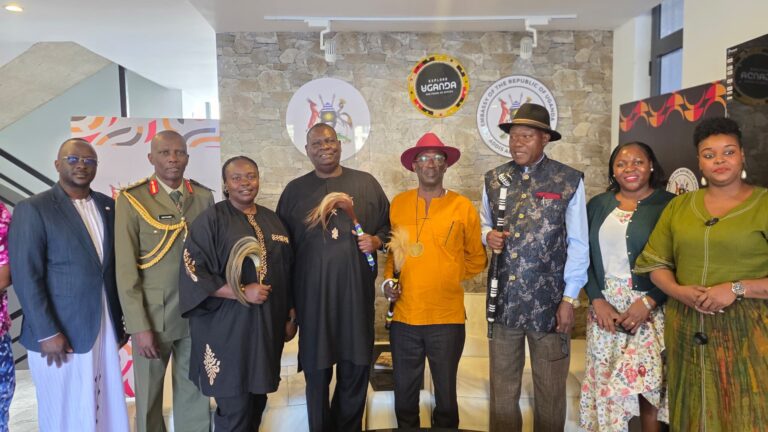
This is where cultural diplomacy becomes particularly relevant. When Uganda presents its cultural diversity to the world through responsible storytelling, exchanges, exhibitions, heritage tourism and academic engagement, it strengthens the country’s international image while creating opportunities for communities to benefit from their own heritage.
The challenge is to ensure that cultural preservation remains inclusive, commercially responsible and relevant to younger generations. Young Ugandans should encounter their cultural history not only during royal ceremonies or national celebrations, but also through schools, digital platforms, research, documentaries and creative enterprise.
Prince Nadiope Ezra Josiah’s birth is first and foremost a blessing for the Kyabazinga, the Inhebantu and their family. It is also a moment of happiness for the people of Busoga, who have welcomed the news with goodwill. Its wider significance, however, rests in the reminder that culture survives through people: through names remembered, stories retold, institutions respected and values transferred from one generation to another. From the royal heritage of Busoga to the traditions of Buganda, Bunyoro, Tooro, Ankole and the cultural institutions of northern and eastern Uganda, the country’s diversity remains an important source of identity and national character.
As Uganda continues to pursue development and international engagement, its cultural institutions have an opportunity to contribute to a stronger national narrative one that values history while making room for innovation, youth participation and shared prosperity.
For Busoga, the young prince’s arrival adds another chapter to a royal family’s story. For Uganda, it is a reminder that cultural heritage is not merely something inherited from the past. It is something every generation must protect, understand and make meaningful for the future.
Busoga Okwisania N’Amanhi.