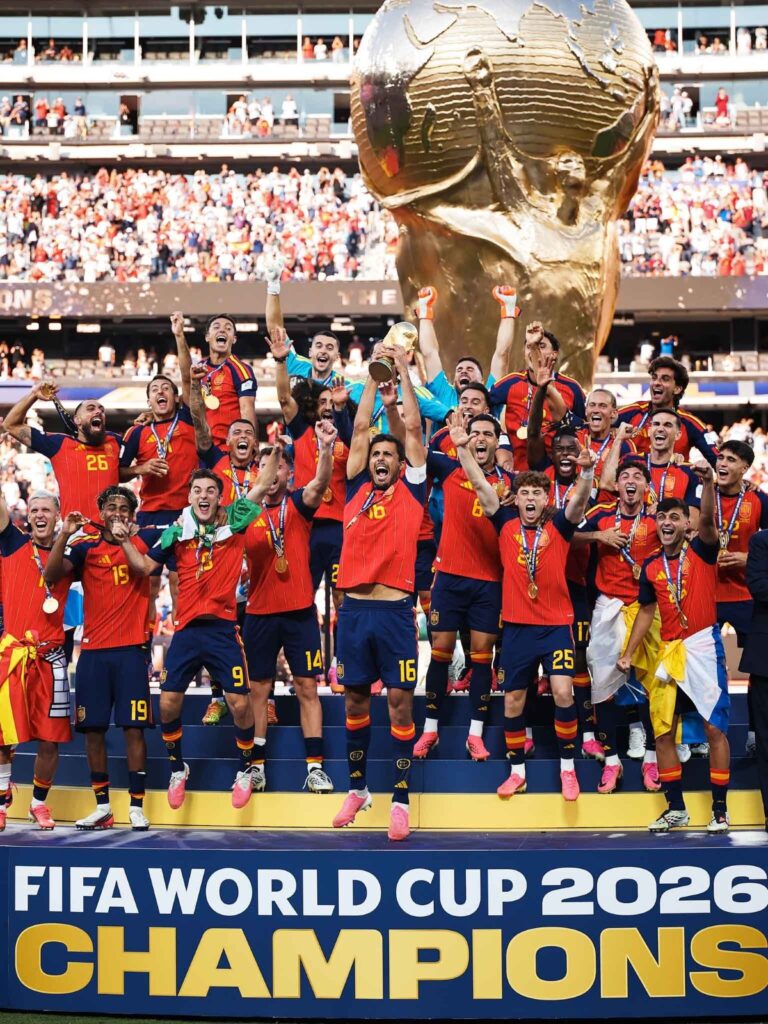
The final whistle of a FIFA World Cup does more than determine a winner and a runner-up. It reveals character, leadership, and the values that sport represents beyond the scoreboard. Argentina’s 1–0 defeat to Spain in the 2026 FIFA Men’s World Cup final ended their hopes of retaining the global crown and marked a historic triumph for Spain, who secured their second men’s World Cup title after a dramatic extra-time victory. Ferran Torres scored the decisive goal in the 106th minute after Argentina had been reduced to ten players following Enzo Fernández’s dismissal. Yet, beyond the result, the post-match scenes generated a global conversationnot about tactics or football ability, but about sportsmanship.
Several Argentine players struggled to accept the defeat with the dignity expected at football’s highest stage. Moments of tension followed the final whistle, including clashes between players, while some members of the Argentine team appeared to turn away during Spain’s trophy celebration. FIFA subsequently opened an investigation into the post-match incidents. For a nation with one of football’s richest traditions, the reaction has sparked debate about the responsibility that comes with wearing a national jersey.
Football is deeply connected to identity, particularly in Argentina, where the national team represents generations of cultural pride, sacrifice, and passion. The disappointment of losing a World Cup final is understandable. Players invest years of preparation, personal sacrifice, and national expectations into a single tournament.
However, the greatest sporting figures are often defined not only by how they win, but by how they respond when they lose. History remembers champions who accepted defeat with humility, recognising that competition requires both victory and respect for the opponent. The ability to congratulate a better-performing team is part of the unwritten code that makes sport a powerful tool for international connection.
The controversy surrounding Argentina’s reaction provides a broader reflection on leadership and public responsibility. National teams are not simply groups of athletes; they are ambassadors of their countries. Their actions are watched by millions of young supporters who learn values from what they see on the field.
Sport has long been considered a form of diplomacy a bridge between societies, cultures, and nations. From Olympic competition to global football tournaments, athletes often represent ideals of respect, fairness, and unity. When those principles are challenged, the conversation extends beyond sport. For Africa, where football remains one of the continent’s strongest cultural forces, the discussion carries particular relevance. Young African players increasingly compete on global stages, and the examples set by international football icons influence emerging generations. Success should therefore be measured not only by trophies won but also by the legacy created.
Spain’s triumph was built on discipline, tactical organisation, and resilience. Their ability to remain composed in a tense final demonstrated the importance of preparation and mental strength at elite level. Their victory also reinforces a central truth of sport: every champion eventually faces a moment of defeat, and every defeated team has an opportunity to demonstrate greatness through its response. Argentina remains one of football’s most successful nations, with a proud history and a team capable of inspiring millions. A disappointing ending does not erase their achievements throughout the tournament. However, moments of frustration can become opportunities for reflection and renewal.
The World Cup is ultimately more than a competition for medals. It is a global stage where nations showcase not only sporting excellence but also cultural values. Victory deserves celebration. Defeat deserves respect, for athletes, coaches, and supporters everywhere, the lesson remains timeless: true champions are revealed not only when they lift the trophy, but when they stand with dignity after it slips away.