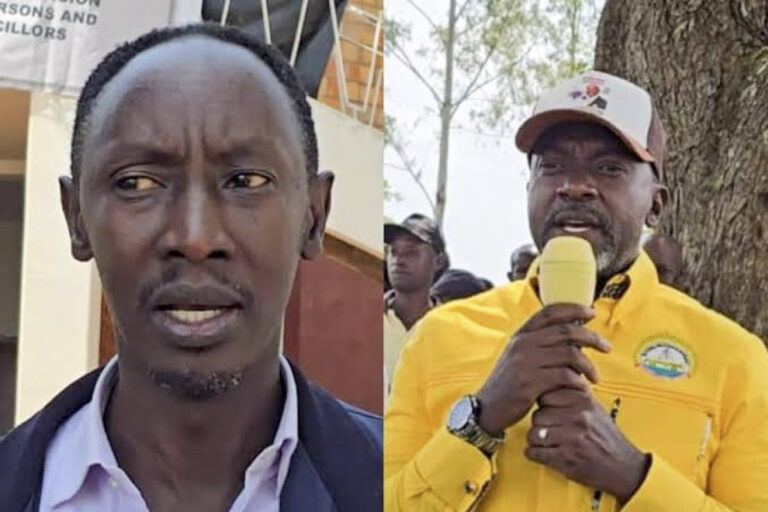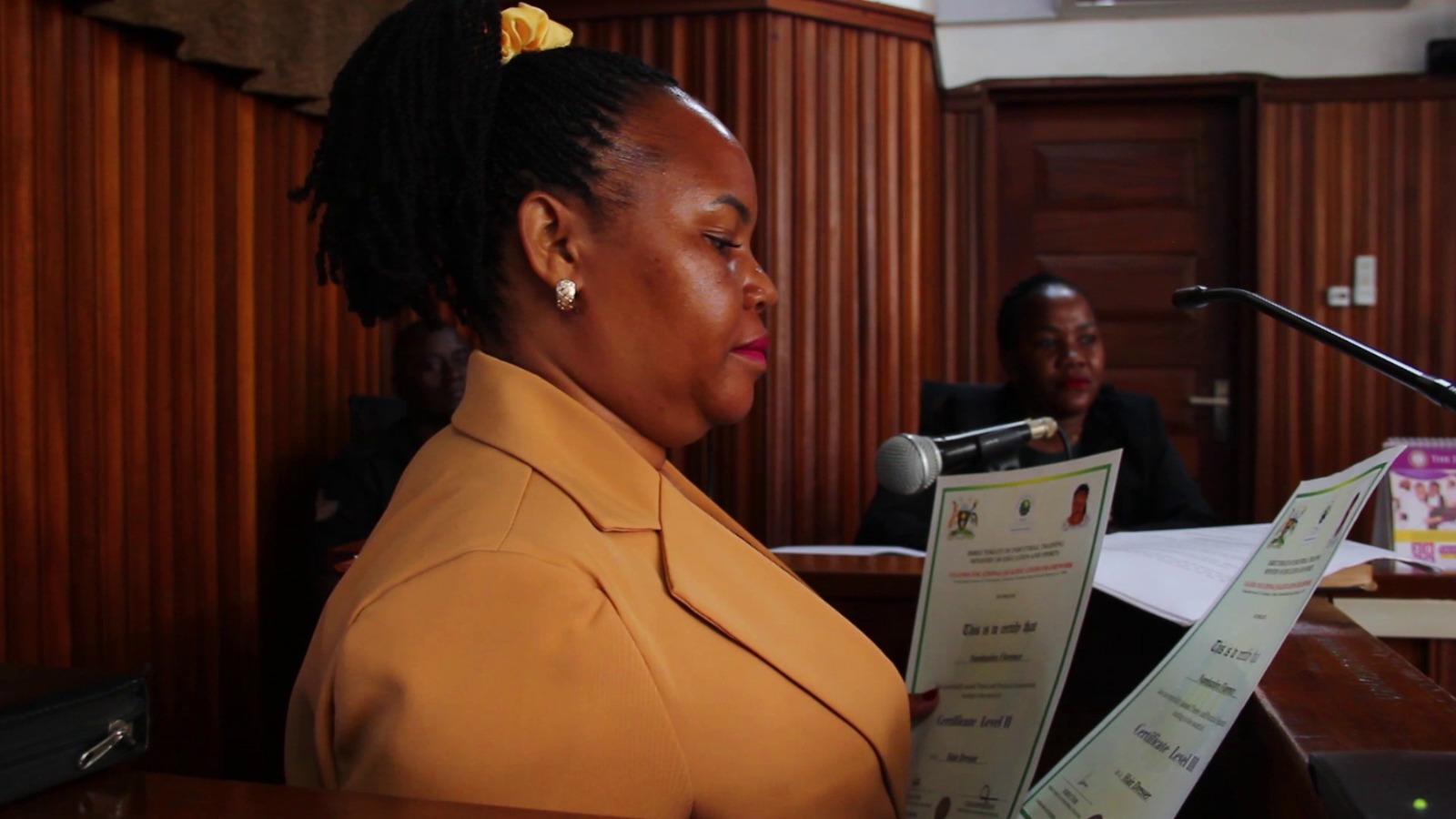
Uganda’s education system, vocational training framework and parliamentary eligibility requirements have come into focus following testimony by Sembabule District Woman Member of Parliament Florence Nambaziira in an election petition before the Masaka High Court. Nambaziira reportedly told court that she had not sat the Primary Leaving Examination (PLE) or Uganda Certificate of Education (UCE), explaining that she instead pursued vocational training in hairdressing, established a business and trained others in the profession.

Her testimony forms part of a petition filed by electoral rival Mary Begumisa, who is challenging Nambaziira’s parliamentary victory and questioning whether her academic qualifications satisfy the requirements for election to Parliament. The case raises a broader policy question: how should Uganda balance the recognition of practical skills and alternative educational pathways with the constitutional standards governing access to elected public office?
Article 80(1)(c) of Uganda’s Constitution establishes an educational qualification for parliamentary candidates: a person must have completed a minimum formal education of Advanced Level standard or its equivalent, as prescribed by Parliament.The provision is significant because it does not expressly make possession of PLE and UCE certificates, individually, the sole test of eligibility. The central legal question is whether a candidate satisfies the prescribed educational standard or an officially recognised equivalent. Consequently, not sitting PLE or UCE examinations does not, by itself, conclusively establish parliamentary ineligibility. Equally, practical experience or possession of vocational certificates does not automatically demonstrate that the constitutional requirement has been met.
According to the reported proceedings, a Uganda National Examinations Board (UNEB) official testified that the documents presented did not qualify Nambaziira for university admission. However, university admission requirements and the legal test for parliamentary candidature are distinct questions. The court must assess the relevant qualifications against the applicable constitutional and statutory provisions. The judgment will therefore be important in clarifying how alternative qualifications should be evaluated in an electoral dispute.
Nambaziira told court that her vocational training included practical hairdressing, business management and customer care. She also stated that she had obtained three certificates and established a company through which she trains others. Her account illustrates the contribution vocational and technical education can make to employment, entrepreneurship and skills development.
Uganda’s education policy must recognise that academic examinations are not the only means of acquiring economically valuable competencies. Vocational institutions can equip learners with practical skills that support self-employment, enterprise development and job creation.
The Technical and Vocational Education and Training Act, 2025, alongside Uganda’s broader skills-development framework, provides important context for the regulation and recognition of technical and vocational learning. However, recognition of vocational training for employment or professional advancement does not necessarily establish equivalence to every academic qualification required by law. The distinction is essential: vocational education should be respected on its own merits, while formal equivalence should be determined through established accreditation and assessment procedures.
International education policy increasingly recognises multiple pathways to learning, including formal schooling, technical training and work-based competencies. The United Nations’ Sustainable Development Goal 4 calls for inclusive and equitable quality education and the promotion of lifelong learning opportunities for all. The Universal Declaration of Human Rights, under Article 26, recognises the right to education and the importance of access to educational opportunities. These principles support educational systems that allow people to develop skills through different routes. They do not, however, require countries to abolish specific educational qualifications for public office.
Comparatively, some jurisdictions impose formal educational thresholds for elected representatives, while others rely principally on citizenship, age and other constitutional requirements without a general academic qualification. There is no single international standard requiring every legislator to possess an Advanced Level certificate or its equivalent. Uganda must therefore determine its own eligibility framework constitutionally, while ensuring that the rules are transparent, consistently applied and compatible with democratic participation.
Beyond the academic qualification dispute, the petition reportedly includes questions concerning declaration-of-results forms, alleged intimidation and claims of electoral irregularities. These allegations remain subject to judicial assessment and should not be treated as established facts. The court’s responsibility is to examine the evidence, interpret the applicable law and reach an independent determination. Neither political affiliation nor public opinion should substitute for proof.
For Uganda, the case highlights the importance of reliable qualification-verification mechanisms, clear guidance on equivalent credentials and transparent electoral administration. Ultimately, the issue is not whether vocational skills are valuable they are. It is whether the evidence establishes compliance with the legal requirements for parliamentary office.
Daily Thinkers’ perspective: A credible democracy must widen access to education, recognise practical competence and enforce electoral law impartially. The Masaka High Court’s determination may help clarify the relationship between alternative learning pathways and constitutional eligibility, while reinforcing the principle that public office must be governed by law rather than assumption.
Sources and legal framework: Constitution of the Republic of Uganda, Article 80; applicable parliamentary electoral legislation; Uganda’s technical and vocational education framework; United Nations Sustainable Development Goal 4; Universal Declaration of Human Rights, Article 26. Court proceedings are reported as described in the supplied account; the final judicial determination was not available for this article.