June 2, 2026

Editor

Daily Thinkers is a digital news and analysis platform dedicated to thoughtful journalism and informed perspectives on global affairs. We cover diplomacy, real-estate, investment, economics, sports, governance, international relations, policy, development, and social issues with a strong emphasis on context, constructive, and credibility. In a fast-paced media environment, Daily Thinkers focuses on insight rather than immediacy, offering readers analysis that explains not only what is happening, but why it matters. Our content is designed for a global audience that values clarity, reasoned debate, and responsible reporting. With contributors drawn from journalism, academia, public policy, think tankers and diplomacy. Daily Thinkers serves as a bridge between information and understanding, particularly highlighting Africa’s evolving role within global conversations.

Kampala, Uganda — Uganda and France are intensifying diplomatic and economic engagement ahead of the upcoming Africa-Forward Summit, with officials from both countries describing the gathering as a defining moment in the evolution of Africa-Europe partnerships. Scheduled for May 11–12 in Nairobi, the summit will, for the first time since its inception in 2017, be hosted in an English-speaking African country an adjustment both symbolic and strategic in the changing landscape of continental diplomacy.


Speaking during a high-level breakfast briefing hosted by H.E Virginie Leroy the French Ambassador to Uganda, Uganda’s Minister of Foreign Affairs, Hon. Gen Odongo Jeje Abubakhar, welcomed the summit as a reflection of shifting geopolitical realities and a growing recognition of Africa’s expanding economic and demographic significance. “Nairobi is a first,” the Minister observed. “Since 2017, these meetings have taken place in French-speaking countries. This is the first time France is crossing the proverbial Rubicon to engage directly within English-speaking Africa.”


The remarks carried broader diplomatic significance beyond venue selection, the summit’s relocation as part of France’s evolving Africa policy under H.E President Emmanuel Macron, aimed at broadening engagement across the continent through partnerships anchored in economic cooperation, innovation, and youth empowerment rather than traditional political influence. Hon. Gen. Odongo framed the summit within Uganda’s own transition toward Economic and Commercial Diplomacy, a strategy increasingly guiding the country’s foreign policy engagements. He emphasized that the Nairobi meeting would focus less on ceremonial diplomacy and more on measurable outcomes tied to trade, investment, enterprise, and job creation. “We are not going to Nairobi for symbolism alone,” he remarked. “Africa-Forward is a statement that Africa is moving forward through enterprise, business, innovation, and regional partnerships.”


The summit comes at a pivotal time for Uganda, which continues to position itself as one of East Africa’s emerging economic centres. Ambassador Leroy noted that Uganda’s sustained economic growth consistently above six percent has attracted growing international interest, particularly as the country prepares for commercial oil production and expands investment in infrastructure and energy. At the same time, she underscored the urgency of addressing Uganda’s demographic realities, with approximately 700,000 young people entering the labour market annually. According to the Ambassador, future partnerships must therefore prioritize scalable employment opportunities, entrepreneurship, and skills development.


France’s engagement with Uganda, she explained, is increasingly guided by three interconnected pillars: partnership, investment expansion, and long-term developmental impact. Under the “Team Up” approach, France works alongside Ugandan institutions, youth-led initiatives, and regional partners through agencies and institutions including the Agence Française de Développement, Alliance Française, and the French Chamber of Commerce. The model also integrates broader European and African partnerships, reflecting a multilateral approach to development cooperation.


The second pillar, “Scale Up,” focuses on mobilizing financing instruments to support Uganda’s priority sectors. French-backed investments have increasingly targeted infrastructure, renewable energy, healthcare, and entrepreneurship through concessional financing, export support mechanisms, and private sector partnerships. The third pillar, “Multiply Impact,” centres on employment creation, skills transfer, and regional integration. Officials highlighted the growing footprint of French companies operating in Uganda, particularly in sectors linked to energy, agribusiness, finance, and digital innovation.

Several bilateral projects were cited as examples of this expanding cooperation. Partnerships between the National Water and Sewerage Corporation and French development institutions have improved access to clean water for millions of Ugandans across Greater Kampala and southwestern Uganda over the past decade and a half.


In the renewable energy sector, collaboration involving Uganda’s Ministry of Energy, France, and the European Union has extended clean energy access across dozens of districts, supporting rural electrification and sustainability goals. Agricultural transformation has also emerged as a central area of engagement, particularly through initiatives supporting climate-resilient coffee production and agroforestry systems. French-supported entrepreneurship programs are increasingly targeting Uganda’s innovation ecosystem. Through initiatives such as Digital Africa and GreenTech incubation partnerships with financial institutions, Ugandan start-ups particularly those led by women and youth are receiving mentorship, financing, and international exposure. Cultural diplomacy has similarly become part of the relationship. Creative economy initiatives supporting digital content creators, musicians, and cultural entrepreneurs illustrate a broader understanding that economic cooperation increasingly intersects with culture, technology, and soft power.


The upcoming summit in Nairobi is therefore expected to serve not merely as a diplomatic gathering, but as a platform for redefining how African and European partnerships are structured in the coming decade. Observers note that the language surrounding the summit particularly the term “Africa-Forward” signals an intentional shift away from donor-recipient frameworks toward partnerships based on shared interests and mutual growth. For Uganda, participation in the summit aligns with its wider strategy of positioning itself as both a regional investment destination and an active diplomatic actor within Africa’s transformation agenda. As preparations continue, expectations are growing that the Nairobi meeting could help shape a more pragmatic and commercially driven phase in Africa-France relations one increasingly defined not by history, but by opportunity.


Kampala, Uganda — In 1986, a relatively young guerrilla leader emerged from years of armed struggle to assume power in Uganda, promising fundamental change after decades marked by political instability, economic decline, and conflict. Forty years later, Yoweri Kaguta Museveni remains one of Africa’s longest-serving leaders, preparing for another presidential inauguration following victory in the January 15 elections, where official results gave him more than 70 percent of the vote.


His political journey has become inseparable from Uganda’s modern history. For supporters, it is a story of stability, recovery, and transformation. For critics, it raises enduring questions about democratic transition, political competition, and the future of governance in Africa. Yet regardless of perspective, few dispute that Uganda today is profoundly different from the country Museveni inherited nearly four decades ago. When the National Resistance Movement (NRM) took power in 1986, Uganda’s economy was fragile, infrastructure had deteriorated, and state institutions were weakened by years of turbulence. According to historical economic data, Uganda’s GDP stood at under USD 4 billion in the late 1980s. Today, the economy has expanded significantly, with GDP estimated at over USD 55 billion. Major roads connect regions once isolated, urban centres have expanded rapidly, and sectors such as telecommunications, banking, education, and aviation have undergone visible transformation.


In health and education, Uganda has also recorded notable progress. Universal Primary Education, introduced in the late 1990s, dramatically increased school enrolment, while healthcare access has expanded across districts. Life expectancy has improved compared to the 1980s, and maternal and child mortality rates have gradually declined, despite continuing challenges linked to population growth and resource constraints. The country has also become a significant regional actor. Uganda’s diplomatic and security engagements within East Africa, the Horn of Africa, and African Union peacekeeping operations have elevated its geopolitical profile. From regional mediation efforts to military deployments under multilateral frameworks, Kampala has increasingly positioned itself as a strategic player in continental affairs.


Politically, however, Uganda’s evolution remains more contested, in 2005, Uganda officially restored the multi-party political system after years of operating under the Movement system. Today, the country has numerous registered political parties participating in electoral processes. Elections are regularly held, political campaigns remain vibrant, and parliamentary debate continues to shape national discourse. Yet opposition groups and civil society organizations frequently raise concerns regarding political freedoms, arrests, detentions, and the broader operating environment during election periods. These tensions are not unique to Uganda alone, across many developing democracies in Africa, balancing security, political competition, and institutional maturity remains an ongoing challenge. Still, Uganda’s experience draws particular attention because of the longevity of its leadership and the influence it holds regionally. Ironically, one of the most frequently recalled statements attributed to President Museveni in his earlier years was that “the problem of Africa is leaders who overstay in power.” Decades later, that observation continues to feature prominently in debates about governance, succession, and democratic transition not only in Uganda, but across the continent.


Yet Uganda’s political story cannot be viewed solely through the lens of leadership duration. It must also be measured against the aspirations of one of Africa’s youngest populations. More than 75 percent of Ugandans are below the age of 35, creating enormous pressure on employment, innovation, housing, healthcare, and digital opportunity. Economic growth alone may no longer be enough; the coming decades will likely require a governance model that equally prioritizes inclusion, institutional trust, and youth participation. The question facing Uganda today is therefore larger than whether past manifestos succeeded or failed. It is whether the country can translate decades of relative stability into a sustainable national vision capable of meeting future demands. Oil production, industrialization, technology, tourism, and regional trade all present opportunities. However, unlocking their full potential will depend on strengthening institutions, expanding civic confidence, combating corruption, and investing consistently in human capital.


For many Ugandans, the dream remains simple but profound: a prosperous, stable, and globally competitive nation where opportunity is not limited by geography, politics, or social status. Achieving that vision will require more than government action alone. It will demand collective responsibility from political actors, private sector leaders, civil society, and citizens themselves. As Uganda approaches another chapter under President Museveni’s leadership, the country stands at an important crossroads between legacy and transition, continuity and reform, ambition and expectation. The visible transformation of the past four decades’ forms part of the national story. The greater challenge now may be defining what the next four decades should become.

Kampala, Uganda — Oryem Henry Okello has reaffirmed Uganda’s commitment to multilateral peacekeeping cooperation following a high-level engagement with a delegation from the United Nations Triangular Partnership Programme at the Ministry of Foreign Affairs. The delegation, led by Paulin Djomo and accompanied by Esther Ngotho, held discussions centered on Uganda’s longstanding partnership with the United Nations in advancing international peace support operations, regional stability, and institutional capacity-building. The meeting reflected Uganda’s growing diplomatic and operational role within global peacekeeping frameworks at a time when international security challenges continue to evolve across Africa and beyond. Officials noted that Uganda remains a strategic partner in regional peace and security efforts, both through troop contributions and support to international peacekeeping infrastructure.


Particular attention during the discussions was directed toward the work of the United Nations Triangular Partnership Programme, a global initiative established in 2015 to strengthen the readiness and effectiveness of uniformed peacekeepers. The Programme focuses on specialized training in engineering, medical support, and advanced operational systems including Command, Control, Communications, Computers, Intelligence, Surveillance, and Reconnaissance (C4ISR).

Through partnerships with member states and regional institutions, the Programme has become an important mechanism for improving operational preparedness in increasingly complex peace support missions under both United Nations and African Union mandates.


During the engagement, Mr. Djomo expressed appreciation to the Government of Uganda for its consistent cooperation and support toward the Programme’s activities and the broader UN peacekeeping architecture. He noted that the United Nations Regional Service Centre Entebbe continues to play a critical role in supporting UN missions across the continent. According to the delegation, operational demands on the Centre have expanded considerably in recent years. Officials indicated that more than 300 personnel are currently engaged in mission-related support activities in Uganda, while over 500 participants are hosted annually in Entebbe for specialized peacekeeping training and capacity-building programmes.


The growing scale of operations, the delegation explained, has created additional infrastructure and logistical requirements necessary to sustain the Programme’s expanding mandate. Discussions therefore explored possible long-term approaches to support future operational needs while ensuring continuity of training and mission support activities. In his remarks, Hon. Oryem Henry Okello acknowledged the concerns raised and reiterated Uganda’s recognition of institutions that contribute to international peace, regional security, and multilateral cooperation. He observed that Uganda’s foreign policy continues to prioritize constructive engagement with global and regional partners committed to peacebuilding and sustainable security frameworks.

The Minister further stated that Government would engage relevant national authorities regarding the matters presented, while emphasizing that Uganda remains open to supporting initiatives that strengthen peace operations within existing legal and administrative frameworks. He also encouraged exploration of sustainable long-term options capable of supporting the future growth of the Programme.


The discussions additionally touched on preparations for an upcoming United Nations mission expected to engage senior Ugandan officials, including leadership from the Ministry of Defence and Veteran Affairs and the Uganda People’s Defence Forces. The anticipated engagements are expected to address issues related to peacekeeping operations, troop reimbursement mechanisms, and broader cooperation between Uganda and the United Nations system. Uganda has, over the years, positioned itself as one of Africa’s active contributors to regional and continental peace support operations. Its involvement in stabilization efforts, peace enforcement missions, and international security partnerships has increasingly reinforced the country’s diplomatic standing within multilateral institutions.


Uganda’s continued collaboration with UN peacekeeping structures also carries broader strategic implications. Beyond security cooperation, such partnerships contribute to technical capacity-building, professional military training, and enhanced regional coordination in responding to emerging threats including terrorism, armed conflict, and humanitarian crises. The meeting concluded with both sides reaffirming their shared commitment to strengthening cooperation in support of global peacekeeping objectives. The Ministry of Foreign Affairs reiterated Uganda’s enduring support for multilateralism and collaborative international partnerships aimed at promoting peace, stability, and sustainable security responses across Africa and globally. At a time when peacekeeping missions face increasingly complex operational realities, the engagement highlighted the importance of sustained international cooperation and the role of regional partners such as Uganda in shaping effective responses to evolving global security challenges.

Kampala, Uganda — In a diplomatic engagement underscoring the centrality of agriculture to Uganda’s development agenda, Hon. Gen. Odongo Jeje Abubakhar today received Letters of Credence from Ezana Getahun Kassa, the newly appointed representative of the Food and Agriculture Organization of the United Nations, during a formal ceremony marked by cordial exchange and renewed commitment to sustainable development cooperation.The presentation of credentials signified the formal commencement of Mr. Kassa’s diplomatic mandate in Uganda, reinforcing longstanding collaboration between the Government of Uganda and FAO in advancing agricultural transformation, food security, and rural development.


Welcoming the newly accredited envoy, Hon. Odongo Jeje reaffirmed that agriculture remains the backbone of Uganda’s economy, sustaining the livelihoods of the majority of the population and anchoring national development priorities. He observed that while Uganda continues to pursue modernization of its agricultural systems, equal attention must be given to preserving indigenous knowledge systems that have historically supported resilience in rural communities. The Minister emphasized that agricultural transformation must be approached as a balanced process one that integrates innovation with cultural and social realities. He noted that climate change has intensified the urgency for adaptive strategies, particularly in relation to unpredictable rainfall patterns, land use pressures, and food production systems.


In his remarks, Hon. Odongo Jeje highlighted the importance of emerging agricultural technologies, including biotechnology and genetically modified organisms (GMOs), while underscoring that their adoption must be guided by careful assessment of Uganda’s socio-economic conditions and cultural context. He reiterated that national policy remains anchored in safeguarding both productivity and identity, stating that development must not come at the expense of heritage. Uganda’s geographical advantage, particularly its equatorial climate, was also highlighted as a strategic asset for agricultural productivity. The Minister noted that the country’s favorable climatic conditions allow for year-round cultivation, offering significant potential for both domestic food security and export-oriented agricultural growth. However, he cautioned that increasing climate variability continues to present challenges that require coordinated, multi-sectoral responses. He further emphasized Government’s commitment to strengthening institutional collaboration across ministries and development partners to ensure a coherent approach to agricultural transformation. According to the Minister, sustainable progress in the sector depends on aligning policy, research, and implementation frameworks under a unified national vision.


In his response, Mr. Ezana Getahun Kassa expressed appreciation for the warm reception extended to him and reaffirmed FAO’s commitment to supporting Uganda’s agricultural development priorities. He commended Uganda’s natural endowment and agricultural potential, describing the country as a strategic partner in advancing regional and global food security objectives. Mr. Kassa further observed that agriculture inherently intersects with multiple sectors, including environment, trade, health, and infrastructure, and therefore requires broad-based institutional engagement. He requested facilitation to engage with relevant Government entities beyond the Ministry responsible for agriculture, in order to support a more integrated approach to programme implementation.


In response, Hon. Odongo Jeje welcomed the proposal, affirming Uganda’s openness to coordinated and structured collaboration through established diplomatic and institutional channels. He underscored the importance of maintaining coherence in external engagements to ensure alignment with national priorities and development frameworks. The discussion also reflected shared concern over global food systems, climate resilience, and the need for strengthened technical cooperation. Both parties acknowledged that sustainable agricultural development is increasingly linked to broader issues such as environmental sustainability, population growth, and global supply chain stability.


The meeting concluded on a note of mutual commitment to deepen cooperation between Uganda and FAO, with a focus on enhancing technical support, promoting innovation, and advancing inclusive agricultural development. Both sides expressed confidence that strengthened collaboration will contribute meaningfully to improving food security and livelihoods across Uganda. As Uganda continues to position agriculture at the centre of its economic transformation agenda, partnerships with international organizations such as FAO remain critical. The engagement reaffirmed a shared understanding that sustainable agricultural progress requires not only investment and technology, but also respect for local context, institutional coordination, and long-term strategic alignment.


Guangzhou/ China Uganda has reaffirmed its commitment to expanding international trade, attracting investment, and strengthening economic diplomacy through a prominent participation at the 139th edition of the Canton Fair, one of the world’s largest and most influential trade exhibitions. Held in Guangzhou, Guangdong Province from 1 to 5 May 2026, the fair brought together thousands of global buyers, manufacturers, and investors, creating a dynamic marketplace for cross-border commerce. Uganda’s presence was strategically positioned within this global ecosystem, reflecting a deliberate push to expand exports, attract foreign direct investment, and elevate the country’s profile as a competitive investment destination.


The Ugandan pavilion, coordinated through the country’s diplomatic missions in China, showcased a diverse range of export-ready products including specialty coffee, shea butter, organic cosmetics, tea, and artisanal crafts. Exhibitors included Seedstar Specialty Coffee, Elyon Organics, Senela Organics, RhinoSeeds Africa, and Megkari Coffee firms representing Uganda’s growing agro-processing and value addition sectors. Early engagements at the pavilion translated into tangible commercial interest, with several products securing confirmed orders and repeat buyer inquiries within the first days of the exhibition. International visitors expressed particular interest in Uganda’s coffee and natural products, reflecting a broader global shift toward ethically sourced, organic, and traceable commodities. For many exhibitors, the fair served as both a commercial platform and a learning experience. Representatives from Seedstar Specialty Coffee described the exposure as transformative, noting the scale of international interest in Ugandan coffee. Similarly, Elyon Organics highlighted the opportunity as a gateway into broader Asian markets and expressed optimism about sustained engagement beyond the exhibition.


Uganda’s delegation was led by Juju Nsababera, accompanied by senior officials including representatives from the Ministry of Foreign Affairs and defence and diplomatic attachés. The delegation underscored the importance of aligning Uganda’s export strategy with international market expectations, particularly in areas of branding, packaging, and quality assurance. Speaking on the sidelines of the exhibition, Ambassador Nsababera emphasized that Uganda’s participation was not merely symbolic but strategic. She noted that global markets increasingly reward consistency, compliance, and value addition, stressing that Ugandan exporters must position themselves as reliable suppliers of finished and semi-processed goods rather than raw commodities alone. She further highlighted the significance of China’s vast consumer base exceeding 1.4 billion people as a critical opportunity for Ugandan producers capable of meeting international standards. According to her, Uganda’s presence at the fair reflects a broader shift in diplomatic engagement, where embassies and consulates increasingly serve as economic gateways in addition to political missions.


The participation also generated interest beyond trade in goods. Uganda’s pavilion attracted inquiries about tourism, investment opportunities, and cultural exchange. Visitors showed curiosity about eco-tourism destinations such as national parks, mountain landscapes, and cultural heritage sites, reinforcing Uganda’s positioning as a multi-sector investment destination. This growing interest aligns with Uganda’s broader economic diplomacy agenda, which seeks to integrate trade promotion, investment attraction, and tourism development under a unified strategic framework. Government officials have consistently emphasized that international exhibitions such as the Canton Fair are critical platforms for advancing this agenda.


Uganda’s trade relationship with China continues to expand steadily. Bilateral trade currently stands at approximately US$1.46 billion annually, with Uganda exporting coffee, oil seeds, timber, and minerals while importing machinery, electronics, vehicles, and industrial inputs. Despite this growth, officials acknowledge a persistent trade imbalance and view export diversification and value addition as essential corrective measures. Within this context, Uganda’s participation in Guangzhou is seen as part of a long-term strategy to reposition the country within global value chains. By showcasing processed and branded products, Ugandan exporters aim to gradually shift from raw commodity dependence toward higher-value trade integration. Beyond immediate commercial outcomes, the fair also served as a platform for investment promotion. Interest was recorded from potential investors exploring opportunities in agro-processing, energy, manufacturing, and mineral development. Several exploratory discussions were initiated, signaling potential future partnerships that could translate into tangible investment inflows.


The Canton Fair itself remains a cornerstone of global trade, connecting buyers and exhibitors from more than 200 countries and facilitating billions of dollars in transactions annually. Uganda’s consistent participation reflects an understanding that sustained engagement in such platforms is essential for maintaining visibility in competitive international markets. As the exhibition concluded, Ugandan officials expressed optimism that the engagements would yield long-term dividends in export growth, investment inflows, and tourism development. The message from the Uganda pavilion was clear and consistent: the country is positioning itself not only as a supplier of goods, but as a credible partner in global trade and investment networks. In the words of the delegation, Uganda’s presence in Guangzhou was not an endpoint, but a continuation of a broader journey—one aimed at deepening economic ties, expanding opportunity, and embedding the country more firmly within the architecture of global commerce.

Kampala, Uganda — The Government of Uganda has formally signed a Host Country Agreement with the Centre for Agriculture and Biosciences International, marking a significant milestone in the country’s efforts to strengthen agricultural productivity, expand export competitiveness, and deepen scientific collaboration in the agriculture sector. The agreement, signed by Hon. Gen. Odongo Jeje Abubakhar on behalf of the Government of Uganda, and Mr. Morris Akiri, Executive Director for Africa at CABI, establishes a permanent institutional presence of the organisation in Uganda. Mr. Akiri was accompanied by Dr. Monica Kansiime, Regional Director; Mrs. Christine Alokit; and Dr. Nasib Mugwanya of the National Agricultural Research Organisation. CABI is a science-driven, intergovernmental, not-for-profit organisation founded in 1928 under a United Nations treaty framework. It is recognised by both the United Nations system and the Commonwealth as a leading global institution in agricultural knowledge, plant health, and bioscience innovation. Uganda has been a member since 1995, engaging the organisation through the Ministry responsible for agriculture and NARO in various research and development programmes.


The newly signed agreement follows Uganda’s ratification of the CABI Instrument in 2025 and the completion of all domestic legal processes, including clearance by the Attorney General. It now provides the legal and operational basis for CABI to establish a fully-fledged country office in the Greater Kampala Metropolitan Area. This transition represents a shift from a project-based engagement model to a permanent institutional footprint within Uganda’s scientific and agricultural ecosystem. At the signing ceremony, Gen. Odongo Jeje Abubakhar underscored the strategic importance of the partnership in addressing structural challenges within Uganda’s agricultural sector. He highlighted the persistent need to improve compliance with international sanitary and phytosanitary standards, particularly as Uganda seeks to regain and expand access to high-value export markets, including the European Union.


He noted that agriculture remains a central pillar of Uganda’s economy, employing a significant proportion of the population, and that partnerships such as this are essential in modernising production systems. Strengthening value chains, improving extension services, and equipping farmers with science-based knowledge were identified as key priorities under the collaboration.

CABI’s mandate aligns closely with Uganda’s national development objectives, particularly in areas of poverty reduction through agricultural productivity, environmental sustainability through nature-based solutions, and inclusive value chain development targeting women and youth. The partnership also places strong emphasis on knowledge transfer between global experts and local institutions, ensuring that scientific innovations are translated into practical solutions for farmers.

Mr. Akiri reaffirmed CABI’s long-term commitment to Uganda, highlighting ongoing and planned programmes designed to strengthen agricultural systems. He referenced an €8 million European Union-funded initiative aimed at improving regulatory frameworks, enhancing plant health systems, and building technical capacity within national institutions. A key component of this collaboration includes the establishment of a Centre of Excellence at Entebbe International Airport, which is expected to support phytosanitary inspections and improve export readiness. In addition, the introduction of cold chain logistics systems was highlighted as a critical intervention to reduce post-harvest losses and maintain product quality for international markets.


One of the flagship programmes under CABI’s global portfolio, PlantwisePlus, is also expected to play a central role in Uganda’s agricultural transformation agenda. The initiative supports plant health management by strengthening advisory services for farmers and extension workers, thereby improving productivity and reducing crop losses caused by pests and diseases. Both parties expressed optimism that the establishment of CABI’s permanent office will significantly enhance Uganda’s agricultural research capacity and export competitiveness. The agreement is also expected to foster stronger linkages between Ugandan scientists and global research networks, opening up new opportunities for innovation, investment, and technical cooperation.


Beyond its technical dimensions, the partnership reflects a broader policy direction within Uganda’s development strategy one that prioritises science, innovation, and international collaboration as drivers of economic transformation. By embedding a globally recognised scientific institution within its national framework, Uganda positions itself to better respond to emerging challenges in food security, climate resilience, and global trade compliance. As implementation begins, attention will now turn to translating the agreement into tangible outcomes for farmers, exporters, and research institutions. If effectively executed, the partnership has the potential to redefine Uganda’s agricultural trajectory shifting it from a largely subsistence-based system toward a more competitive, knowledge-driven, and export-oriented sector.

Kampala, Uganda — For years, Uganda’s global athletics story has largely been told through the triumphs of elite runners on distant tracks and city marathons. From the high-altitude communities around Mount Elgon to international podiums, Ugandan athletes have carried the country’s flag with distinction. Yet a quiet transformation is underway one that is shifting the narrative from exporting talent to importing global attention. At the centre of this shift is the Rwenzori Marathon, an initiative that has evolved into one of East Africa’s most compelling examples of sports diplomacy in action. What began as a modest idea has matured into a globally recognised event, now officially listed as a World Athletics Label Road Race an endorsement that places Uganda firmly on the international road racing calendar.

This recognition, recently announced was made by national leaders and sector stakeholders, signaling more than compliance with global standards in race organisation. It affirms a broader strategic vision: that sport can be a bridge between tourism, investment, and international engagement. Set against the dramatic backdrop of the Rwenzori Mountains and stretching through the iconic Queen Elizabeth National Park, the marathon offers a course unlike any other. Runners begin near the Equator and move through landscapes that blend wildlife, culture, and geography into a single experience ending in Kasese town with the mountains rising behind them. It is this fusion of sport and scenery that has elevated the marathon beyond competition into a storytelling platform for Uganda’s natural and cultural assets.

Over its five editions, the marathon has demonstrated a measurable ripple effect with tourism bookings surging in the weeks surrounding the event, with many participants extending their stay to explore western Uganda’s attractions. Hospitality businesses from lodges to local vendors report increased activity, while transport and service sectors benefit from the influx of visitors. In the immediate aftermath, conversations around investment often follow, linking visibility to opportunity.

This intersection of sport and economics reflects a growing policy direction within Uganda’s external engagement framework. Under initiatives such as economic and commercial diplomacy, Ugandan missions abroad are increasingly tasked with promoting the country not only as a destination, but as a partner. Pre-event runs organised in foreign capitals have become part of this strategy, positioning the marathon as a year-round diplomatic tool rather than a single-day event. The journey has not been without its challenges, in its early stages, the marathon operated with limited institutional backing, relying heavily on private sector initiative and community support. Today, that dynamic is shifting, Government involvement both direct and indirect has expanded, with commitments including financial support and logistical coordination. The Ministry responsible for sports pledged significant funding, recognising the marathon’s role in advancing national development priorities.

At the heart of this evolution is Amos Wekesa, widely credited as the driving force behind the initiative. A tourism entrepreneur with a long-standing commitment to promoting Uganda’s global image, Wekesa has consistently framed the marathon as more than a race. His approach often emphasising action over formalities has helped translate vision into reality, mobilising partnerships that cut across sectors. Importantly, the marathon’s impact extends into the host communities, Temporary employment opportunities emerge in event management, security, hospitality, and logistics. Small businesses experience increased demand, while local visibility improves for future tourism flows. Though these gains are concentrated around the event period, they contribute to a broader ecosystem of opportunity.

Globally, the Rwenzori Marathon aligns with a growing recognition that sporting events can serve as catalysts for development when anchored in local contexts. From marathons in major capitals to emerging races in scenic regions, the model is increasingly being adapted to reflect place-based identity. Uganda’s approach integrating conservation, culture, and commerce offers a distinctive variation of this trend. The awarding of World Athletics Label status marks a pivotal milestone, but stakeholders are clear that it is not an endpoint. Rather, it raises expectations around quality, inclusivity, and sustainability. As participation grows, so too does the need to balance international appeal with environmental stewardship and community benefit.

With the next edition scheduled for August 22, 2026, anticipation is already building, registration figures are rising, and interest from both elite and recreational runners continues to expand. For Uganda, the event represents more than a date on the calendar it is a statement of intent. In an era where nations compete not only through policy but through perception, the Rwenzori Marathon illustrates how a single idea, nurtured over time, can reshape a country’s narrative. It brings the world to Uganda’s doorstep, invites engagement beyond headlines, and demonstrates that the future of diplomacy may well be run one kilometer at a time.

Kampala, Uganda — Uganda’s security agencies have disrupted what authorities describe as a sophisticated transnational criminal network, following an intelligence-led operation that uncovered links between drug trafficking, identity fraud, and impersonation of state authority. The operation, coordinated under the oversight of the Ministry of Internal Affairs, resulted in multiple arrests, seizure of weapons, and recovery of forged official documents.


At the centre of the investigation is Mugisha Keith King, a resident of Kira Municipality and proprietor of the Keith King Group of Companies entities authorities believe largely functioned as shell structures to facilitate illicit activities. Security officials describe him as a repeat offender with a documented history of international drug trafficking. In 2010, he was arrested at Jomo Kenyatta International Airport in possession of cocaine reportedly trafficked from Brazil, for which he served a 12-year custodial sentence in Kenya.


According to investigators, the suspect maintained multiple identities, holding passports from several jurisdictions, including Seychelles, Eswatini, Belgium, the United Kingdom, and Brazil. He is also reported to have possessed national identification documents from both Kenya and Nigeria. Authorities further allege that he used forged credentials to impersonate an official attached to the Office of the President, raising concerns about vulnerabilities in document verification systems. Security agencies indicate that the network’s methods extended beyond documentation fraud. Mugisha is accused of adopting elaborate impersonation tactics, including the use of luxury vehicles fitted with unauthorized sirens and the wearing of military-style uniforms to project legitimacy and evade scrutiny. At his residence, signage reportedly identified the premises as an “Ambassador’s Residence,” suggesting deliberate attempts to exploit diplomatic symbolism for operational cover.


Investigations also point to collaboration with foreign nationals, particularly from Nigeria. Two individuals Ikemefuna Testimony Udo and Ikemefuna Annointing are currently in custody and assisting with inquiries. Authorities allege that another associate, Ms. Ikemefuna Winner Chekwubechukwu, fraudulently obtained Ugandan identification documents and is currently at large, with indications she may be in Brazil. Search operations conducted at multiple locations yielded a range of items now considered critical evidence. These include firearms a gun and pistol alongside live ammunition. Security personnel also recovered a cache of forged documents, including passports, identity cards, and counterfeit headed papers purportedly from the President’s Office. In addition, military-style equipment such as jackets, tactical vests, headgear, walkie-talkies, and a satellite communication device were seized.


Officials say the breadth of recovered materials underscores the organised nature of the network and its capacity to operate across borders. A comprehensive review of the immigration status of all foreign associates linked to the case is currently underway, with authorities working to determine the full scope of the network’s regional and international connections. The operation reflects a broader shift toward intelligence-driven security interventions in Uganda, where agencies are increasingly targeting complex criminal enterprises that exploit global mobility and digital systems. Analysts note that such networks often blur the lines between organised crime and identity-based fraud, making coordinated responses essential.


In a statement issued by the Ministry, spokesperson Simon Peter Mundeyi reiterated the government’s zero-tolerance stance on drug trafficking and the misuse of state symbols, including military attire and official insignia. He emphasized that such acts not only undermine public trust but also pose risks to national security. Authorities have called on the public to remain vigilant, particularly regarding individuals who unlawfully use sirens, wear military-style clothing, or present themselves as state officials without clear identification. Citizens are also encouraged to report suspected drug-related activities through established police communication channels. While investigations continue, the case has reignited discussion around document security, cross-border crime, and the need for stronger verification systems within both public and private institutions. It also highlights the importance of regional cooperation, as many of the elements uncovered including multiple passports and international movements fall beyond the jurisdiction of any single country.


For Uganda, the dismantling of this network represents both an operational success and a reminder of the evolving nature of organised crime. As authorities deepen investigations and pursue remaining suspects, attention will likely turn to strengthening safeguards that prevent similar networks from taking root. In an increasingly interconnected world, the challenge for security agencies is not only to respond to crime, but to anticipate it. This latest operation suggests that, at least in this instance, intelligence and coordination have delivered a decisive outcome.

Kinshasa/DRC — In a carefully choreographed diplomatic engagement reflecting the steady evolution of Great Lakes cooperation, Félix-Antoine Tshisekedi Tshilombo on Tuesday received John Mulimba, a special envoy of Yoweri Kaguta Museveni, at the African Union Headquarters. The meeting, though anchored in protocol, carried broader regional significance. Minister Mulimba delivered an official message from President Museveni, extending an invitation to President Tshisekedi to attend Uganda’s forthcoming presidential investiture ceremony an event expected to draw regional leaders and signal continuity in Kampala’s political trajectory. Beyond the formal invitation, the engagement opened space for substantive discussions on bilateral cooperation between Uganda and the Democratic Republic of Congo (DRC). Officials indicated that the diplomatic sequence leading to the investiture is expected to culminate in the signing of several protocols of agreement, aimed at reinforcing collaboration across key sectors.


Relations between Kampala and Kinshasa have, in recent years, shifted toward pragmatic engagement, particularly in areas of security, infrastructure development, and cross-border trade. The anticipated agreements are likely to build on existing frameworks, including joint infrastructure projects and coordinated security efforts in eastern DRC an area of shared concern for both governments.  The timing of the envoy’s visit is instructive. Convened on the margins of continental diplomacy at the African Union Headquarters, the meeting reflects a growing preference among African states to situate bilateral engagements within broader regional and multilateral contexts. This approach not only enhances visibility but also aligns national priorities with continental agendas on integration, peace, and economic transformation.


For Uganda, the outreach underscores its continued emphasis on regional diplomacy as a pillar of foreign policy. The Ministry responsible for regional integration has increasingly positioned itself at the forefront of fostering ties within the East and Central African corridors, recognising that economic interdependence and political stability are mutually reinforcing. For the DRC, engagement with Uganda remains strategically important. As one of Africa’s largest economies by landmass and resource endowment, the country is actively seeking partnerships that can accelerate infrastructure connectivity and unlock trade potential, particularly in its eastern provinces. Improved road networks, energy cooperation, and border management have emerged as priority areas in this regard.


The proposed protocols of agreement are expected to address some of these priorities, although specific details remain under negotiation. Diplomatic sources suggest that emphasis will likely be placed on facilitating trade flows, enhancing security coordination, and promoting investment opportunities that benefit communities on both sides of the border. The invitation to the investiture ceremony itself carries symbolic weight. In African diplomacy, such occasions often serve as platforms for reaffirming alliances, reviewing progress on joint initiatives, and signalling political goodwill. Attendance by President Tshisekedi would not only underscore the current momentum in bilateral relations but also provide an opportunity for high-level consultations on issues of mutual interest.


This latest engagement builds on a series of interactions between the two countries, reflecting a deliberate effort to maintain dialogue even amid complex regional dynamics. While challenges persist particularly in addressing insecurity in eastern DRC the tone of recent diplomacy suggests a shared recognition that cooperation offers a more sustainable pathway than unilateral approaches. At the continental level, the meeting aligns with the African Union’s broader vision of integrated and peaceful regions. Strengthened bilateral ties between neighbouring states are increasingly viewed as foundational to achieving these objectives, particularly in areas where localised instability has cross-border implications.


As preparations for the investiture advance, attention will turn to the outcomes of the expected agreements and their implementation. For both Uganda and the DRC, the effectiveness of these frameworks will ultimately be measured not by their signing, but by their impact on trade, security, and the everyday lives of citizens. In this context, the visit by Hon Mulimba represents more than a ceremonial exchange. It is part of a continuing diplomatic process one that seeks to translate political engagement into tangible progress, and to anchor bilateral relations within a wider vision of regional stability and shared prosperity.

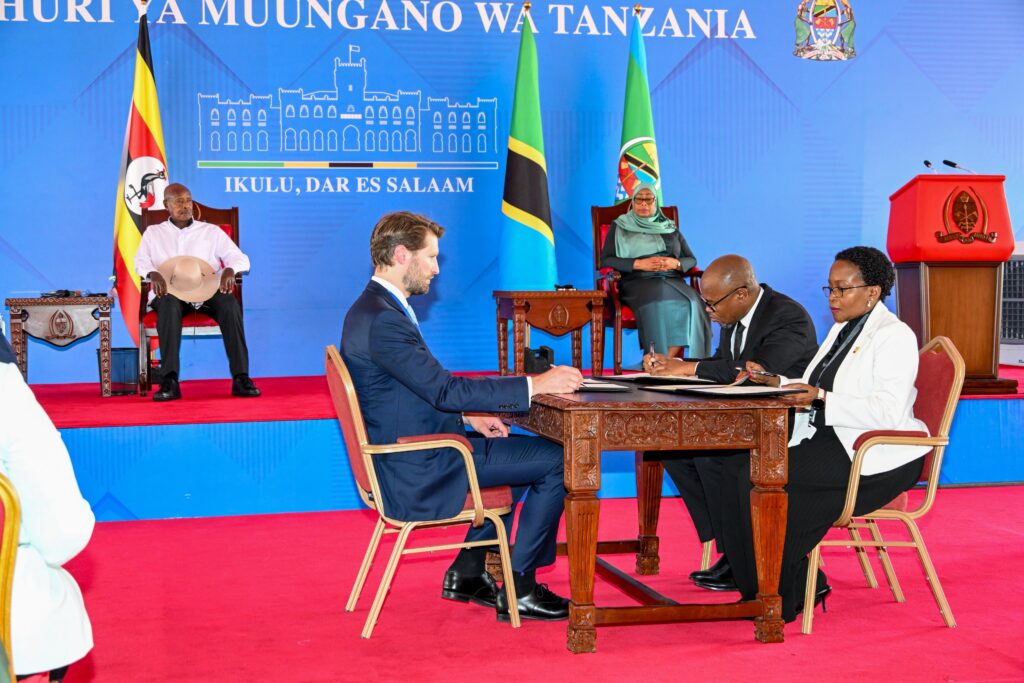
Dar es Salaam / Tanzania— A rare moment of public candour between regional leaders has drawn fresh attention to the complexities of East Africa’s energy ambitions, after Tanzanian President Samia Suluhu Hassan openly pressed Kenyan President William Ruto to clarify remarks about a proposed oil refinery in Tanga. The exchange, which unfolded during a Memorandum of Understanding signing ceremony at State House in Dar es Salaam, underscores both the opportunities and sensitivities surrounding cross-border infrastructure projects in the region. At the centre of the discussion is a plan, first referenced by Ruto at the Africa We Build Summit 2026 in Nairobi, to establish a joint refinery involving Kenya, Uganda, and Nigerian industrialist Aliko Dangote in Tanzania’s coastal city of Tanga.


President Suluhu’s remarks were measured but unmistakably firm. She indicated that her government had not been formally engaged on the refinery proposal prior to its public mention, describing her intervention as a necessary step to ensure alignment between partners. In diplomatic terms, her statement signalled a broader principle: that regional cooperation must be anchored in consultation, transparency, and mutual consent. President Ruto, responding at the same press conference, sought to reframe the proposal as a strategic opportunity rather than a point of contention. He described the envisioned refinery as a transformative investment capable of repositioning East Africa within global energy value chains. By processing crude oil within the region, he argued, partner states could move beyond the long-standing pattern of exporting raw resources and importing refined products at higher cost.


The economic rationale behind the proposal is not without precedent. Across Africa, governments have increasingly emphasized value addition as a pathway to industrialisation, job creation, and fiscal resilience. A refinery in Tanga, proponents suggest, could support downstream industries including petrochemicals, fertilizers, and plastics sectors with significant multiplier effects across manufacturing and agriculture. Geography also plays a role in the argument. Ruto pointed to Tanga’s proximity to the Kenyan port city of Mombasa and its linkage to existing refined products infrastructure as factors that could enhance the project’s viability. From this perspective, the refinery would not only serve Tanzania but function as a regional hub, integrating supply chains across the East African Community.


Yet the exchange between the two leaders highlights a critical dimension often overlooked in large-scale infrastructure planning: political ownership. For host countries, projects of this magnitude carry implications that extend beyond economics, touching on sovereignty, environmental considerations, and long-term development strategy. Public endorsement, therefore, must follow not precede structured engagement.


The engagements reflect a broader tension within African integration efforts, while there is strong political will to pursue joint investments, differences in national priorities, communication channels, and institutional coordination can complicate implementation. In this context, Suluhu’s intervention may be seen less as resistance and more as an assertion of process. Importantly, neither side signalled a breakdown in relations. On the contrary, the tone of the engagement remained constructive, with both leaders emphasizing the potential benefits of collaboration. This suggests that the issue is likely to transition from public debate to technical negotiation, where feasibility studies, financing structures, and governance frameworks will determine the project’s trajectory.


The involvement of private capital, particularly from figures such as Dangote, adds another layer to the discussion. Public-private partnerships have become central to infrastructure development across the continent, but they also require clear regulatory frameworks and alignment with national development plans. Ensuring that such investments deliver equitable benefits will be a key consideration for all parties involved. For East Africa, the stakes are significant. The region stands at a pivotal moment in its energy evolution, with discoveries of oil and gas resources creating both opportunity and urgency. Decisions made now about where and how to invest in refining capacity will shape economic patterns for decades to come.


The Tanga refinery proposal, whether realised in its current form or adapted through negotiation, represents more than a single project. It is a test case for how African states navigate shared ambitions in an increasingly interconnected yet competitive global economy. It also raises a fundamental question: can regional integration move at the pace of political announcements, or must it proceed at the rhythm of consensus-building? In pressing for clarity, President Suluhu has reinforced the importance of the latter. In defending the vision, President Ruto has articulated the promise of the former. Between these positions lies the space where diplomacy, policy, and development must converge. As discussions continue, the outcome will likely hinge not only on economic feasibility but on the strength of trust between partners. In a region where cooperation is both a necessity and a challenge, that trust may ultimately prove to be the most valuable resource of all.


Kampala, Uganda — Tourism remains one of Africa’s most consistent foreign exchange earners, supporting livelihoods, shaping national brands, and connecting local economies to global markets. In Uganda, often celebrated as the “Pearl of Africa,” the sector has gained renewed strategic focus, particularly through government-led efforts to align diplomacy with economic outcomes.  A notable shift came with the launch of the Economic and Commercial Diplomacy (ECD) Strategy in 2025 during the Ambassadors’ Conference in Gulu. Positioned within the government’s Tenfold Growth Programme, the strategy tasks Ugandan missions abroad with moving beyond traditional diplomatic functions to actively attract foreign direct investment and promote tourism. It reflects a broader continental trend where diplomacy is increasingly tied to economic competitiveness. Yet as Uganda expands its visibility on the global stage, a more grounded question emerges: how prepared is the domestic ecosystem to fully capture and retain the value brought in by tourism?


At the heart of this question lies not only the ability to attract visitors, but also the capacity to ensure that their spending translates into sustainable local benefit. Across Uganda’s tourism destinations from national parks to cultural heritage sites communities have demonstrated remarkable creativity. Locally crafted products, handmade souvenirs, and cultural artifacts increasingly reflect the country’s identity and storytelling power. However, the next phase of growth demands a shift from creativity alone to consistency, quality, and compliance with standards. Institutions such as the Uganda National Bureau of Standards are mandated to ensure that products entering the market meet established benchmarks, including metrology and certification requirements. These standards are not merely technical obligations; they are essential safeguards for consumer trust, public health, and international competitiveness.


In many developed and emerging tourism markets, adherence to standards is a foundational pillar of the visitor experience. From food safety to product labeling and packaging, quality assurance is treated as integral to national reputation. In contrast, gaps in enforcement or awareness can undermine even the most well-intentioned promotional efforts. Uganda’s tourism narrative has been effectively amplified through global campaigns and diplomatic outreach. But without parallel investment in quality assurance at the grassroots level, there is a risk that the visitor experience may fall short of expectations. A handcrafted product that lacks durability, proper finishing, or safety certification may not only disappoint a tourist but also weaken confidence in the broader market. This is not an argument against local enterprise far from it. Community-driven innovation remains one of Uganda’s strongest assets. Rather, it is a call to strengthen that innovation through structured support systems. Training programs on standards, accessible certification processes, and targeted awareness campaigns could bridge the gap between creativity and competitiveness.


Equally important is the issue of pricing, in several tourism hotspots, concerns have emerged around inconsistent or inflated pricing of locally made products. While communities understandably seek to maximize income from tourism, pricing that is not aligned with perceived value can discourage purchases. In some cases, tourists may opt not to buy at all, effectively taking back the very foreign exchange the sector aims to attract. Balanced pricing strategies are therefore critical. They should reflect the true value of craftsmanship while remaining competitive within regional and global markets. Transparent pricing not only builds trust but also encourages repeat engagement and positive word-of-mouth factors that are increasingly influential in a digitally connected travel economy.


The intersection of standards and pricing ultimately determines whether tourism revenues circulate within local economies or dissipate prematurely. When products meet quality expectations and are priced fairly, they are more likely to generate sustained demand, support small enterprises, and contribute to inclusive growth. For policymakers, this underscores the need to look beyond promotion as the sole driver of tourism success. Marketing campaigns and diplomatic engagement are essential for visibility, but they must be complemented by robust domestic systems that uphold quality and accountability.


This includes strengthening the operational reach of standards institutions, enhancing coordination between tourism and trade agencies, and investing in community-level capacity building. It also requires a cultural shift one where standards are not viewed as barriers, but as enablers of market access and long-term profitability. For communities, the opportunity lies in embracing these standards as tools for growth rather than constraints. Certified products, consistent quality, and fair pricing can open doors to broader markets, including exports and partnerships with international retailers.


Uganda stands at a promising juncture. Its natural attractions, cultural richness, and strategic policy direction position it well within Africa’s tourism landscape. But the true measure of success will not be the number of visitors alone. It will be the extent to which each visitor’s dollar is retained, circulated, and translated into lasting economic value. If promotion is the invitation, then standards and pricing are the experience. And in a competitive global tourism market, it is the experience that ultimately defines the destination.

Kampala, Uganda — In fast-growing cities, infrastructure rarely fails all at once. It fades—quietly at first—until the moment it becomes impossible to ignore. The pedestrian footbridge that once spanned Queensway Kampala, linking Katwe to Nsambya, is a case in point. Brought down on 13 May 2018 after being declared structurally unsafe, it had served the public for over two decades. Its removal was justified on safety grounds. Its replacement, however, remains unseen years later. At the time, Kampala Capital City Authority assured the public that a new structure would be installed “as soon as possible.” In the interim, a zebra crossing was announced to be designated to facilitate pedestrian movement, accompanied by guidance under the Traffic and Road Safety Act requiring motorists to slow down. On paper, this was a reasonable contingency. In practice, it has proven insufficient.


Queensway remains one of the city’s busy corridors, carrying a mix of private vehicles, commercial traffic, and public transport. The communities of Katwe, Makindye and Nsambya are densely populated, with residents crossing daily for work, school, trade, and access to services. A painted crossing, however visible, cannot replicate the safety of grade-separated infrastructure in such an environment. The result is a daily negotiation between pedestrians and traffic one where risk is normalized. The persistence of this gap raises a broader question: how should cities manage essential infrastructure when removal becomes necessary? Kampala is not alone in facing such dilemmas, across rapidly urbanizing regions, authorities are often forced to balance immediate safety concerns with long-term planning constraints. Yet what distinguishes resilient cities is not the absence of failure, but the presence of continuity. When infrastructure is removed, alternatives temporary or permanent are expected to follow within a clear, communicated timeline.


In Katwe, that continuity has been less visible, as residents and commuters now ask whether the city was prepared to dismantle aging infrastructure without first securing viable replacements. The concern extends beyond this single location. Other pedestrian crossings, including those in high-traffic areas such as Nakawa, have also shown signs of wear. The question being posed is both practical and urgent: are we waiting for structures to fail before acting, or planning proactively to prevent disruption? Urban mobility cannot function effectively in a cycle of reaction.


A city’s transport system is an ecosystem, roads, crossings, sidewalks, and public transit networks are interdependent. When one element is removed without adequate substitution, pressure shifts to others often in ways that compromise safety. In this case, the burden has shifted to pedestrians, who must navigate high-speed traffic with limited protection. There is also a governance dimension to consider. Infrastructure projects require not only technical design but also budgeting, procurement, and coordination across agencies. Delays can stem from legitimate constraints funding cycles, competing priorities, or regulatory processes. However, the absence of consistent public updates risks eroding trust. When commitments are made without visible follow-through, even well-intentioned decisions come under scrutiny.


What, then, can be done?

  • First, transparency must become standard practice, if timelines for reconstruction have shifted, authorities should communicate the reasons clearly, alongside revised plans. Public understanding does not eliminate frustration, but it can mitigate uncertainty.
  • Second, interim solutions should match the scale of the challenge. In high-traffic corridors like Queensway, temporary pedestrian infrastructure such as signalized crossings, traffic calming measures, or modular footbridges could provide safer alternatives while permanent structures are developed.
  • Third, maintenance and audit systems need strengthening. Regular structural assessments of existing footbridges can identify risks early, allowing for phased rehabilitation rather than abrupt closure. This approach reduces disruption and enables better resource planning.


Finally, urban planning must anticipate growth rather than respond to it. Kampala’s expansion is not a future projection; it is a present reality. Infrastructure strategies must therefore align with projected population increases, traffic volumes, and land-use patterns. The story of the Katwe–Nsambya footbridge is not merely about a missing structure. It reflects a broader tension between urgency and preparedness in urban governance. Cities evolve, and with them, the demands placed on infrastructure. The challenge is to ensure that adaptation is deliberate rather than reactive. For the thousands who cross Queensway each day, the issue is immediate and tangible. It is about safety, time, and dignity in movement. Whether Kampala can address such gaps decisively will shape not only mobility outcomes, but also public confidence in the systems designed to support a growing city.


Accra, Ghana — Uganda and Ghana have reaffirmed their long-standing diplomatic ties following high-level consultations between Vincent Bagiire and Khadija Iddrisu, signaling renewed momentum in bilateral cooperation anchored in shared values and global outlook. The meeting, held at the Ministry of Foreign Affairs Ghana in Accra on 30 April 2026, unfolded in a notably cordial atmosphere, underscoring what both sides described as a relationship built on historical alignment and mutual respect. Officials familiar with the discussions indicated that the engagement went beyond routine diplomatic exchange, instead reflecting a convergence of perspectives on regional and global priorities.


At the heart of the dialogue was a recognition that Uganda and Ghana, though geographically distinct within Africa, share remarkably similar approaches to international engagement. Both countries have maintained consistent commitments to multilateralism, actively participating in platforms such as the United Nations, the African Union, and the Non-Aligned Movement. This shared institutional membership has, over time, shaped comparable diplomatic instincts favoring dialogue, consensus-building, and rules-based international order.


During the consultations, the two sides exchanged views on a range of global issues, including ongoing tensions in the Middle East, with particular reference to the situation in Gaza. While acknowledging the complexity of the conflict, both delegations emphasized the importance of peaceful resolution, humanitarian considerations, and adherence to international law. Their alignment on such matters reflects a broader African diplomatic posture that seeks to balance principled engagement with pragmatic restraint. Equally significant was the discussion on development trajectories within both countries. Uganda and Ghana, each navigating distinct but parallel economic transitions, reiterated their shared aspiration to accelerate inclusive growth while maintaining political stability. Officials highlighted the importance of leveraging diplomatic channels not only for political cooperation but also for economic advancement particularly in trade, investment, and knowledge exchange.


In this context, the meeting can be viewed as part of a wider recalibration of African diplomacy, where foreign policy is increasingly intertwined with development objectives. Uganda’s ongoing emphasis on economic and commercial diplomacy, alongside Ghana’s established role as a regional economic hub, presents opportunities for collaboration that extend beyond traditional statecraft. Analysts note that such engagements are particularly relevant at a time when African states are seeking to strengthen intra-continental partnerships while also navigating shifting global dynamics. The ability to align positions on key international issues enhances the continent’s collective voice, while bilateral cooperation provides a practical pathway for implementing shared priorities.


The Accra meeting also underscored the importance of institutional continuity in sustaining diplomatic relations. By engaging at the level of permanent secretaries and chief directors, both countries signaled a commitment to maintaining steady, professional dialogue that transcends political cycles. This approach is often seen as essential for ensuring that bilateral agreements and understandings are translated into actionable outcomes. Beyond policy discussions, the tone of the meeting itself carried symbolic weight. In diplomatic practice, the quality of engagement measured through openness, mutual respect, and clarity of purpose can be as significant as the substantive issues addressed. In this instance, both delegations appeared keen to reinforce not only the content of their cooperation but also the spirit in which it is conducted.


Looking ahead, there is potential for the Uganda–Ghana relationship to expand into more structured areas of collaboration. These may include joint initiatives within multilateral forums, coordinated positions on global governance reforms, and increased exchange in sectors such as education, technology, and cultural diplomacy. For both countries, the engagement in Accra serves as a reminder that Africa’s diplomatic landscape is increasingly defined by partnerships grounded in shared experience and common ambition. As global uncertainties persist, such relationships offer a degree of stability and predictability, enabling states to navigate challenges with a measure of collective strength. Ultimately, the meeting between Vincent Bagiire and Khadija Iddrisu reflects a broader narrative within African diplomacy one that emphasizes alignment over divergence, cooperation over competition, and a sustained commitment to shaping outcomes both within the continent and on the global stage.


Kampala, Uganda — Uganda’s immigration authorities have intensified enforcement operations, arresting 62 Nigerian nationals in Adjumani District for allegedly working without valid permits. The operation, conducted by the Directorate of Citizenship and Immigration Control, followed a public tip-off and forms part of a broader national effort to address irregular migration and unauthorized economic activity. “Following a tip-off, our enforcement team has arrested 62 Nigerian nationals operating illegally in Adjumani (without work permits),” the agency confirmed. Authorities say the group had been operating a church and engaging in additional activities outside the scope of legal authorization. The suspects are currently undergoing processing under Uganda’s immigration laws, with outcomes expected to include fines, deportation, or prosecution depending on individual case assessments.


The Adjumani arrests come shortly after a separate intelligence-led operation in Kampala, where Ugandan authorities began deporting 169 foreign nationals arrested in the Bukoto–Ntinda area. According to officials at the Ministry of Internal Affairs Uganda, the group comprising nationals from Asia and Africa was found working on visitor visas, in violation of immigration regulations. Deportations began on 1 May 2026 and are being conducted in phases due to flight constraints. Assistant Commissioner Robert Kahwa Kato noted that each individual was fined approximately $400 and required to cover their return travel costs. Authorities also recovered computers and digital equipment allegedly used in illicit online activities, including cyber fraud and unauthorized gaming operations.


Uganda’s actions are grounded in the Uganda Citizenship and Immigration Control Act, which regulates entry, residence, and employment of foreign nationals. Under the Act, it is an offence for any non-citizen to engage in employment without a valid work permit. Violations may result in fines, imprisonment, or deportation.

Specifically, the law provides that: A foreign national must obtain appropriate authorization before engaging in any form of employment or business activity.

  • Immigration officers are empowered to arrest, detain, and remove individuals found in breach of these provisions.
  • Deportation orders may be issued where continued presence is deemed contrary to national interest or public order.

Regionally and globally, Uganda’s enforcement aligns with established legal norms. The International Organization for Migration recognizes the sovereign right of states to regulate migration within their borders, provided actions respect human rights and due process. Similarly, frameworks such as the African Union Migration Policy Framework encourage member states to balance enforcement with protection, particularly in cases involving vulnerable populations. At the global level, instruments like the International Convention on the Protection of the Rights of All Migrant Workers and Members of Their Families emphasize that while states may enforce immigration laws, migrants regardless of status retain fundamental rights, including access to fair legal processes and humane treatment.


Uganda’s recent operations reflect a broader pattern across Africa, where governments are tightening immigration controls amid concerns over illegal employment, tax evasion, and transnational crime. In countries such as Ghana, South Africa, and Kenya, similar crackdowns have targeted unauthorized workers and undocumented migrants, often linked to informal sector activity or digital fraud networks. Globally, the scale of migration underscores the complexity of enforcement. According to the United Nations, there are over 280 million international migrants worldwide, with a significant proportion engaged in informal or irregular employment. The International Labour Organization estimates that migrant workers constitute nearly 5% of the global labor force, highlighting both their economic contribution and the regulatory challenges they present. In Africa, migration remains largely intra-continental, driven by economic opportunity, conflict, and regional integration. While free movement protocols exist in some regions, enforcement at national level often reflects domestic priorities, particularly where local employment and revenue concerns are at stake.


Uganda’s recent actions raise important policy considerations, on one hand, enforcement is necessary to uphold the rule of law, protect labor markets, and safeguard public revenue. Officials argue that unauthorized employment deprives the state of non-tax income generated through work permits and may expose citizens to unfair competition. On the other hand, such operations carry diplomatic and humanitarian implications. The arrest of foreign nationals particularly in large numbers requires careful handling to maintain bilateral relations and ensure compliance with international standards. Analysts note that the most effective immigration systems combine enforcement with clear, accessible legal pathways for work authorization. Simplifying permit processes, enhancing public awareness, and strengthening inter-agency coordination can reduce violations while supporting legitimate economic activity.


The cases in Adjumani and Kampala illustrate both the scale and complexity of migration governance in a globalized economy. As Uganda continues to position itself as an investment and trade hub in East Africa, the integrity of its immigration system will remain central to that ambition. For authorities, the task is to sustain enforcement while ensuring transparency, fairness, and consistency. For migrants, the message is equally clear: compliance with host country laws is not optional, but foundational to lawful participation in the economy. In an interconnected world, migration will continue to test the balance between sovereignty and openness. Uganda’s current trajectory suggests a firm stance on legality one that mirrors a wider global shift toward stricter, but increasingly scrutinized, immigration control.

Old Kampala, Uganda — The Uganda Muslim Supreme Council (UMSC) has taken decisive administrative and policy steps following a Joint Session that brought together its Executive Committee and the Majlis Al-Ulaam, setting the stage for governance reforms and institutional continuity ahead of the forthcoming General Assembly. The high-level meeting, held on Sunday, May 3, 2026, at the UMSC Headquarters in Old Kampala, resolved to fill critical vacancies, approve strategic transfers within the religious administrative structure, and define priority agenda items for deliberation at the next sitting of the General Assembly the Council’s supreme legislative organ.


At the core of the Joint Session’s resolutions was the imperative to ensure continuity in leadership and operational efficiency. The session formally acknowledged the cessation of membership of Hon. Hussein Lukyamuzi from the Executive Committee due to prolonged absence since 2022, in accordance with governance expectations on participation and accountability. To address existing gaps, the session approved key appointments within the Majlis Al-Ulaam. Isa Twahir Walugumba was appointed to succeed the late Sheikh Hussein Walugumba as a representative of Busoga, while Saad Habib Kaweesi was appointed to replace the late Sheikh Twaha Tamale as Kampala’s representative. These appointments reflect a structured approach to leadership succession, ensuring that regional representation within the Council remains intact while preserving institutional memory.


Beyond leadership replacements, the Joint Session approved a series of transfers affecting Regional Assistants to the Mufti (RAMs) and District Kadhis. The reassignments, both across Muslim regions and within districts, are designed to enhance service delivery, improve administrative coordination, and respond to evolving community needs. In policy terms, such transfers signal a shift toward a more dynamic and responsive governance model within UMSC one that prioritizes efficiency, equity in service provision, and optimal utilization of human capital across regions. Importantly, the session also resolved to mandate the Mufti to appoint qualified Sheikhs to serve as Kadhis in districts where such capacity is lacking. This decision, grounded in the provisions of the UMSC Constitution, addresses long-standing gaps in judicial and religious leadership at the grassroots level.


The resolutions of the Joint Session are anchored in the broader framework of the UMSC Constitution, reinforcing the Council’s commitment to rule-based governance. By adhering to constitutional provisions in appointments and administrative restructuring, UMSC strengthens institutional legitimacy while minimizing governance disputes. The decisions are, however, subject to ratification by the General Assembly an inclusive body representing Muslim communities across all ten regions of Uganda. This layered approval process reflects a governance model that balances executive efficiency with representative oversight.


The session was chaired by Hon. Haj Muzamir Abon, Deputy National Chairperson, who represented the National Chairperson, Muhammad Lubega Kisambira. The Chairperson was reportedly engaged in attending to a family medical emergency. Also in attendance were senior religious and administrative leaders, including His Eminence Shaban Ramadhan Mubaje, the Mufti of Uganda; His Eminence Muhammad Ali Waiswa; and His Eminence Hafiz Muhammad Harunah Bukenya, alongside the Secretary General, Abbas Muluubya Ssekyanzi, and other key officials. Their presence underscored the institutional weight of the meeting and the importance attached to the resolutions passed.


The outcomes of the Joint Session carry broader implications for religious governance and institutional management within Uganda. By prioritizing structured appointments, strategic transfers, and constitutional compliance, UMSC is reinforcing a governance culture that aligns with modern organizational standards while remaining rooted in faith-based leadership principles. Such reforms are particularly significant in a context where religious institutions play a central role in community cohesion, social service delivery, and moral guidance. Strengthened administrative systems within UMSC can therefore translate into more effective engagement with Muslim communities nationwide.


Attention now shifts to the upcoming General Assembly, where these resolutions will be presented for ratification. The Assembly is expected to deliberate on governance reforms, administrative restructuring, and broader policy directions aimed at strengthening the Council’s institutional capacity. As UMSC advances toward this critical meeting, the Joint Session’s decisions provide a clear indication of its strategic priorities: continuity, accountability, and service delivery. In a rapidly evolving socio-religious landscape, such policy-driven approaches may prove essential in ensuring that the Council remains responsive, representative, and resilient.

Mubende, Uganda — In development discourse, electricity is often framed as a catalyst for progress powering hospitals, sustaining enterprise, and reinforcing public trust in state institutions. Yet in parts of Uganda today, its absence is producing the opposite effect. In towns like Mubende, prolonged power outages are converging with rising insecurity, exposing vulnerabilities that extend beyond infrastructure into the realm of governance and public confidence. A recent visit to Mubende, a municipality strategically positioned along trade routes linking central and western Uganda, revealed a pattern residents describe with quiet resignation: “If it is not darkness, it is theft.” The phrase captures more than frustration. It reflects a lived reality where essential systems appear to be faltering in tandem.


Electricity supply in the area has become increasingly erratic following the transition from Umeme Limited to Uganda Electricity Distribution Company Limited (UEDCL). While the shift was intended to strengthen national control and improve service delivery, many residents report a sharp decline in reliability. In some instances, power is available for only a few hours within a 24-hour period; in others, entire days pass with little to no supply. For small businesses welders, traders, internet cafés, and informal manufacturers this is not merely an inconvenience. It disrupts livelihoods, reduces productivity, and erodes already narrow profit margins. In an economy where micro and small enterprises form the backbone of local resilience, such disruptions carry long-term consequences.


The implications are even more pronounced in critical public services. Mubende hosts a regional referral hospital serving a wide population catchment. Facilities of this nature depend on stable electricity for surgical procedures, diagnostic equipment, neonatal care, and vaccine storage. Global health authorities, including the World Health Organization, have consistently warned that unreliable power in medical settings can directly compromise patient outcomes. Where backup generators exist, they offer only a partial solution; where they do not, improvisation becomes an uneasy substitute for system reliability.


Yet the absence of light has also created conditions for another pressing concern: insecurity.

Residents increasingly point to a rise in theft, particularly involving motorcycles and vehicles. In Uganda, motorcycles commonly used as commercial taxis are both an economic lifeline and a frequent target for organized theft. During this visit, the theft of a motorcycle belonging to a local resident triggered a rapid, community-led response. Within hours, citizens mobilized to track suspects, and by the following day, several individuals had been apprehended. While this demonstrates a strong sense of civic vigilance, it also raises difficult questions. If communities can identify suspects with relative speed, why do such networks continue to operate?


Conversations with residents and local actors suggest that certain locations informally known as “Ku Ki Solar” and “Kataka” are widely associated with the movement or dismantling of stolen property. These areas are not remote; they exist within close proximity to administrative and security centers. Such dynamics point to a deeper governance paradox. When communities perceive that criminal actors are known yet remain active, confidence in institutions begins to erode. Over time, this erosion risks undermining cooperation between citizens and law enforcement cooperation that is essential for effective policing.


It is important, however, to situate these concerns within broader structural realities. Security personnel in many developing contexts operate under significant constraints, including limited resources, logistical challenges, and staffing shortages. These factors complicate efforts to maintain consistent, proactive presence on the ground. Nonetheless, the convergence of unreliable electricity, economic strain, and rising crime creates a reinforcing cycle. Businesses close earlier in the absence of power. Public spaces grow darker and less active. Reduced visibility and mobility create opportunities for illicit activity. The result is a gradual contraction of both economic and social life after dusk.


The implications extend beyond Mubende itself. Uganda has long positioned itself as a stable and attractive destination for investment in East Africa. Secondary towns like Mubende play a critical role in this vision, linking rural production zones to national markets and supporting decentralized growth. When such towns experience persistent instability whether infrastructural or security-related the effects ripple outward, influencing investor confidence, employment patterns, and migration trends. Addressing these challenges requires a coordinated and transparent response. Authorities responsible for energy oversight must provide clear communication regarding power distribution, including timelines for infrastructure improvements and mechanisms for managing outages. Equally, security agencies may need to strengthen intelligence-led operations and deepen collaboration with communities to address perceptions of impunity. There are precedents across the continent and globally where such integrated approaches have yielded measurable improvements in both service delivery and public safety. The key lies in aligning institutional capacity with community trust.


Ultimately, the situation in Mubende is not solely about electricity or crime. It reflects a broader question facing many developing regions: whether the promise of development often articulated in policy frameworks and international forums translates into tangible improvements in everyday life. For residents, expectations remain modest but fundamental: reliable power, secure neighborhoods, and institutions that respond effectively to emerging challenges. Meeting these expectations is not only a matter of service delivery; it is central to sustaining public confidence and long-term stability. If left unaddressed, the issues unfolding in Mubende risk becoming more than a localized concern. They may serve as an early signal of wider systemic pressures one that policymakers would do well to heed, both within Uganda and across similarly positioned economies.

Kampala, Uganda — Uganda’s renewed push to enforce urban trade order has reignited a long-standing policy debate: how to balance the need for structured, competitive cities with the realities of informal livelihoods that sustain millions. Recent operations led by the Kampala Capital City Authority (KCCA), and replicated across municipalities nationwide, have cleared roadside vendors and informal operators from city streets often abruptly, and in some cases with reported loss of goods.


The directive, initially rolled out in Kampala and later extended to other districts, was briefly halted by the Ministry of Local Government over procedural concerns. Yet before tensions could fully subside, authorities announced a resumption of enforcement. The policy intent is clear: restore order, improve mobility, and align Uganda’s urban centres with the standards of competitive emerging economies. The question, however, is whether the country is sufficiently prepared for such a transition and whether the sequencing of enforcement matches the broader development context.

There is little dispute that organized cities are essential for economic growth. Congested streets, unregulated trade, and encroachment on road reserves and wetlands undermine infrastructure, deter investment, and strain public services. In that sense, the government’s direction reflects a legitimate ambition: to transform Uganda’s towns into efficient, investor-friendly spaces. Yet policy coherence remains a central concern. For years, informal trade has not only been visible but tacitly accommodated. In some instances, operators working in road reserves or drainage corridors held trading licenses issued by local authorities. This creates a contradiction: how does a system first permit, or at least tolerate, irregular activity, only to later enforce its removal without structured transition mechanisms?

The cost of this inconsistency is borne primarily by small-scale traders many of whom operate with limited capital and rely on daily income. Sudden evictions, particularly where alternative spaces are not ready or accessible, risk deepening urban vulnerability. While enforcement may restore order physically, it can also disrupt economic stability socially. Comparative experiences from other developing cities offer instructive lessons. In Kigali, often cited for its urban cleanliness and order, authorities combined strict enforcement with early investment in designated markets and continuous public engagement. Informal traders were gradually relocated into structured trading zones, supported by regulatory clarity and consistent messaging.

Similarly, Nairobi has pursued a mixed approach, where periodic crackdowns on street vending are paired though not always seamlessly with efforts to formalize small businesses through market infrastructure and licensing reforms. While challenges persist, the policy direction acknowledges that enforcement alone cannot resolve informality without parallel inclusion strategies. Further afield, Addis Ababa has invested in integrated urban development plans that incorporate informal trade into city design, recognizing its role in employment creation while gradually transitioning operators into formal systems. These examples underscore a common principle: successful urban order is rarely achieved through enforcement in isolation. It requires sequencing first establishing viable alternatives, then enforcing compliance. It also requires consistency in governance, ensuring that licensing, zoning, and infrastructure development align with enforcement actions.

In Uganda’s case, critics argue that this sequencing has been uneven. Questions persist over why construction in wetlands and road reserves has historically been allowed or inadequately regulated, only to later become the focus of enforcement. Addressing such structural gaps is essential, not only for fairness but for long-term credibility of urban policy. At the same time, it is important to recognize the government’s broader objective. Uganda is positioning itself within a competitive regional and global economic landscape. Well-planned cities, efficient transport systems, and regulated commercial environments are increasingly seen as prerequisites for attracting investment and supporting industrial growth. Without order, these ambitions risk being undermined.

The challenge, therefore, is not whether enforcement should happen but how it is implemented. A more balanced approach would integrate enforcement with support systems: expanding affordable market spaces, improving access to microfinance, offering business formalization pathways, and strengthening communication between authorities and traders. Equally critical is institutional coordination. Local governments, urban authorities, and central ministries must operate within a unified framework that minimizes policy reversals and builds public trust. Abrupt halts and resumptions of enforcement, as seen in recent weeks, risk sending mixed signals that can complicate compliance and planning.

Ultimately, Uganda’s urban transition reflects a broader development dilemma faced by many emerging economies: how to modernize without marginalizing. The aspiration for orderly cities is both legitimate and necessary. But its success will depend on whether reform is inclusive, predictable, and anchored in long-term planning rather than reactive measures. As enforcement resumes, the path forward may lie in bridging policy intent with practical readiness ensuring that the pursuit of order does not come at the expense of livelihoods, and that the evolution of Uganda’s cities reflects both structure and opportunity.

Kampala, Uganda — A recent communication attributed to Yoweri Kaguta Museveni has added new clarity and complexity to Uganda’s ongoing debate around sovereignty and policy independence. Framed as both a philosophical reflection and a policy directive, the message outlines a vision of sovereignty rooted not in isolation, but in decisive control over national policy direction while preserving the country’s long-standing commitment to a free and open economy.

At the centre of the President’s argument is a clear distinction: sovereignty, in the Ugandan context, is primarily about decision-making authority. Political, social, economic, and diplomatic choices, he suggests, must ultimately reflect domestic priorities rather than external influence. This position resonates with broader currents across Africa, where questions of external pressure whether through funding, advocacy, or geopolitical alignment continue to shape governance debates.

Yet, notably, the message also seeks to reassure both domestic and international stakeholders that Uganda’s economic model remains fundamentally open. The President emphasizes that private enterprise, capital flows, remittances, and religious contributions should remain free from undue restriction. Uganda, he reiterates, operates a liberalized economic system where foreign exchange is traded openly and cross-border financial flows are part of its structural strength.

This dual framing asserting political sovereignty while protecting economic openness reveals an attempt to strike a delicate balance. On one hand, the government signals resistance to perceived external interference in sensitive policy domains. On the other, it acknowledges that Uganda’s economic resilience is closely tied to global integration, diaspora remittances, and private sector dynamism. For many observers, this reflects a pragmatic recalibration rather than a radical shift. Uganda is not rejecting globalization; it is seeking to define the terms of its participation within it. The President’s remarks also situate sovereignty within a historical narrative. Referencing Uganda’s past political instability, he underscores the importance of policy choices grounded in national interest rather than identity-based politics. In this framing, sovereignty becomes both a safeguard against external pressure and a corrective against internal fragmentation an effort to anchor governance in economic and developmental priorities.

Equally significant is the emphasis on constitutional legitimacy. By pointing to electoral processes and constitutional provisions as the foundation of sovereignty, the message reinforces the idea that national authority is exercised through established democratic mechanisms. This positions sovereignty not as an abstract concept, but as a lived practice embedded in institutions and civic participation. However, the communication also raises important policy questions particularly regarding implementation. If sovereignty is to be asserted more firmly in decision-making, how will Uganda manage its relationships with international partners, development institutions, and multilateral frameworks? The country’s economic and diplomatic engagements are deeply intertwined with global systems, from trade agreements to financial cooperation.

Balancing autonomy with partnership will therefore be critical. A more assertive policy stance may require clearer communication with external stakeholders to avoid misinterpretation. Investors, donors, and diplomatic partners typically prioritize predictability and coherence. Ensuring that Uganda’s sovereignty agenda is understood as constructive rather than confrontational will be essential in maintaining confidence.

The reference to private sector freedom is particularly consequential. Uganda’s economic growth over recent decades has been driven in large part by liberalization policies that encouraged entrepreneurship, foreign investment, and financial openness. By reaffirming these principles, the President appears to signal continuity an important reassurance at a time when policy debates could otherwise create uncertainty. From a regional perspective, Uganda’s position aligns with a broader African conversation about agency in global affairs. Countries are increasingly seeking to negotiate partnerships on more equal terms, emphasizing mutual benefit over dependency. Within frameworks such as the African Continental Free Trade Area, sovereignty is being reinterpreted not as withdrawal from the global system, but as stronger participation within it.

Domestically, the message may resonate with citizens who value national self-determination, particularly in areas perceived as culturally or politically sensitive. At the same time, it places responsibility on institutions to ensure that sovereignty translates into effective governance, transparency, and inclusive development outcomes. Ultimately, the evolving discourse suggests that Uganda’s sovereignty agenda is less about erecting barriers and more about defining boundaries clarifying where external influence ends and domestic authority begins.

As the debate continues, the central challenge will be maintaining equilibrium. Sovereignty, in a globalized economy, cannot exist in isolation. It must coexist with interdependence, requiring careful calibration between independence and engagement. In that sense, Uganda’s approach may be best understood not as a departure from global integration, but as an effort to navigate it on more self-defined terms anchored in national priorities, yet responsive to the realities of an interconnected world.


Kampala, Uganda — Uganda’s proposed Sovereignty Bill has ignited a measured but consequential debate across legal, Religious, diplomatic, and economic circles. Framed as an effort to reinforce national autonomy and insulate domestic decision-making from external influence, the bill arrives at a moment when many countries particularly in the Global South are reassessing how to balance sovereignty with the realities of an interconnected world. At its core, the proposed legislation seeks to affirm the primacy of Uganda’s constitutional and legal systems over external directives that may be perceived to conflict with national interests. While details continue to evolve, the bill is widely understood to address concerns around international legal obligations, external funding conditionality’s, and the growing influence of global governance frameworks on domestic policy.


For proponents, the argument is grounded in principle. Sovereignty, they contend, is not merely symbolic; it is a functional necessity for self-determined development. In this view, Uganda like many developing economies must retain policy space to pursue its priorities without undue external pressure. The bill is therefore positioned as a corrective measure, reinforcing the country’s agency in shaping its legal and economic trajectory. This perspective resonates within a broader continental discourse. Across Africa, debates around sovereignty have intensified in recent years, often intersecting with questions of development financing, trade agreements, and regulatory standards. Institutions such as the African Union have consistently emphasized the importance of “African solutions to African problems,” a principle that underscores the desire for locally grounded policy frameworks.

Yet the Sovereignty Bill also raises complex questions particularly regarding Uganda’s engagement with international partners. In an era where economic growth is closely tied to global integration, the recalibration of sovereignty must be managed with precision. Uganda’s trade relationships, development partnerships, and multilateral commitments are embedded within systems governed by institutions such as the World Trade Organization and financial frameworks linked to organizations like the International Monetary Fund. Any legislative shift that appears to redefine these relationships will inevitably attract scrutiny. From a local perspective, the implications of the bill are likely to be both practical and perceptual. On one hand, a stronger assertion of sovereignty could enhance public confidence in national institutions, reinforcing the idea that policy decisions are made with domestic priorities at the forefront. This may resonate particularly in sectors where citizens perceive external influence as misaligned with local realities.

On the other hand, there are legitimate concerns about how the bill will affect governance standards, regulatory predictability, and investor confidence. Businesses both domestic and foreign tend to operate best in environments where legal frameworks are stable and internationally coherent. If the bill is interpreted as creating divergence from established norms, it could introduce uncertainty, particularly in sectors reliant on cross-border investment and partnerships. The diplomatic dimension is equally significant. Uganda has historically maintained a pragmatic foreign policy, balancing regional leadership with constructive engagement on the global stage. The Sovereignty Bill, depending on its final form and implementation, may require careful diplomatic communication to ensure that it is understood not as a retreat from cooperation, but as a recalibration of engagement.

Comparative experiences offer useful context, Countries like India and Brazil have, at different points, asserted stronger national control over policy domains while remaining active participants in global systems. Their experiences suggest that sovereignty and integration are not mutually exclusive but achieving balance requires clarity, consistency, and sustained dialogue with partners. For Uganda, the path forward may lie in defining sovereignty not as isolation, but as strategic autonomy. This would involve maintaining international commitments where they align with national interests, while ensuring that domestic institutions retain the authority to adapt policies to local conditions. Such an approach would position the country as both self-determined and globally engaged.

Public discourse will play a critical role in shaping this trajectory, as the bill moves through legislative and consultative processes, there is a clear need for inclusive dialogue bringing together policymakers, legal experts, civil society, and the private sector. Transparency in both intent and implementation will be essential in building trust and mitigating misinterpretation. Ultimately, the Sovereignty Bill represents more than a legal instrument; it is a reflection of Uganda’s evolving identity within the international system. It raises fundamental questions about how nations navigate power, partnership, and policy in a complex global environment.

For citizens, its impact will be measured in tangible outcomes: the strength of institutions, the stability of the economy, and the extent to which governance reflects public interest. For the international community, it will serve as an indicator of how Uganda seeks to position itself assertive in its autonomy, yet engaged in collective progress. As the conversation unfolds, one principle remains clear: sovereignty, in the modern era, is most effective when it is both confident and constructive anchored in national priorities while open to the opportunities of global cooperation.

London — Uganda’s long-distance running legacy gained renewed global visibility as Jacob Kiplimo delivered a standout performance at the London Marathon, finishing third in one of the fastest races in the event’s history. Clocking a personal best of 2:00:28, Kiplimo not only improved significantly on his previous mark of 2:02:23 set during his victory at the Chicago Marathon but also reinforced Uganda’s growing stature within elite global athletics.


In a race defined by extraordinary pace and historic milestones, Kenya’s Sebastian Sawe stunned the athletics world by completing the marathon in 1:59:30, becoming the first athlete to break the two-hour barrier in a competitive race setting. Ethiopia’s Yomif Kejelcha secured second place, with all three podium finishers surpassing the previous course record of 2:00:35 set by the late Kelvin Kiptum in 2023. The result positions the 2026 edition among the most competitive and technically advanced marathons in recent memory.

Uganda’s representation extended beyond the podium, with Joshua Cheptegei finishing 12th in 2:06:39 an outcome that, while outside medal contention, reflects consistent high-level participation by Ugandan athletes on the global stage. Together, these performances illustrate a broader narrative: Uganda is no longer an emerging force in long-distance running; it is an established contender shaping the sport’s modern era. Yet beyond times and rankings, Kiplimo’s achievement carries significance that transcends athletics. In an increasingly interconnected world, sport has evolved into a subtle but influential instrument of diplomacy projecting national identity, fostering international goodwill, and expanding soft power. Uganda’s presence at premier global competitions such as the London Marathon contributes to this dynamic, positioning the country within a network of cultural and sporting exchange.

For policymakers and observers alike, such performances highlight the strategic value of investing in sports development. Elite athletes serve as de facto ambassadors, representing not only personal excellence but also the systems that nurture talent from grassroots training programs to national federations. In Kiplimo’s case, his discipline, endurance, and consistency reflect a broader ecosystem that continues to produce world-class competitors from Uganda’s high-altitude regions. This visibility has tangible implications, international sporting success can enhance a country’s global image, attract tourism, and even influence investment perceptions. Major sporting events often serve as entry points through which global audiences engage with nations beyond traditional narratives. For Uganda, whose economic ambitions increasingly hinge on diversification and global integration, such exposure is both timely and valuable.

At the same time, the race underscores the intensifying competitiveness within East Africa’s athletics corridor. Kenya, Ethiopia, and Uganda remain dominant forces, yet the margins separating victory from third place are narrowing. This evolving landscape places renewed emphasis on innovation in training, sports science, and athlete welfare areas that will determine future success as performance thresholds continue to shift. Kiplimo’s personal progression also reflects the changing profile of elite runners. Transitioning from track and cross-country dominance into marathon excellence requires not only physical adaptation but also strategic race management. His ability to deliver a personal best in a high-pressure, record-breaking field signals maturity and positions him as a consistent podium contender in future majors.

For Uganda’s younger athletes, the impact is equally important. Performances at this level create aspirational benchmarks, demonstrating that global competitiveness is attainable. They also reinforce the role of sport as a pathway not only to personal achievement but to national contribution. In communities where opportunities may be limited, such examples carry profound social resonance. As global attention continues to follow the evolution of marathon running, Uganda’s presence within that conversation is becoming more pronounced. Kiplimo’s bronze medal is not merely a podium finish; it is part of a broader trajectory that sees the country consolidating its place among the world’s leading athletics nations.

In the final analysis, the significance of this moment lies in both performance and perception. While the stopwatch records speed, the broader impact is measured in visibility, influence, and connection. Through athletes like Kiplimo, Uganda is engaging the world in a language that transcends borders one defined by endurance, excellence, and shared human achievement. As the marathon calendar progresses, the question is no longer whether Uganda can compete at the highest level, but how far it can extend its influence within it. For now, Kiplimo’s run in London stands as a compelling reminder that in global sport, as in diplomacy, presence matters and Uganda’s presence is being felt with increasing clarity.