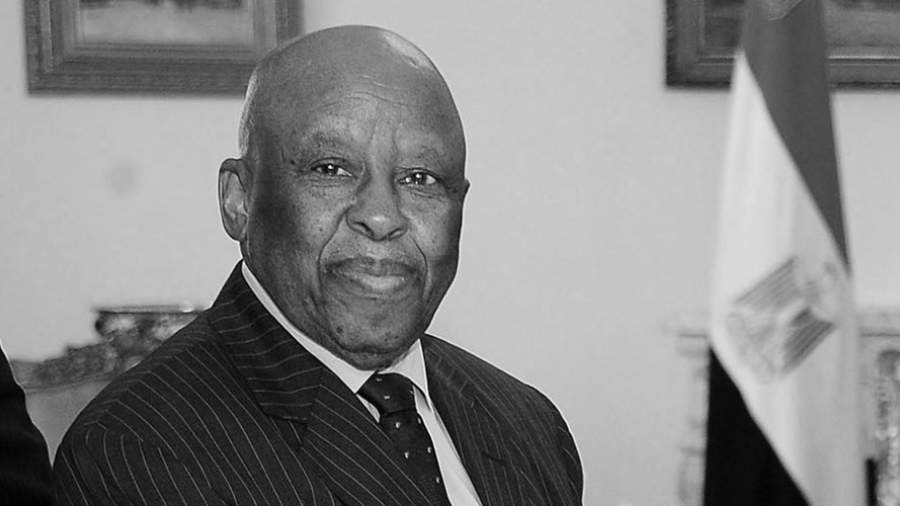
Botswana-The passing of former Botswana President Festus Mogae at the age of 86 marks the end of a significant chapter in Africa’s post-independence leadership story. Across the continent and beyond, tributes have emerged not only in recognition of his decade-long presidency, but also for the institutional discipline, economic stewardship, and quiet diplomacy that came to define his public life. At a moment when questions of governance, democratic continuity, and public trust continue to shape political discourse across Africa, Mogae’s legacy is likely to be revisited not through dramatic rhetoric, but through the enduring stability he helped preserve in Botswana.
Born in Serowe in 1939 during the final years of British colonial administration, Mogae belonged to a generation of African leaders tasked with navigating newly independent states through uncertain political and economic transitions. Educated in economics in the United Kingdom, he returned to Botswana shortly after independence in 1966 and entered public service at a time when the country was still building the foundations of state institutions. Before rising to the presidency, Mogae served in several influential positions, including Governor of the Bank of Botswana, Minister of Finance, and later Vice President. His ascent to national leadership was therefore not sudden, but rooted in decades of technocratic experience and administrative continuity. In 1998, he assumed the presidency following the retirement of President Ketumile Masire, in a constitutional transition that reinforced Botswana’s reputation as one of Africa’s most stable democracies.
Unlike many political trajectories on the continent historically associated with military intervention or prolonged incumbency, Mogae’s leadership emerged through institutional succession. Botswana’s democratic framework, though not without criticism, benefited from a culture of orderly transfers of power, and Mogae became one of its most internationally recognized custodians. His presidency coincided with one of the most difficult public health crises in Southern Africa. At the height of the HIV/AIDS epidemic, Botswana faced one of the highest infection rates globally, threatening not only public health systems but also economic productivity and national morale. Mogae’s administration responded with unusual openness for the period, publicly acknowledging the scale of the crisis and expanding access to antiretroviral treatment programmes.
That decision would later become one of the defining features of his presidency. While many governments across the continent initially approached the epidemic cautiously due to stigma and political sensitivities, Botswana under Mogae adopted a more direct strategy rooted in public awareness, international partnerships, and healthcare investment. The approach earned global recognition and contributed to Botswana becoming one of Africa’s leading examples in HIV/AIDS response policy. Economically, Mogae inherited a country already benefiting from diamond revenues, but his administration was largely credited with maintaining fiscal discipline and macroeconomic stability. As an economist by training, he projected a leadership style associated more with institutional management than populist politics. During his tenure, Botswana continued to attract international praise for prudent governance, anti-corruption efforts, and relative transparency within public administration.
Yet his presidency was not without challenges. Like many resource-dependent economies, Botswana faced concerns around inequality, unemployment, and overreliance on diamond exports. Critics also argued that economic growth did not always translate into equitable social transformation, particularly among younger populations and marginalized communities. Nonetheless, even political opponents often acknowledged the administration’s commitment to institutional continuity and constitutional order. After completing the two-term constitutional limit in 2008, Mogae peacefully transferred power to Vice President Ian Khama. In a continent where debates around term limits and political succession remain sensitive, the transition reinforced Botswana’s image as a comparatively stable democracy.
Beyond Botswana, Mogae remained active in continental affairs. He later chaired mediation and monitoring initiatives linked to peace efforts in South Sudan, contributing to regional diplomacy and conflict resolution. His post-presidency reflected a broader tradition among some African elder statesmen who continue to engage in governance and peacebuilding after leaving office. His death therefore carries significance beyond national borders. For many observers, Mogae represented a leadership model increasingly discussed within African policy circles: restrained, institutional, and policy-driven rather than personality-centered. In an era often dominated by political polarization and media spectacle, his style stood in contrast measured, procedural, and deliberately understated.
What Africa may remember most about Mogae is not necessarily charisma or ideological grandstanding, but the importance of governance anchored in systems rather than individuals. His career highlighted the value of respecting constitutional limits, investing in institutions, and confronting national crises with transparency rather than denial. For younger leaders and policymakers across the continent, his legacy offers several lessons: that democratic credibility is built gradually through consistency; that economic management requires long-term planning; and that public leadership is often defined as much by restraint as by ambition. As Botswana enters a period of mourning, the broader African community is also reflecting on the passing of a leader whose influence was shaped less by political theatrics and more by disciplined statecraft. In many ways, that may become his most enduring contribution.