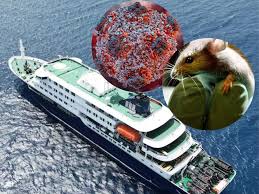
The decision by the Centers for Disease Control and Prevention to quarantine and monitor passengers evacuated from the MV Hondius cruise ship has drawn international attention not simply because of the virus involved, but because the outbreak represents one of the rare modern cases where a hantavirus strain linked to limited human-to-human transmission is being tracked across multiple countries simultaneously.
According to U.S. health authorities, at least 41 individuals are currently being monitored in connection with the outbreak, including 18 people quarantined in Nebraska and Atlanta after being evacuated from the Dutch-flagged expedition cruise ship. The outbreak aboard the MV Hondius has already resulted in multiple confirmed infections and three reported deaths linked to the Andes virus strain of hantavirus, a subtype primarily associated with parts of South America. Unlike most hantaviruses, which are typically transmitted through contact with infected rodent droppings or urine, the Andes strain is one of the few known variants capable of limited person-to-person transmission under close-contact conditions.
The cruise ship had departed from Ushuaia, Argentina, before cases began emerging during the voyage. International concern intensified after passengers developed severe respiratory symptoms while at sea, triggering a multinational public health response involving the CDC, the World Health Organization, European health agencies, and several governments coordinating passenger evacuations and contact tracing operations. What many people may not realize is that the quarantine operation now underway in the United States reflects lessons learned from previous global outbreaks, including Ebola and COVID-19. The National Quarantine Unit at the University of Nebraska Medical Center one of the facilities receiving monitored passengers was originally developed to handle high-risk infectious disease situations requiring specialized containment systems.
Health officials have repeatedly emphasized that the current risk to the general public remains extremely low. The CDC notes that hantavirus is not easily transmitted between humans in ordinary social settings and does not currently pose a pandemic-level threat comparable to COVID-19. Still, authorities are approaching the situation cautiously because the Andes virus has a long incubation period sometimes up to six weeks and symptoms can initially resemble common flu illnesses before progressing rapidly into severe respiratory complications. This explains why exposed individuals are being monitored for 42 days even if they currently show no symptoms. Another little-known aspect of the outbreak is the scale of international coordination involved behind the scenes. Reports indicate that health agencies across more than a dozen countries are now tracing passengers, crew members, flight contacts, and medical personnel who may have interacted with infected individuals during evacuation procedures.
The outbreak has also exposed the growing complexity of disease management in an era of global tourism and interconnected travel systems. Expedition cruises such as the MV Hondius, which travel through remote international waters and multiple jurisdictions, create unique logistical challenges when infectious disease incidents occur onboard. Public health authorities must coordinate maritime law, international aviation, quarantine protocols, laboratory testing, and diplomatic arrangements simultaneously. For global health experts, the response is therefore being viewed as both a medical containment effort and a stress test for international outbreak coordination systems established after previous global health crises. Importantly, experts continue to caution against panic or misinformation. Medical professionals stress that hantavirus infections remain rare worldwide, and most forms of the virus do not spread easily between people. Prevention still largely centers on avoiding exposure to rodent-infested environments and maintaining strong public health surveillance systems.
The CDC has classified the response as a Level 3 emergency operation the lowest level within its emergency response framework while continuing active monitoring and coordination with international partners. For now, the quarantine measures in Nebraska and Atlanta reflect a broader public health principle increasingly shaping global disease management: early containment and cautious monitoring are often viewed as safer and more effective than delayed reaction after wider transmission occurs.